
How It Shows Up
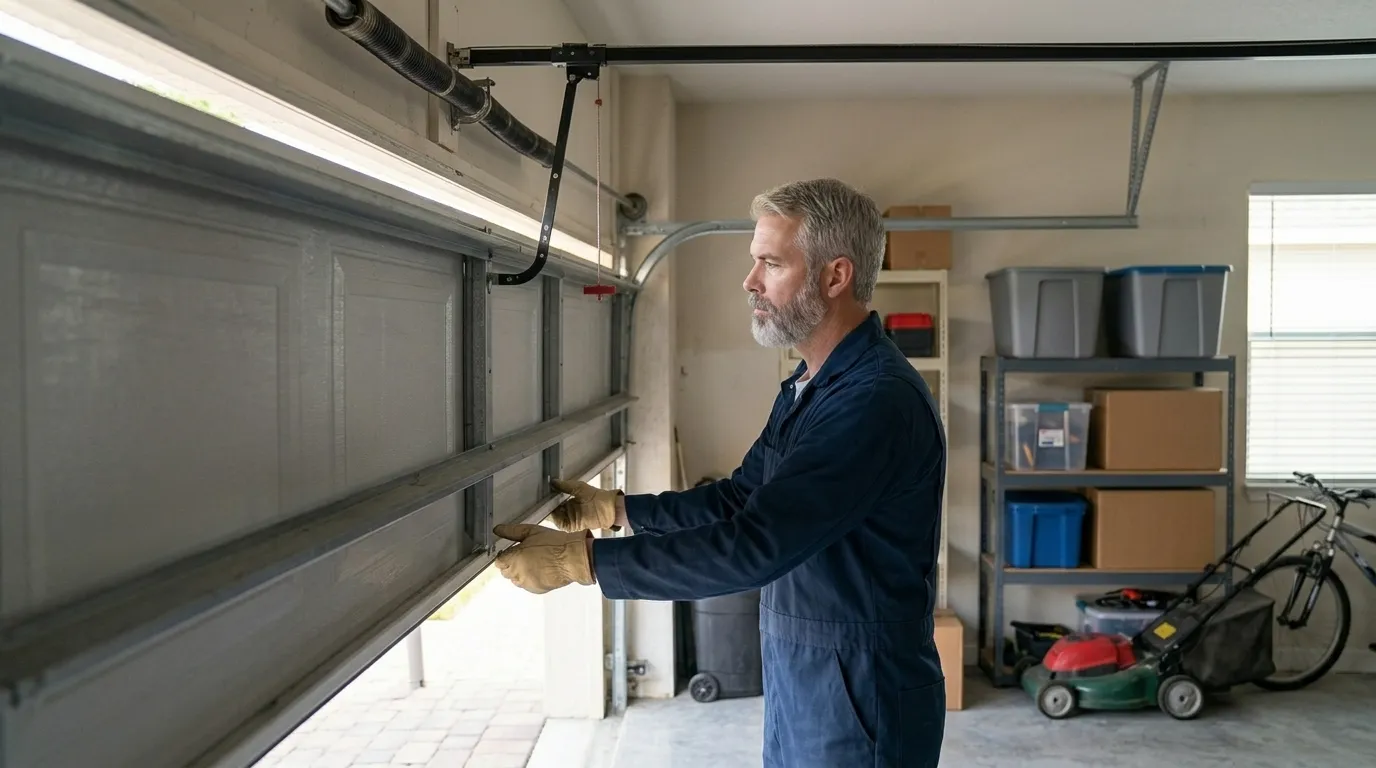
Chino Valley sits eleven miles out from our shop in Prescott Valley, and that drive shapes how a call here actually works. It's not a same-block job - a tech loads the truck knowing they're committed to that stretch of road before they know exactly what's wrong with your opener, so we ask more questions on the phone up front than we would for a closer address. Once we're at the house, the fault itself tends to look the same across most of Chino Valley, because the housing stock here is unusually consistent: the median home was built around 1999, and a lot of the neighborhood went up within a few years of that date. That means most of the openers we find aren't the brand-new belt-drive units with smart-home boards, and they aren't the ancient chain-drive units from the 1970s either. They're the mid-generation units - screw or chain drive, a logic board from the late 90s, sensor eyes that were required by then but wired in a way that's simpler than today's units. The complaint is usually the same: the light blinks, the motor hums, and the door doesn't move, or it reverses halfway up for no visible reason.
Stocked Parts
Because the opener generation here is fairly narrow - mostly units installed new when the houses were built around 1999, or replaced once already since - we stock the parts that fail on that generation: drive gears and sprockets, standard 41A-style safety sensor pairs, capacitors for the motor start circuit, and remote receivers that match the mid-90s-to-2000s logic boards rather than the newer rolling-code-only versions. We also carry limit switches and the wired wall control units common to that era. What we don't carry on the truck is anything specific to a smart-home hub integration or a proprietary board from a manufacturer that stopped making parts for that model years ago - if your opener falls into that bucket, we'll tell you on-site rather than stall the job pretending we have it in a bin.
What Can Go Wrong
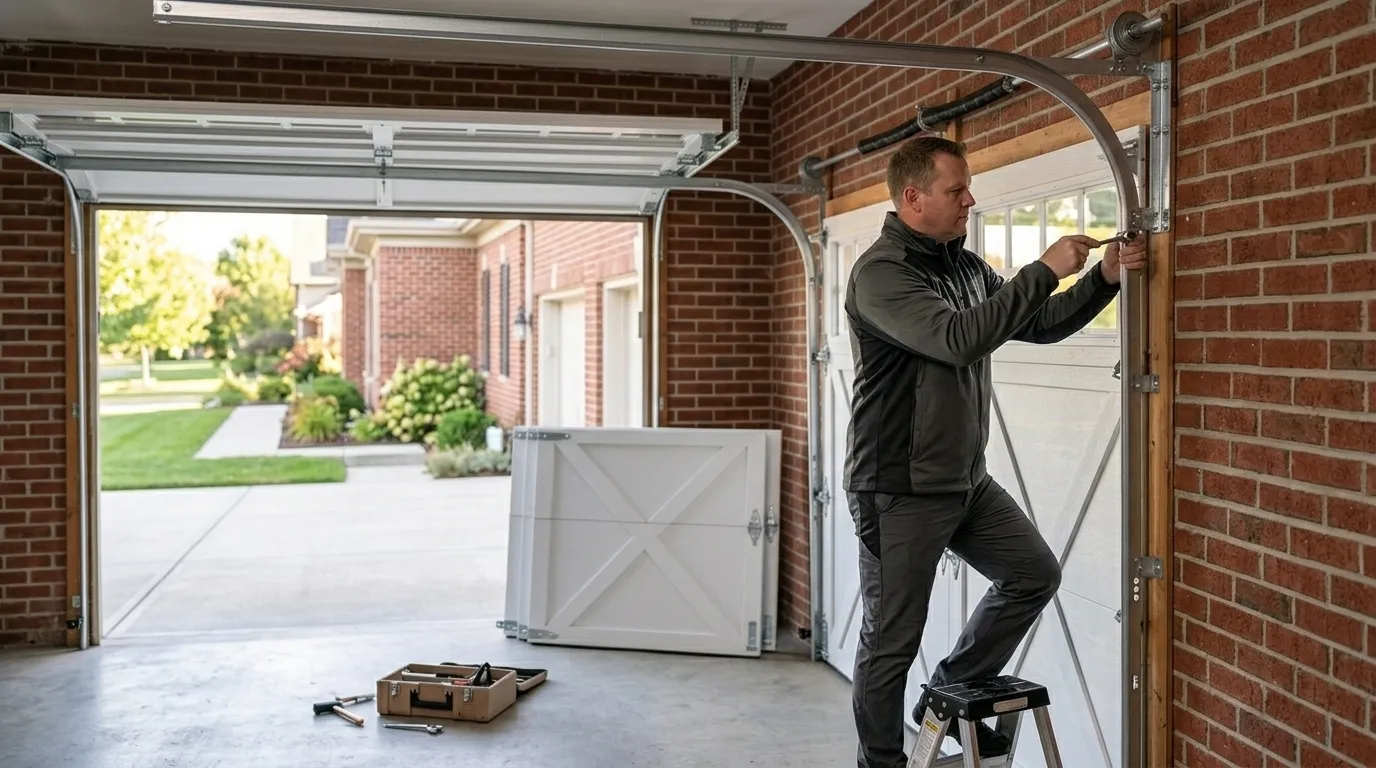
The complication we run into most in Chino Valley is a mismatch between the opener and a door that's been reworked since the house was built - a heavier insulated panel swapped onto an opener sized for the original lighter door, which overloads the motor and looks like an opener failure when it's really a load problem. Another one: houses from the 1999 build wave often still have the original torsion or extension spring setup, and a spring that's tired but not yet broken puts extra strain on the opener every single cycle, so we sometimes fix the opener and the spring fails a month later because it was already close to done. We flag this when we see it rather than let the customer think the opener repair is the end of the story.
Why This Fails Locally
Chino Valley falls in the same cold-moderate climate band as the rest of the service area, and that matters for openers specifically because cold mornings stiffen grease in the drive rail and slow the capacitor's ability to deliver the motor's starting punch - a door that opened fine at 2pm the day before can hesitate or trip a breaker at 6am. Combine that with the housing wave here - most openers installed the same few years, aging out on a similar clock - and it means a good number of Chino Valley households across the roughly 5,657 in this area are sitting on openers reaching the point where the motor windings and start capacitor are simply worn from twenty-plus years of daily cycling, cold-morning strain included. That's a wear pattern, not a defect, but it shows up as sudden failure rather than a slow decline, which is why these calls tend to come in as "it worked yesterday."