How It Shows Up
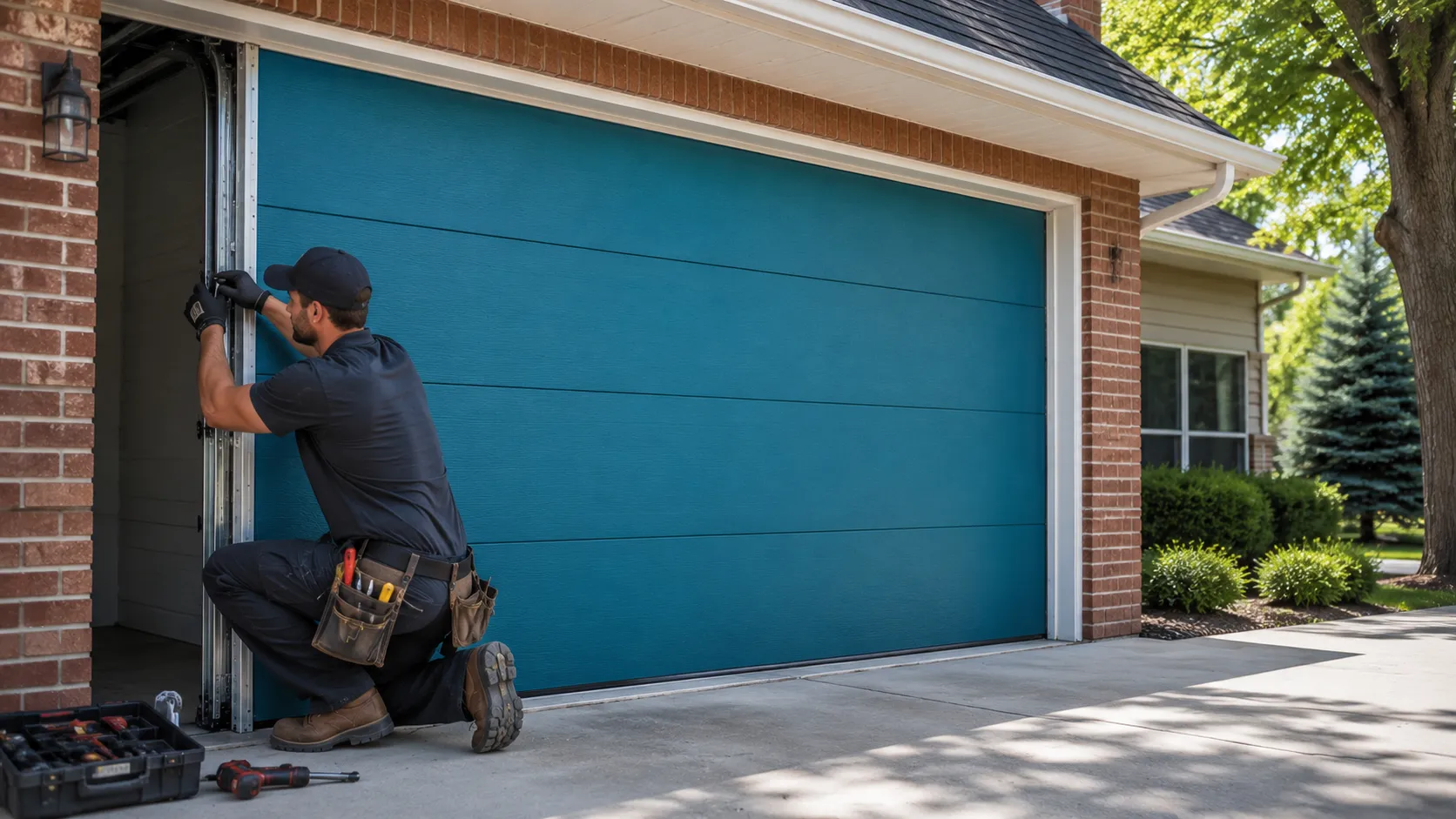
Chino Valley's houses run later than the rest of the territory we cover out of Prescott Valley. The median build year here lands around 1999, while the broader service area sits closer to 1992 across its five main pockets of housing. That eight-year gap matters more than it sounds. A door installed in a house built in 1999 is a different animal from one going into a house from the early 1980s - different rough opening standards, different stock spring sizing, different opener mounting.
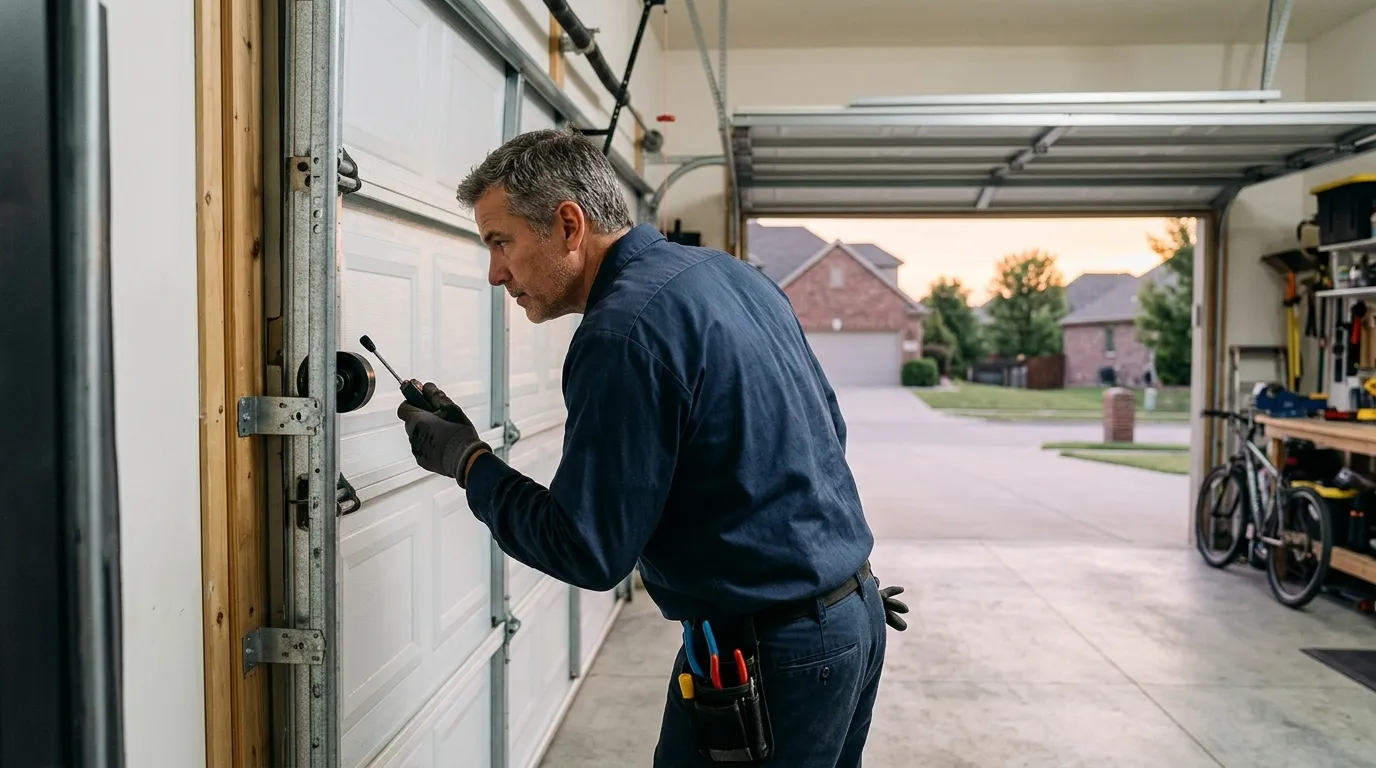
What you'll actually notice: openers that are chain-drive units nearing the end of their service life rather than the worn-out one-piece doors you'd find on older stock. Panels sag at the bottom corner before the spring itself lets go. Remotes stop pairing reliably before the track shows real wear. None of that is dramatic, which is exactly why people put off calling until the door won't open at all.
We're 11 miles out from Prescott Valley to get here, so this isn't a same-day walk-in kind of job - it's scheduled, and that's worth knowing before you start pricing panels.
Stocked Parts
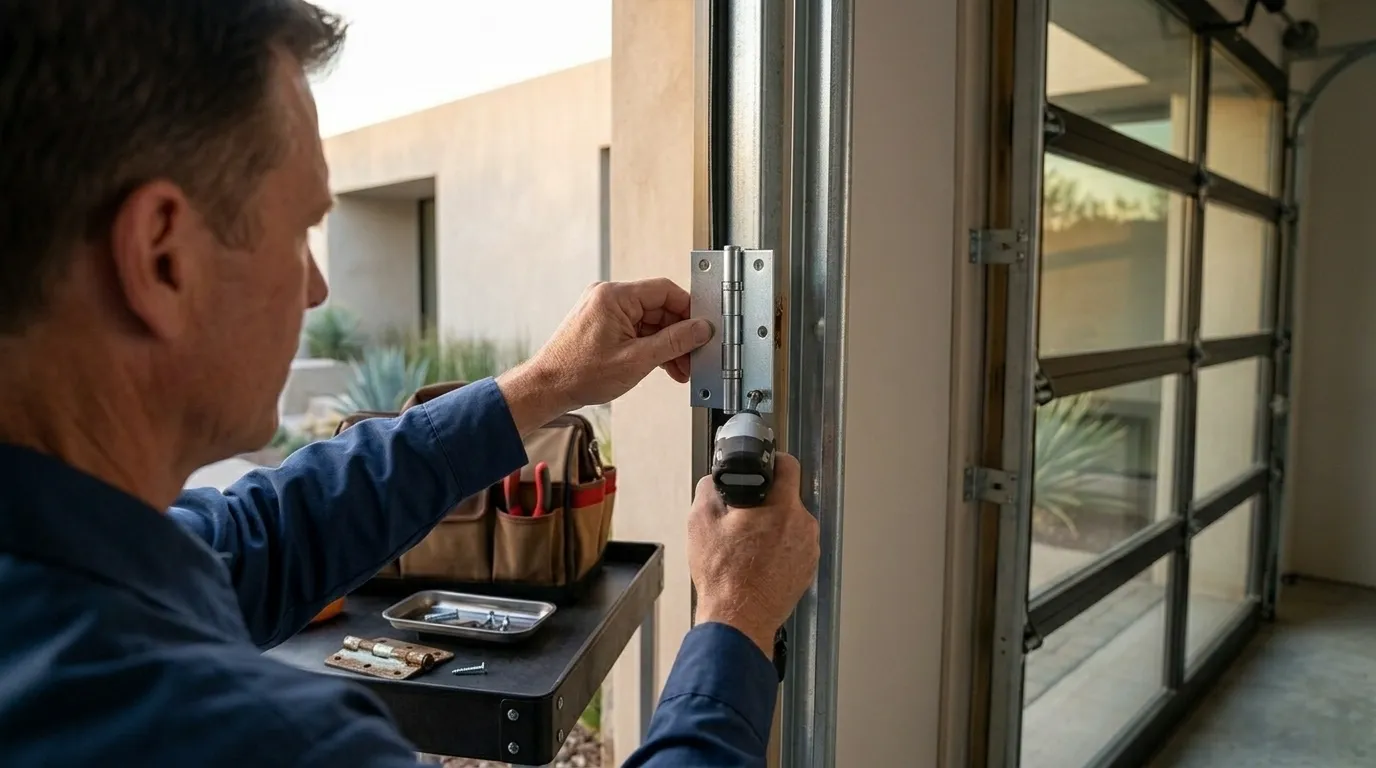
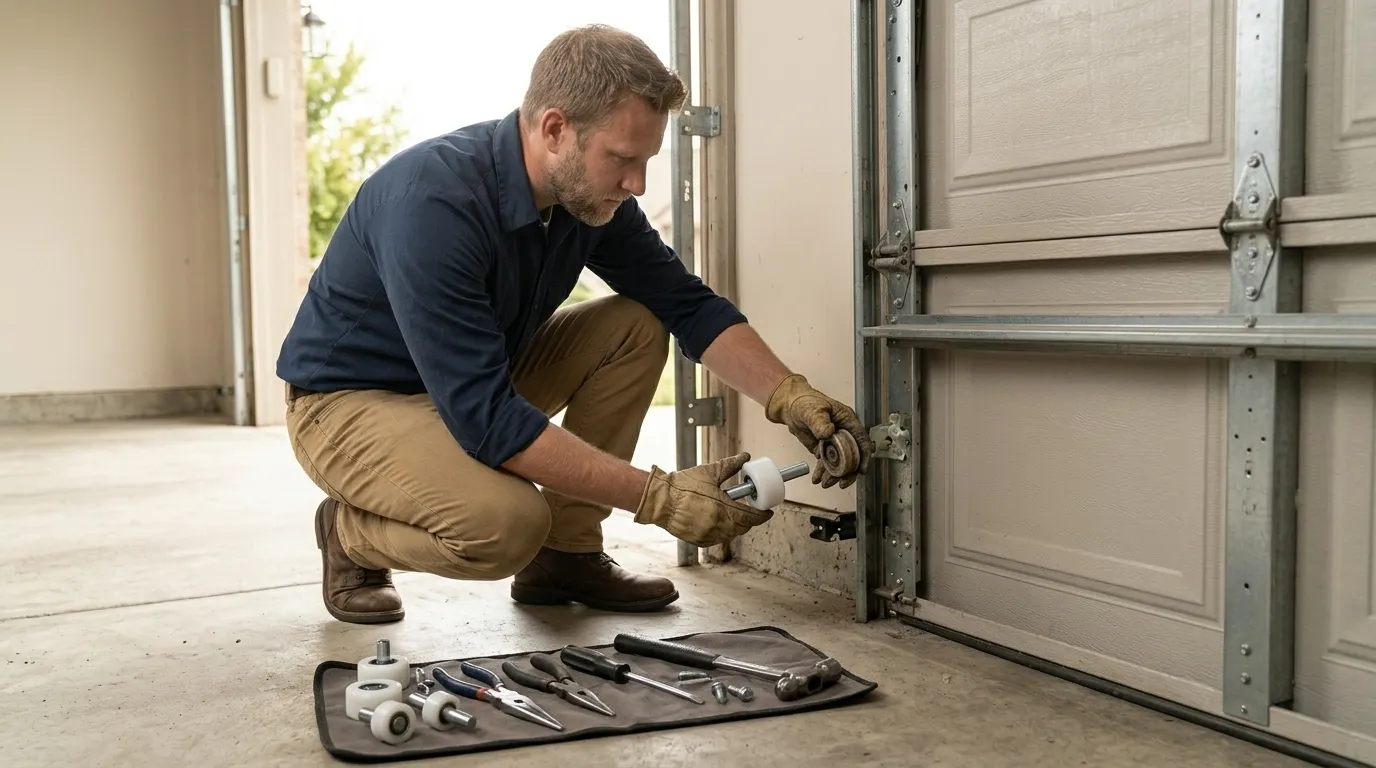
For a house built around 1999, the parts that fit are pretty standard - torsion springs sized for a 7-foot sectional door, extension cables rated for a two-car opening, and steel roller tracks in the widths that were common through the late 1990s. That's good news: this era of construction didn't have the oddball rough openings you sometimes see in houses from the 1960s or 70s, so we're not special-ordering a bracket to make something fit.
What we don't carry on the truck is anything discontinued. If a homeowner wants to match an obsolete panel style or a proprietary opener rail from a builder that's since gone out of business, that part has to be sourced, and lead time on it is out of our hands - not something we can promise a date on.
Across the wider area, most homes sit in that same 1980s-to-90s window, so the springs, cables and openers we stock for Chino Valley overlap heavily with what we already carry for the rest of the territory. That's not a coincidence - it's why we stock what we stock.
What Can Go Wrong
On a house built around 1999, the most common surprise isn't structural - it's electrical. Openers from that era were wired straight into a switched outlet with no dedicated circuit, and some homes never got that updated. If the outlet's on the same circuit as garage lighting or an exterior receptacle, a new opener with a stronger motor can trip it. That's not a garage door problem, but it shows up like one.
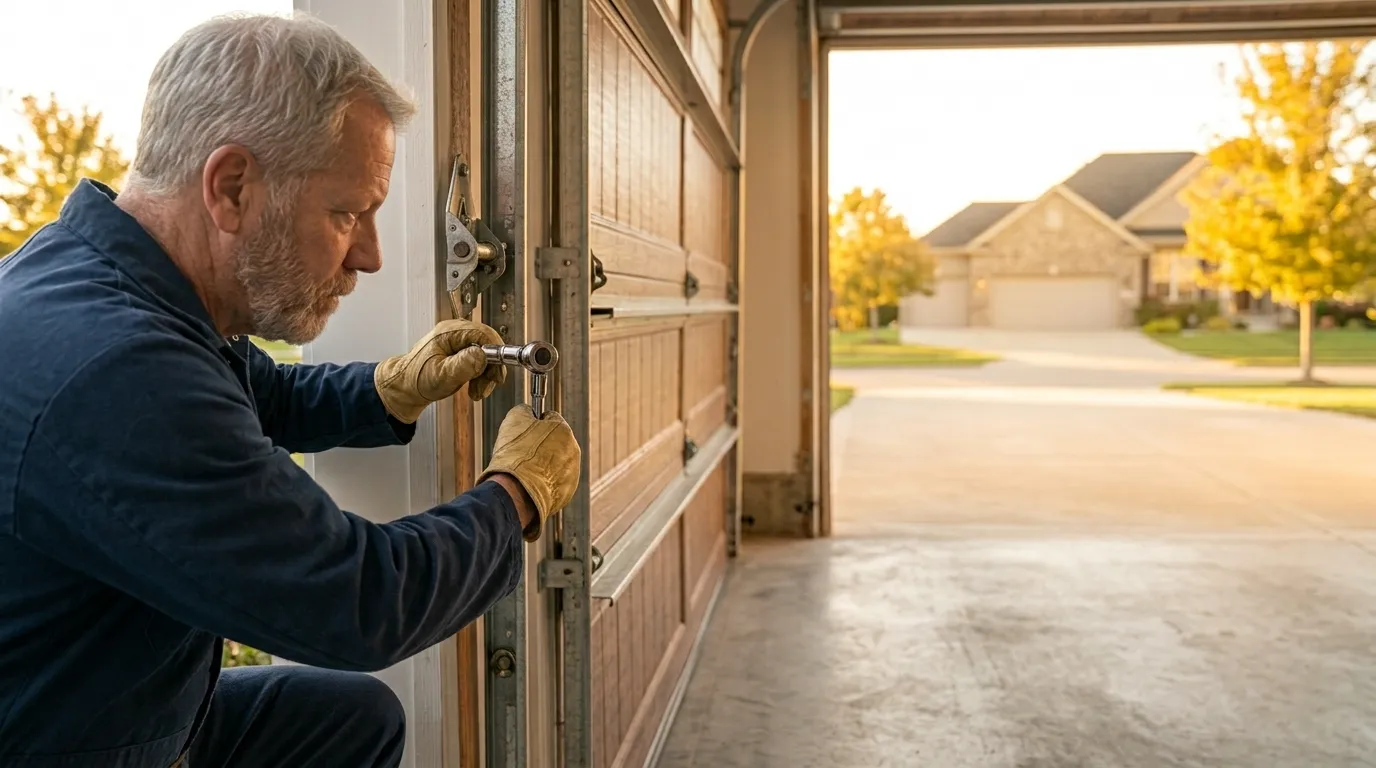
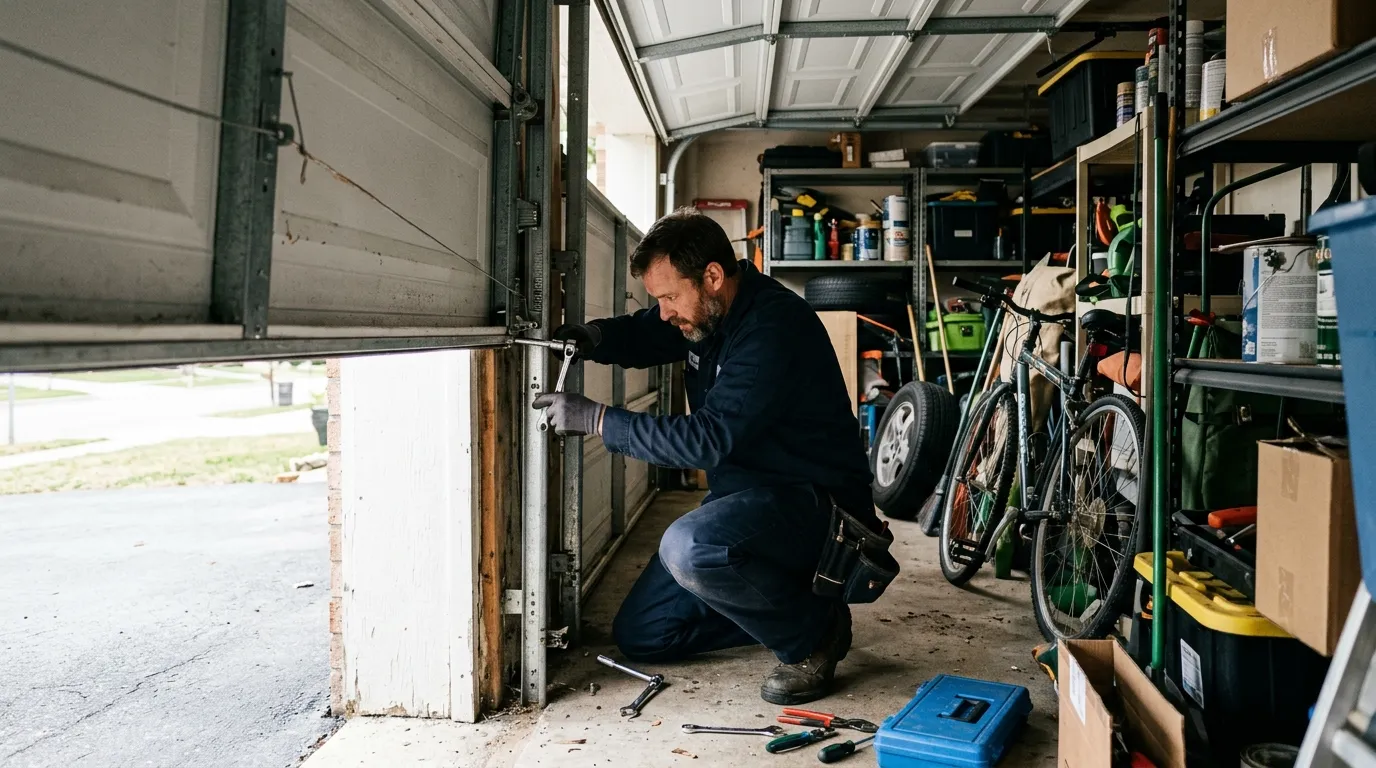
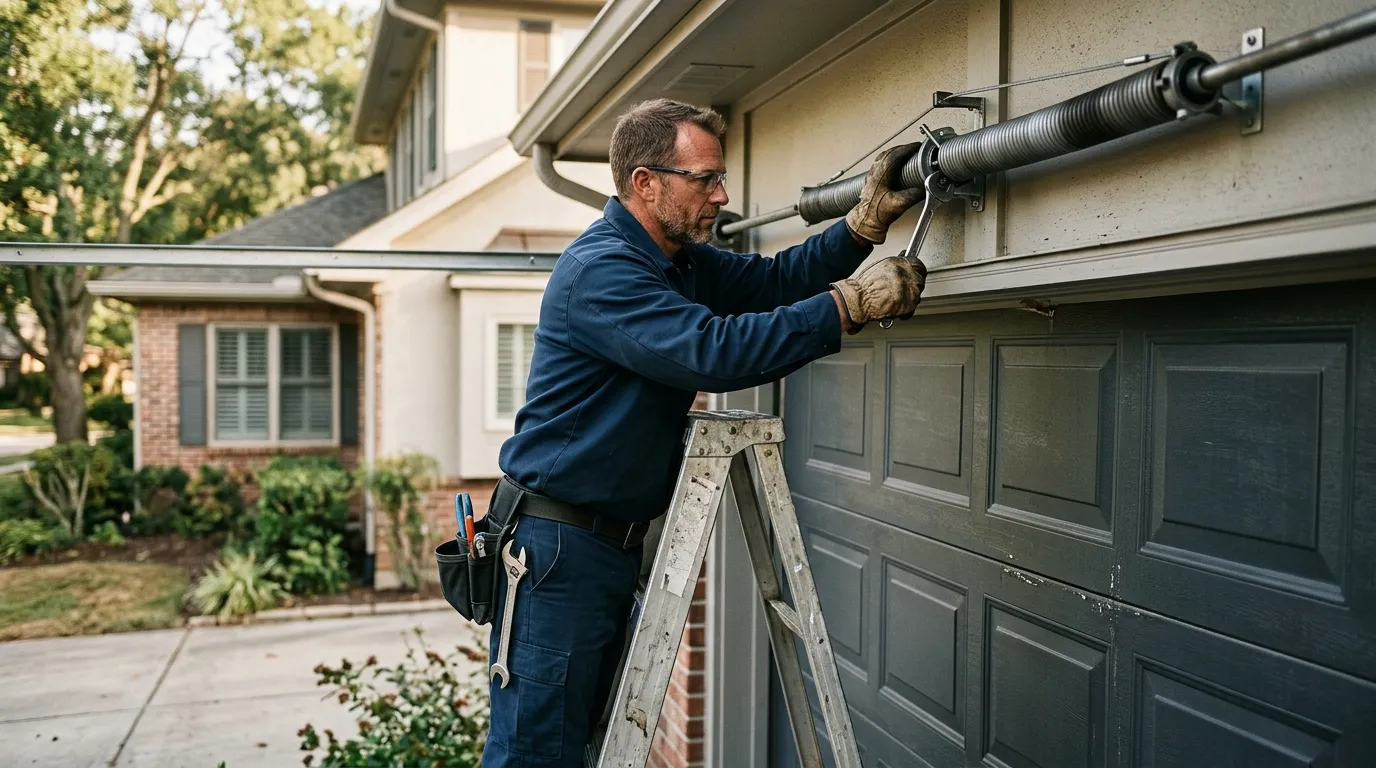
The other thing we run into: double doors on these homes were often installed with two separate torsion springs, one per section, because that was the standard install method at the time. If only one spring gets replaced during a repair instead of a full install, the door runs uneven and wears the track on one side faster than the other. It's a common shortcut and it costs the homeowner more later.
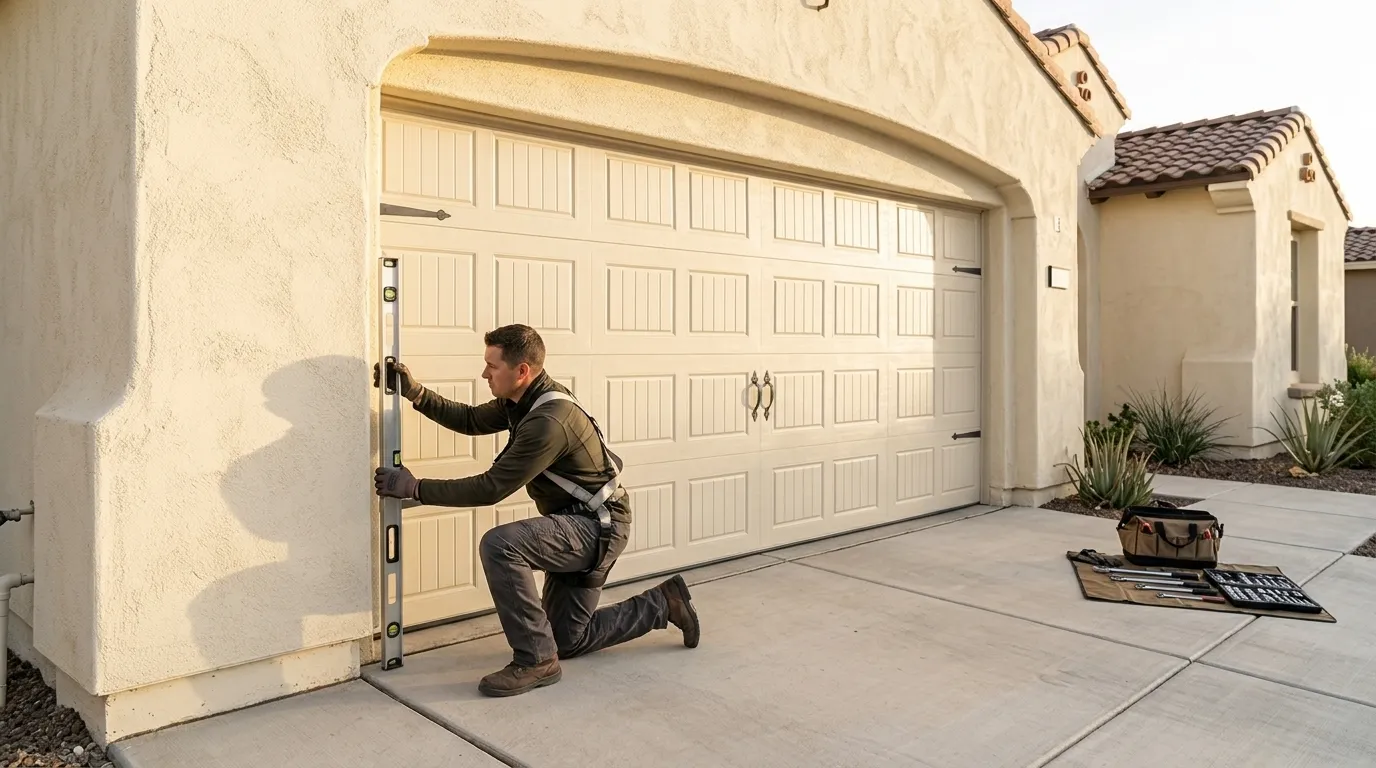
We're honest about the limit here too - if the framing around the opening has shifted or settled, which does happen on this era of construction, that's a carpentry fix before it's a garage door fix, and we'll say so instead of forcing a new door into an opening that isn't square.
Why This Fails Locally
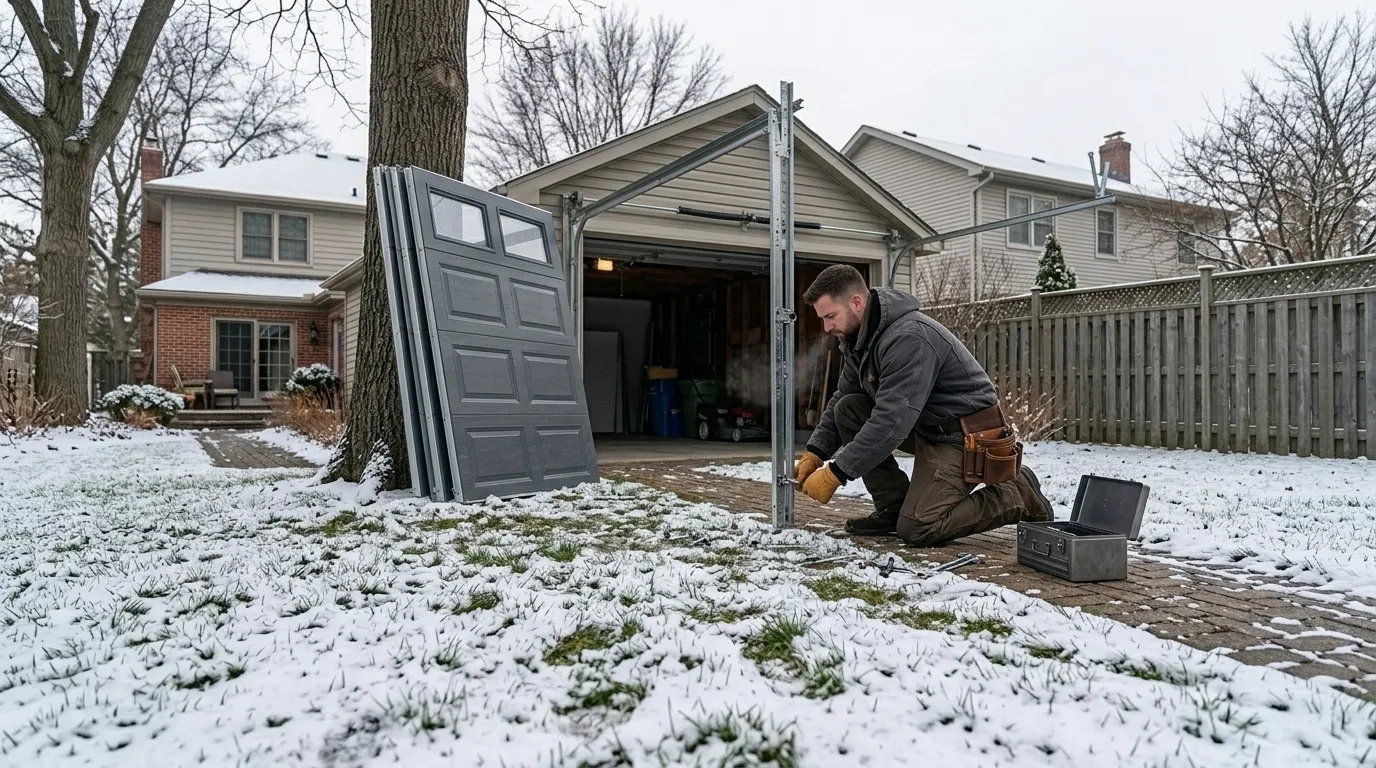
Chino Valley sits in a cold-moderate climate band, and a garage door installed here has to handle real winter temperature swings, not just heat. Steel panels contract in the cold enough to change how a door balances at the top of its travel, which is part of why we test balance in the actual conditions rather than assuming a spec sheet number holds up in January.
With 5,657 households in Chino Valley and a median income of $59,733, most of the installs we quote here are mid-range steel sectional doors rather than premium insulated or custom wood - not because people can't afford more, but because that's what fits a house built in the late 1990s and what most owners are actually asking for. We size the job to the house, not the other way around.
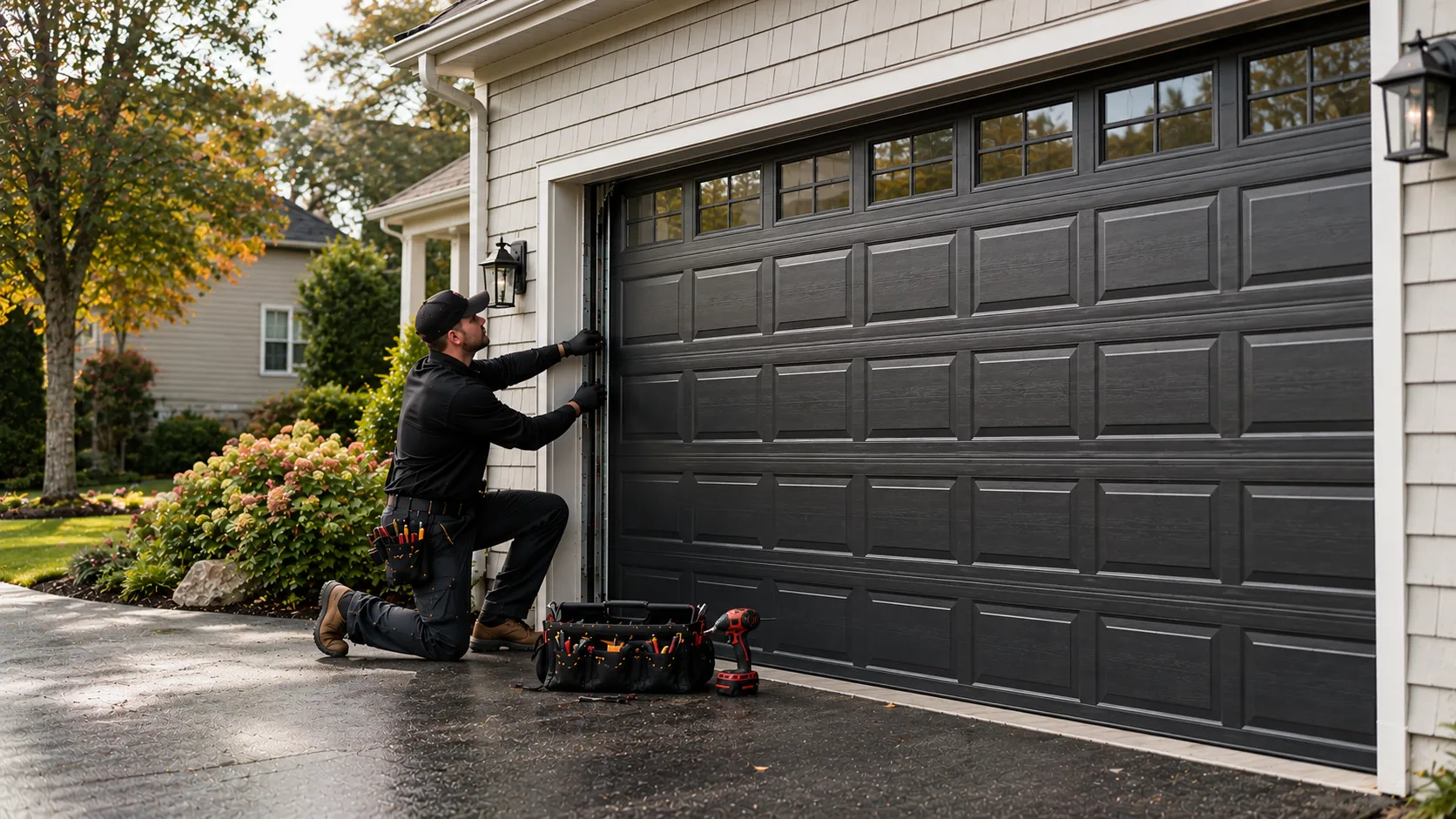
The distance from Prescott Valley means we plan the trip - parts get loaded before we leave, not sourced after we arrive. For a straightforward install on a 1999-era opening, that's rarely an issue. For anything needing a special-order part, it adds a day, and we'd rather tell you that up front than have you find out on install day.