How It Shows Up
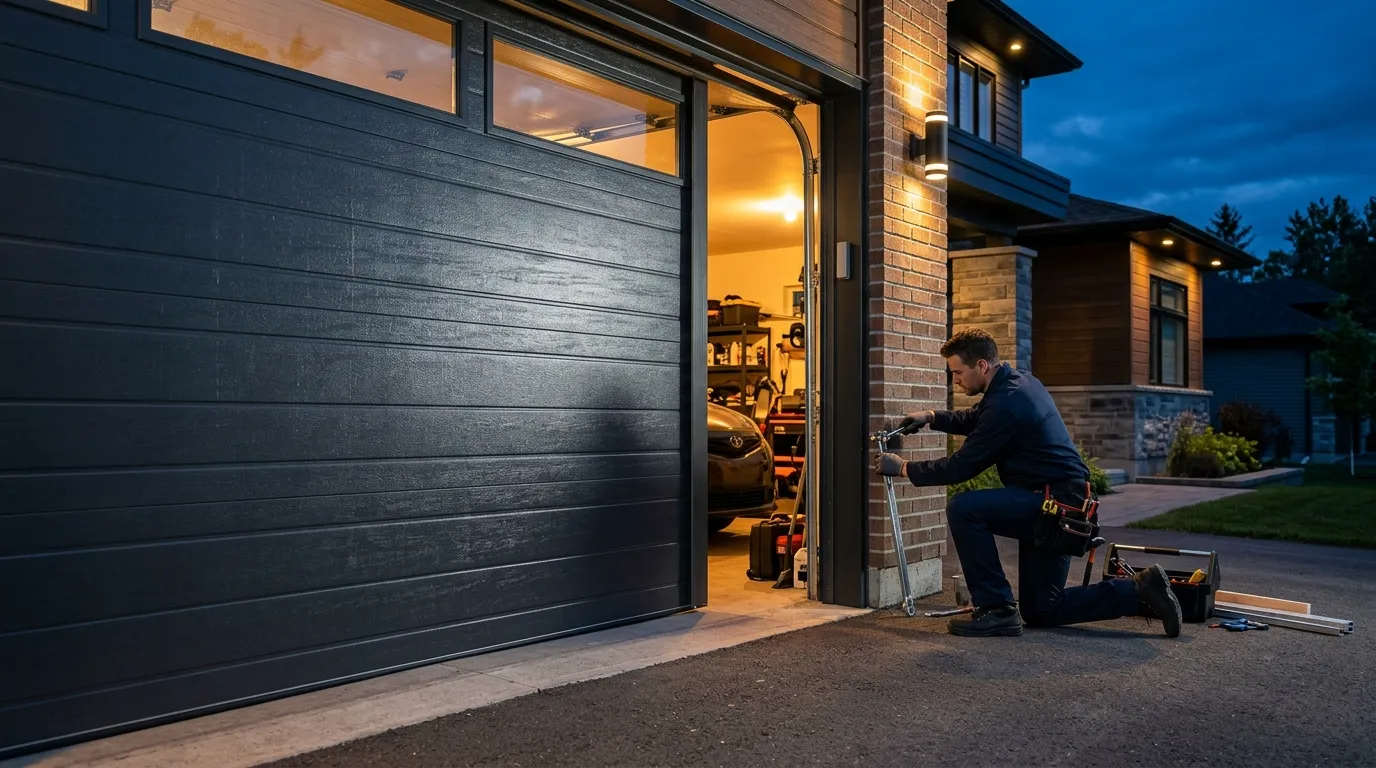
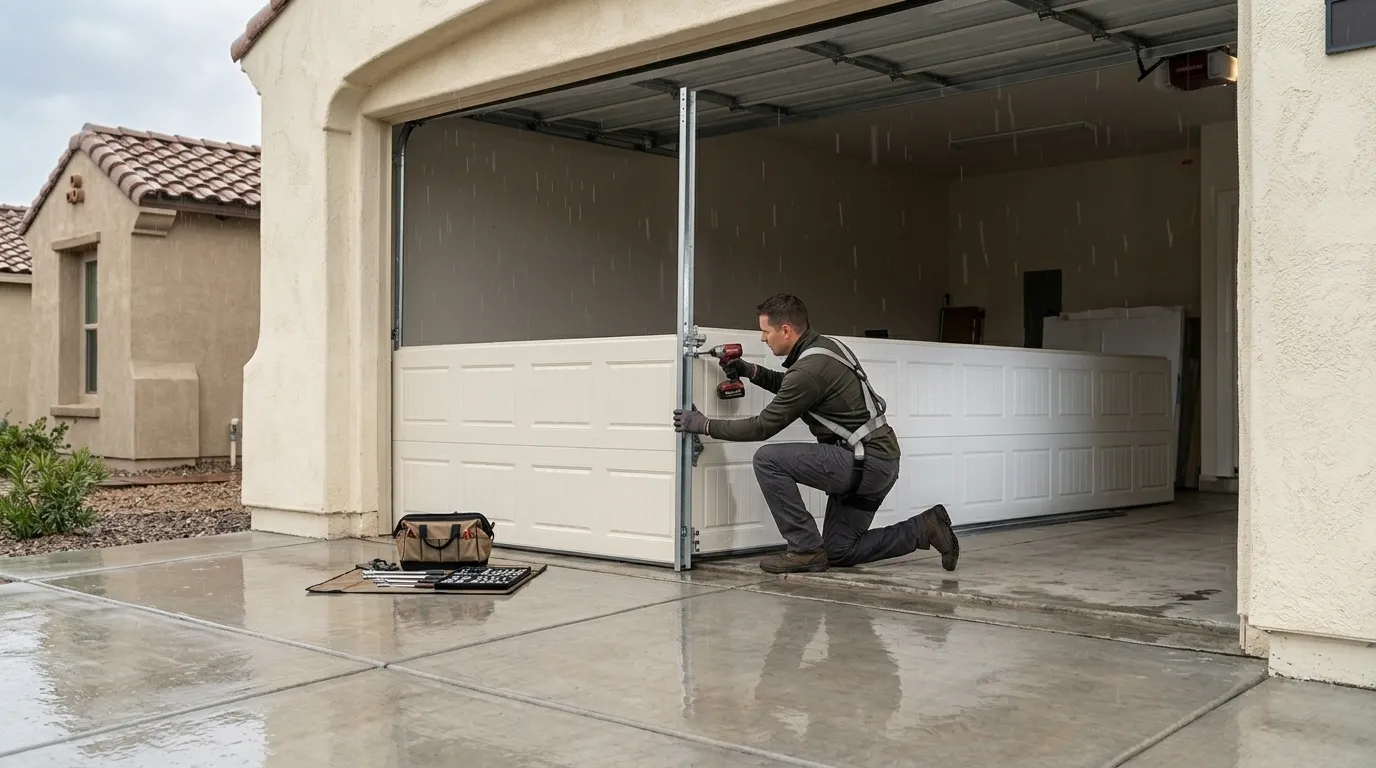
Most houses in Chino Valley went up between 1987 and 1999, with the median build year landing right at 1999. That means the garage door on your house is almost certainly the builder-grade steel sectional that shipped standard in that window: a 16x7 double or 9x7 single, roll-formed steel track bolted to the jamb, and 2-inch nylon or steel rollers riding in a track that was never meant to flex much. When one of those rollers wears down or a bracket backs out, the door doesn't glide off the rail slowly - it jumps, usually at the bottom corner where the track angle changes going into the horizontal run. You'll see the door hanging crooked, one side lower than the other, or stuck half-open with a visible gap between the roller and the rail. On a double door, this is worse because the extra width puts more torque on that same track gauge, so a misalignment on one side shows up fast as binding across the whole panel.
With 5,657 households in Chino Valley and most of that stock the same age, this is not a rare call - it's the single most common reason a door quits moving straight in this town.
Stocked Parts
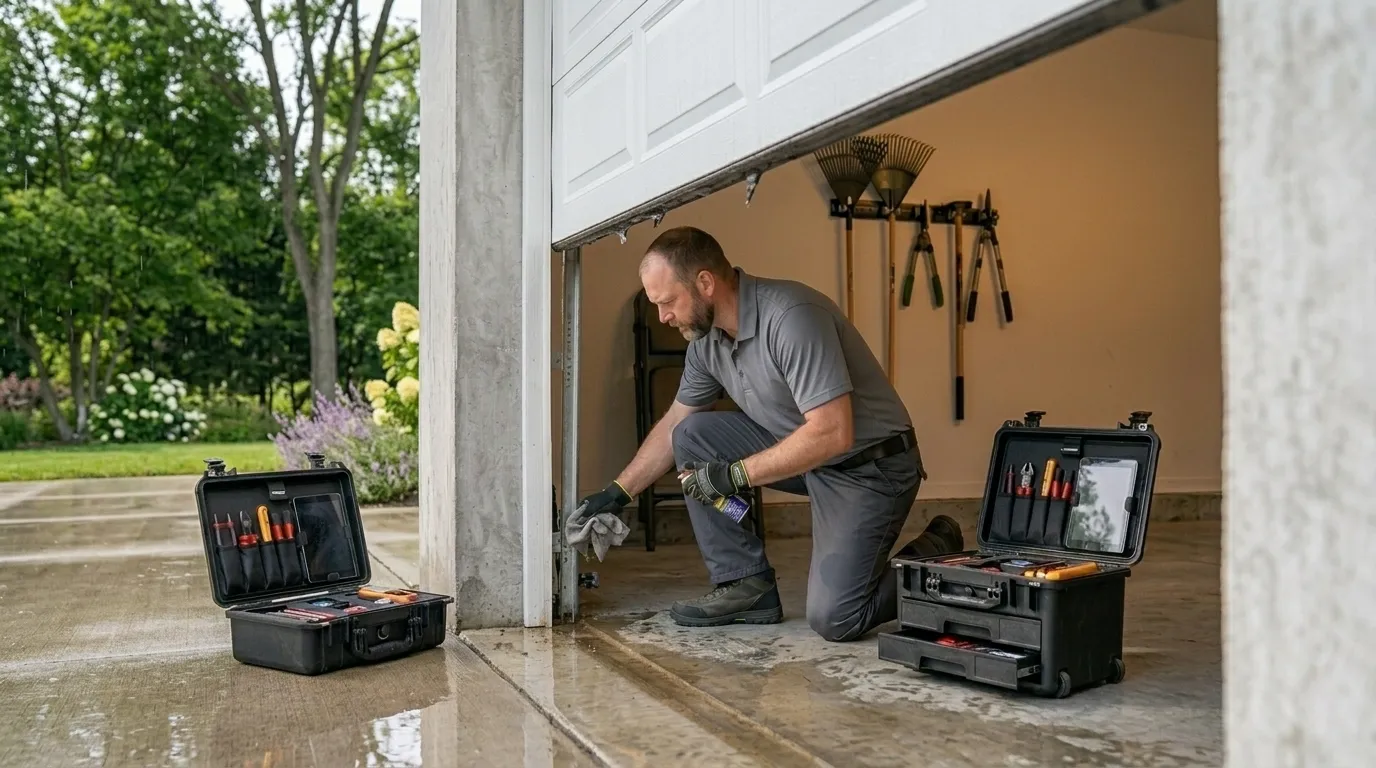
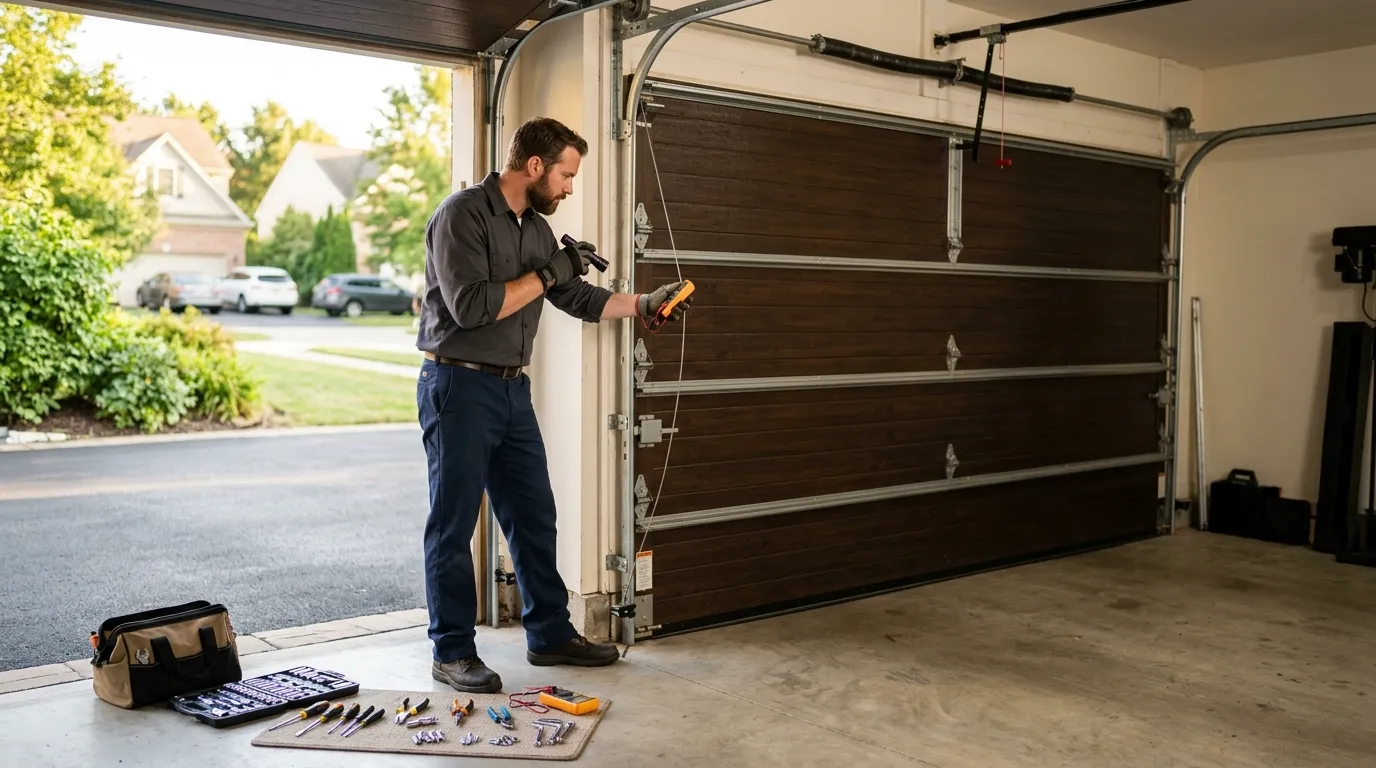
We carry the track brackets, roller sets, and cable drums that fit late-80s through late-90s steel sectional doors, because that's what's on most driveways out here. Standard 2-inch and 2-inch-extended rollers, galvanized track sections in the common residential widths, and the lag bolts and jamb brackets that these builder doors used are all things we bring on the truck rather than order.
What we don't stock is anything custom - insulated doors with proprietary track profiles, or hardware for a door that's been swapped out for a modern model with a different rail spec. If your door isn't the original 1990s-era steel sectional, we may need to order a part, and we'll tell you that on the spot rather than pretend otherwise. That's the one honest limit here: we're set up for what this town actually has on its garages, not every door ever made.
What Can Go Wrong
The risk with an off-track door isn't the track - it's the spring. If the door jumped the rail while under torsion tension, that tension is still loaded even though the door isn't moving right. Cranking on a door in that state, or letting a spring release suddenly while the door is off its track, is how people get hurt. We treat every off-track call as a tensioned system until we've confirmed otherwise.
The other thing that goes wrong is skipping the cause. A track that bent because a roller failed will bend again in the same spot if you replace the track but not the roller. We check both ends of the failure - what came off the rail, and what let it come off - before we call the job done.
Why This Fails Locally
Chino Valley sits about 11 miles from Prescott Valley, in the same cold-moderate climate band, which means the same freeze-thaw cycle that stresses metal track brackets over a winter here as it does across the wider service area. Add a median build year of 1999 and you get a lot of doors right at the point where the original steel track and rollers have put in two-plus decades of cycles in a climate that expands and contracts the hardware seasonally. That combination - older builder-grade track, cold-moderate seasonal swing, and two decades of use - is exactly the profile that produces off-track calls, more so than it would in a newer or more climate-stable area. It's less about any one house and more about what this whole town was built with, at the same time, in the same weather.