How It Shows Up
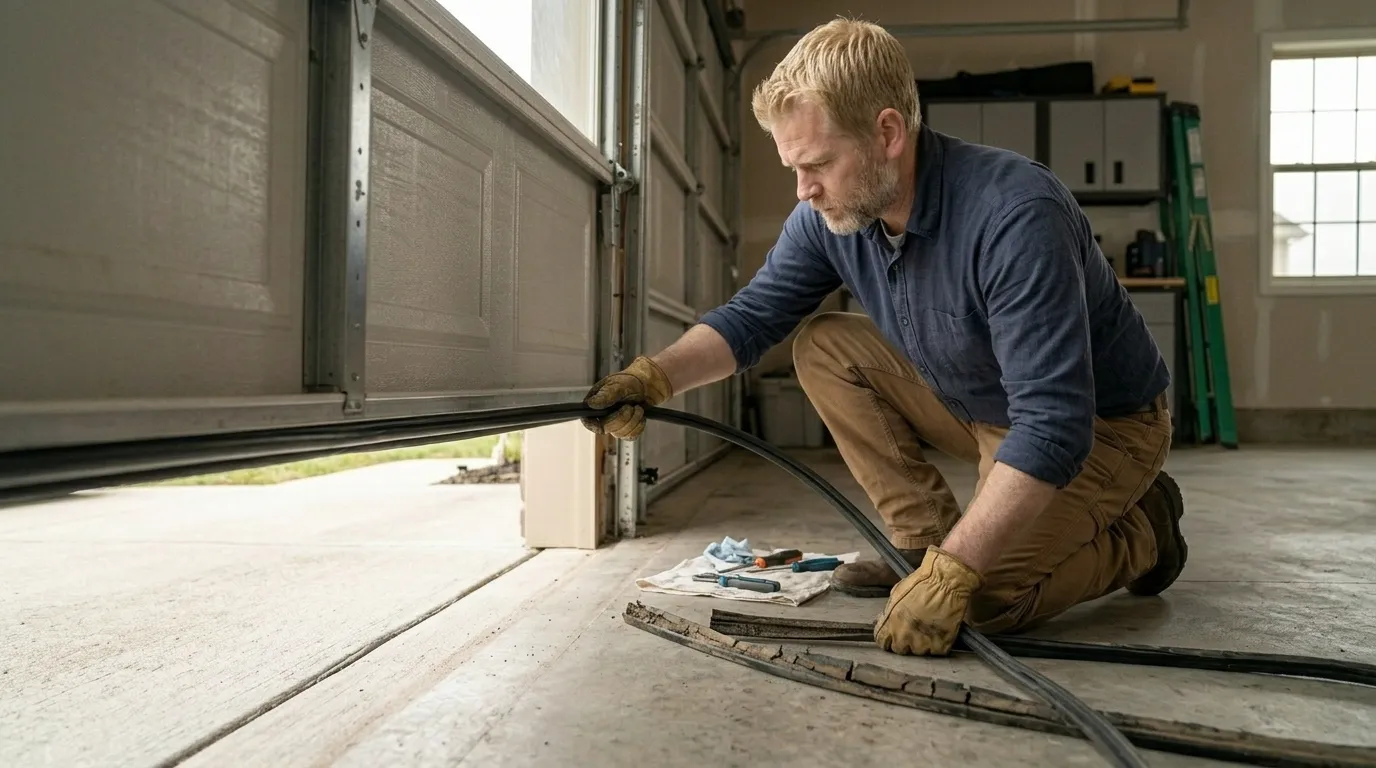
The call usually starts the same way: the opener hums but the door doesn't move, or it moves a few inches and reverses, or the remote works from the driveway but not from inside the truck. Sometimes it's quieter than that - a grinding noise on the up-stroke that wasn't there last winter, or a wall button that needs three presses before anything happens.
Most of Prescott Valley's housing went up between 1987 and 1999, with a median build year of 1992. That means a lot of the original chain-drive and early belt-drive openers in this service area are pushing three decades of use, and a chunk of the units we see haven't been swapped since they came off the builder's truck. The gears strip. The circuit boards that ran the safety reversal system get flaky. The logic board that once took a single learn-code remote now fights with a replacement that doesn't quite match. None of this is dramatic - it's just parts wearing out on a schedule tied to when the house was framed.
We see this pattern repeat across the five main pockets of 1980s-90s stock that make up most of the area, not as an isolated complaint from one street.
What's different house to house is usually the drive type and mount, not the failure itself. A belt-drive from the late 90s fails differently than a chain-drive from 1988, but both are old enough now to be due.
Why This Fails Locally
Two things push opener failure here beyond normal wear. First is age of stock: with a median build year of 1992, a large share of openers in this service area are original or one replacement cycle in, which puts the drive gear, the capacitor, and the logic board all near end of life at roughly the same time. When one goes, the others aren't far behind.
Second is the climate. This area sits in a cold-moderate band, which means openers live through real freeze-thaw swings rather than a flat desert heat load. Garage temperature drops overnight, grease on the drive gear and rail thickens, the motor has to work harder to start the door moving, and that extra load is what finally kills a gear that was already thin. Circuit boards don't love the swing either - solder joints that have been flexing with temperature changes for years are the ones that eventually crack.
We're not saying every opener in a 1990s Prescott Valley house is about to fail. We're saying the ones that do fail here tend to fail for these two reasons together, age and cold-moderate cycling, not from one bad remote battery. That's the difference between a call that's a five-minute fix and one where the whole head unit needs to come down.
The Cost of This Job
What drives the bill on an opener repair isn't the labor, it's whether the part is a stocked item or a special order. A drive gear or a sensor pair swap is a same-visit job. A logic board for an obsolete model, if it exists at all, can mean a wait - and on a 1992-built house, there's a real chance the exact board isn't made anymore.
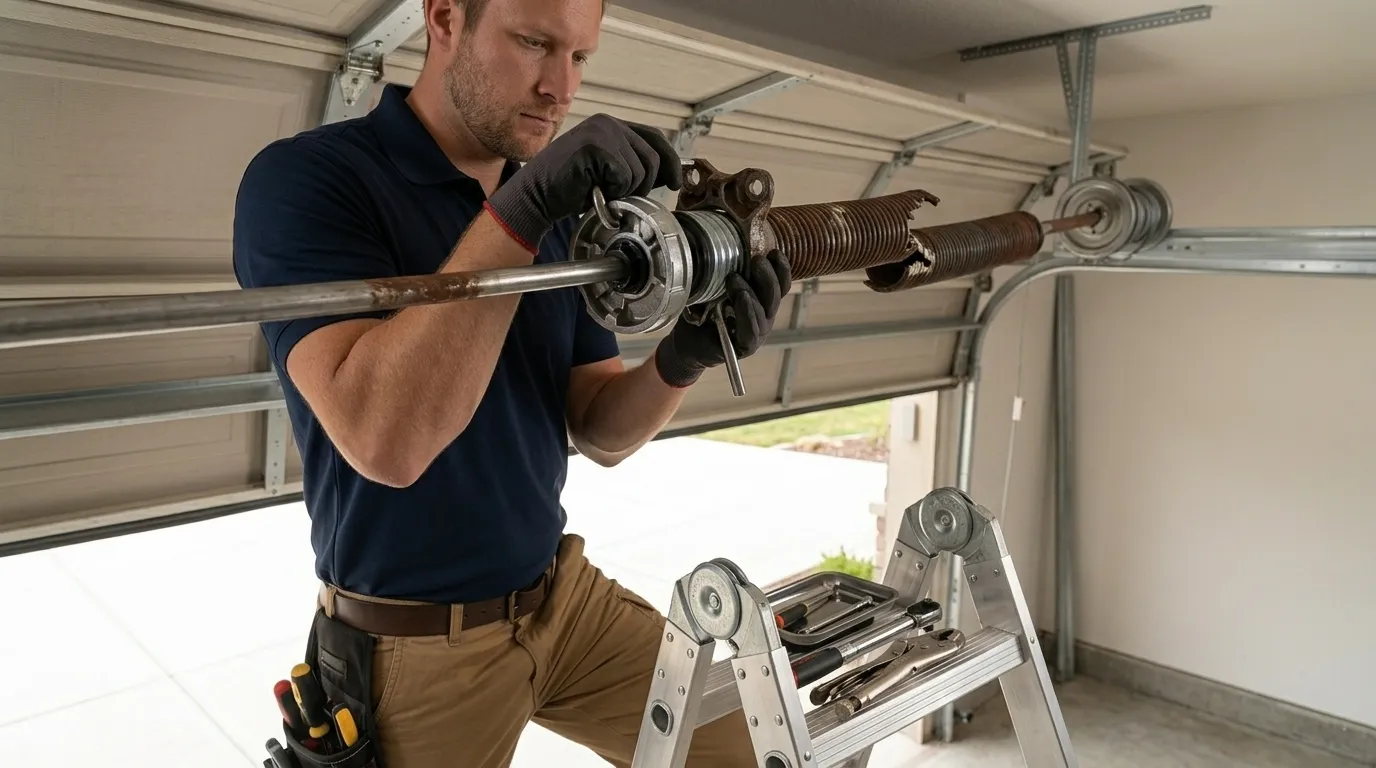
The other factor is what else the age of the house has caught up with. An opener call on a house from this era sometimes turns up a spring or a cable that's also near the end of its life, and fixing the opener without addressing that just means a second call. We'll flag it if we see it, but we won't sell you work the opener call didn't need.
At some point on the oldest units, replacing the opener outright costs less over time than chasing parts for a system nobody supports anymore. We'll tell you when we think that point has been reached rather than let you keep paying to patch something that's done.