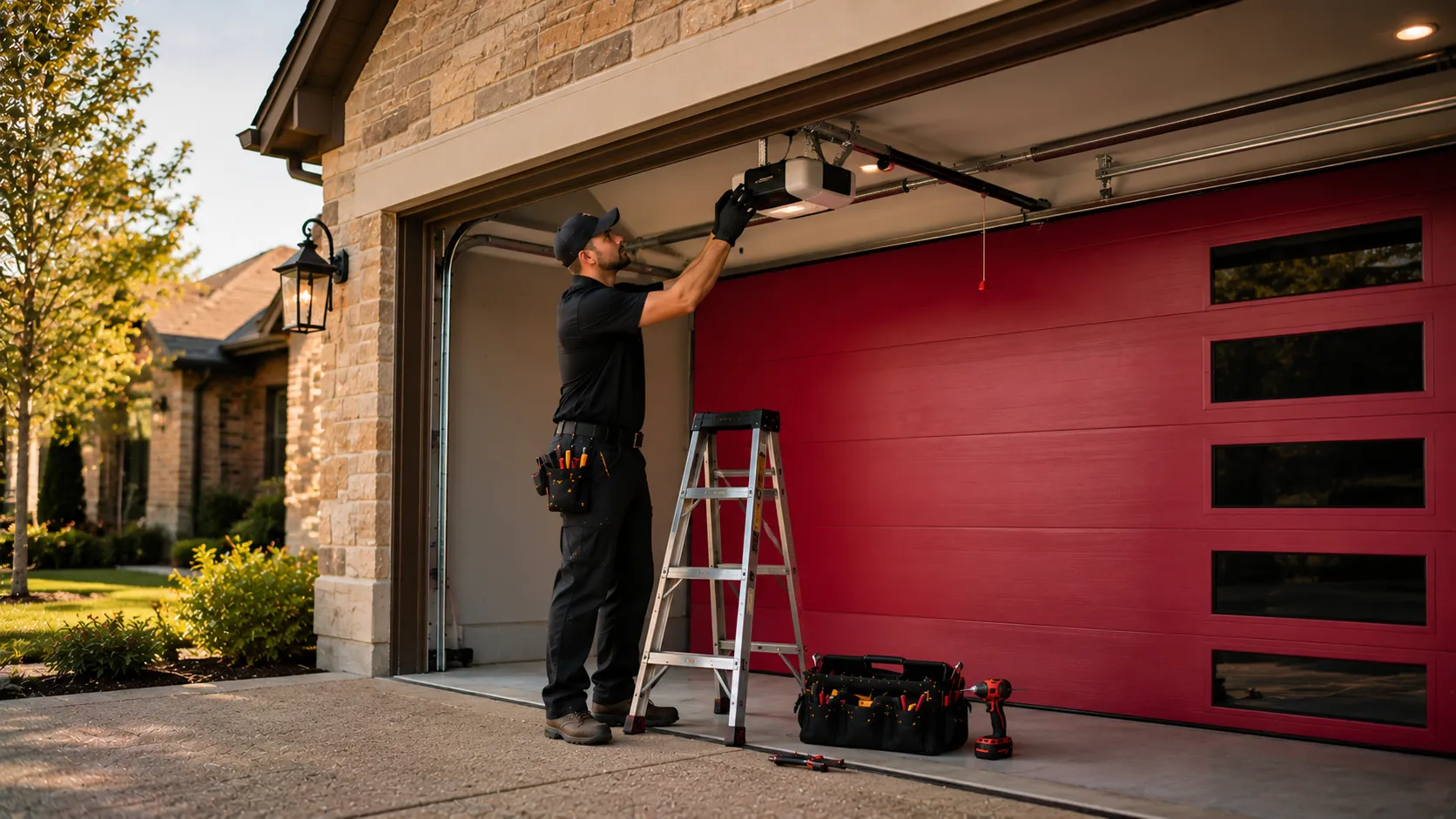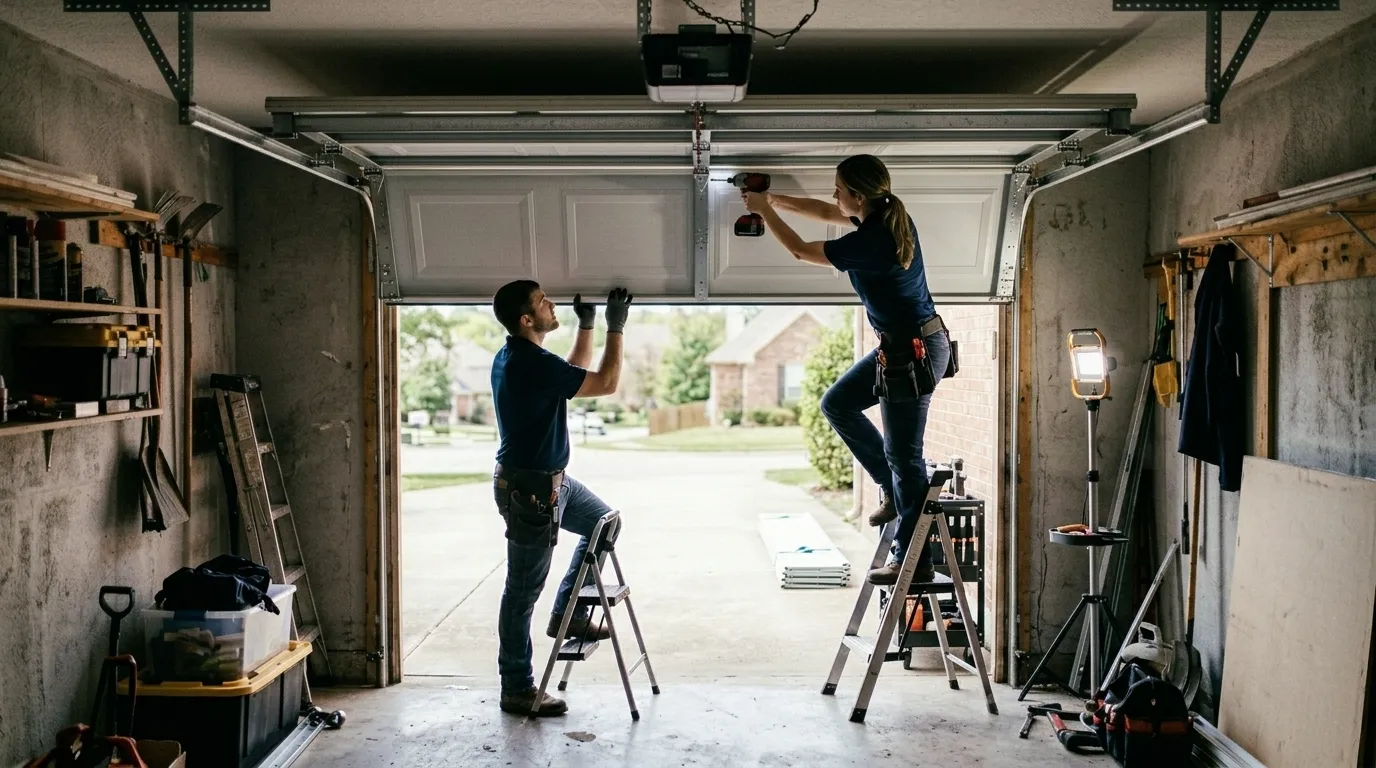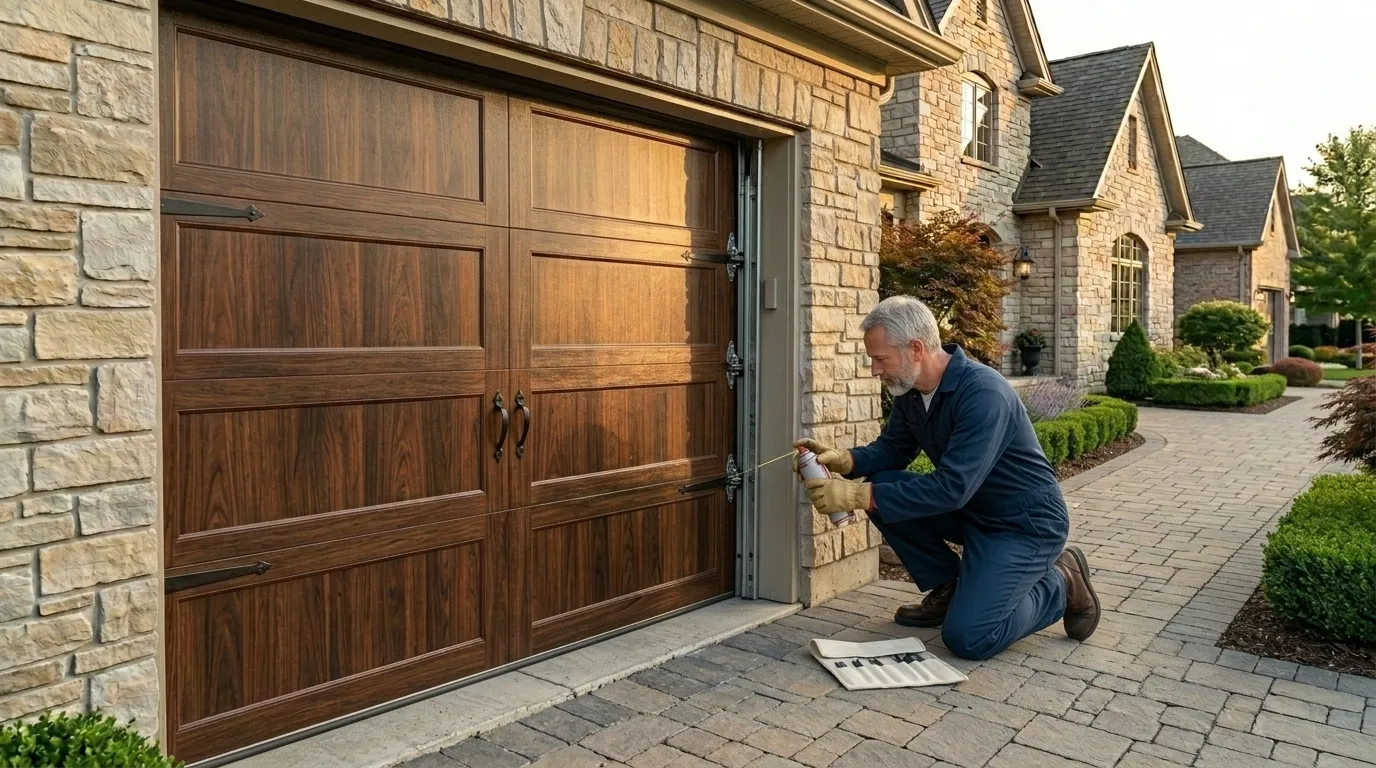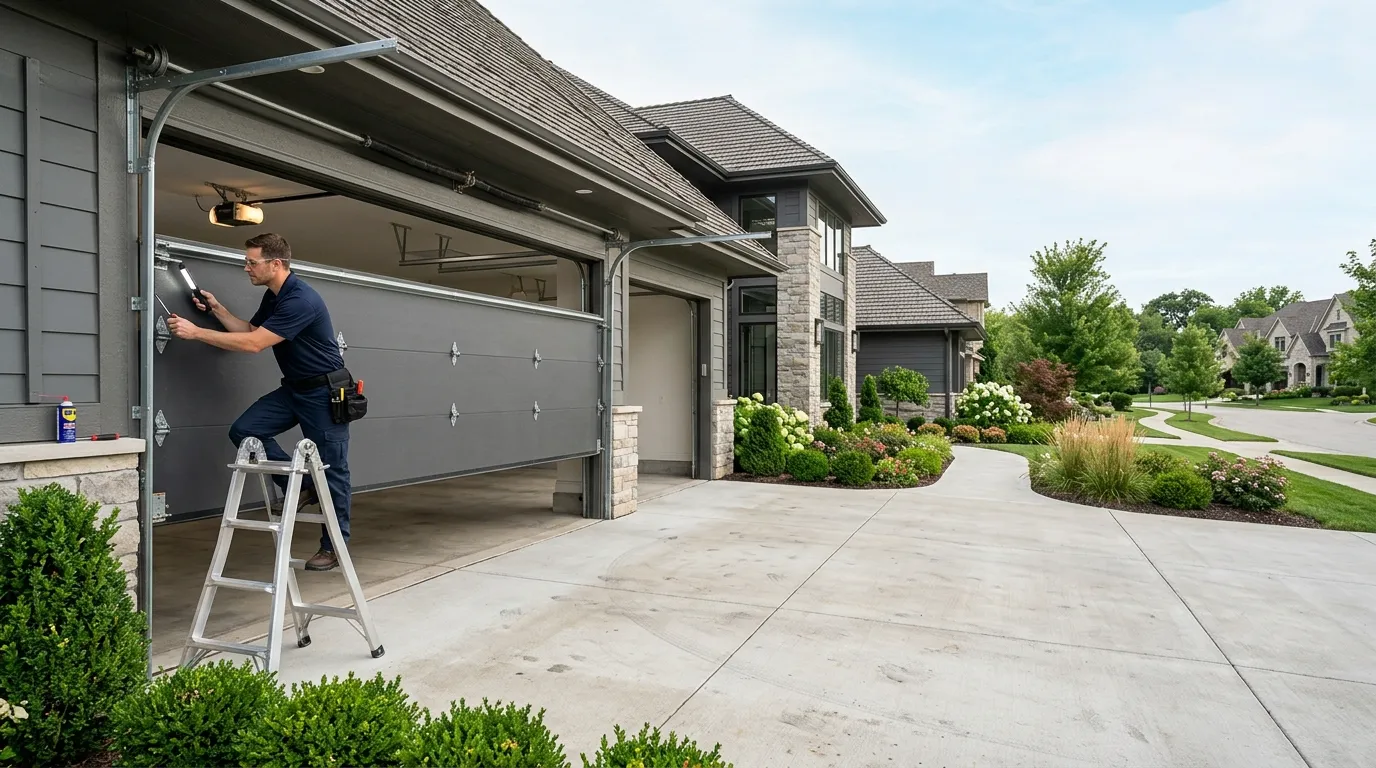
How It Shows Up
Start with the number that actually decides most calls out here: median household income in Chino Valley sits at $59,733. That's the line we work against when a homeowner asks whether to fix a door or replace it. A spring job, a cable, a set of rollers - those stay well inside what a household at that income can absorb without much thought. A full door and opener replacement is a bigger stretch, and at this income level it usually only makes sense once the door itself is failing structurally, not just the hardware on it.
Chino Valley homes carry a median year built of 1999, which puts the neighborhood at the tail end of the broader 1987-1999 build wave that shaped this whole service area. That's a meaningful detail because it tells us what's likely behind the door before we even get there. A door installed in the late 90s is usually on a torsion system rather than the older extension-spring setups you'd find on 1970s stock, and the panels are more likely insulated steel than bare single-layer. The failures we see reflect that: torsion spring fatigue, worn end bearings, and openers original to the house finally giving out after two-plus decades of daily cycles.
Stocked Parts
We run out of Prescott Valley, 11 miles from Chino Valley, and the parts we carry on the truck are picked for the housing stock we actually see out this way - which means torsion springs sized for late-90s sectional doors, standard-drum drums, and the steel rollers and hinges that match that era's hardware, not the older extension-spring parts from earlier decades.
That 11-mile run means a call here isn't a same-day guarantee the way a job inside Prescott Valley proper might be, and we won't pretend otherwise. If a repair needs something outside the common sizes - an odd-width panel, a discontinued opener logic board - that's an order-in part, and we'll tell you the lead time straight instead of guessing at a date.
What Can Go Wrong
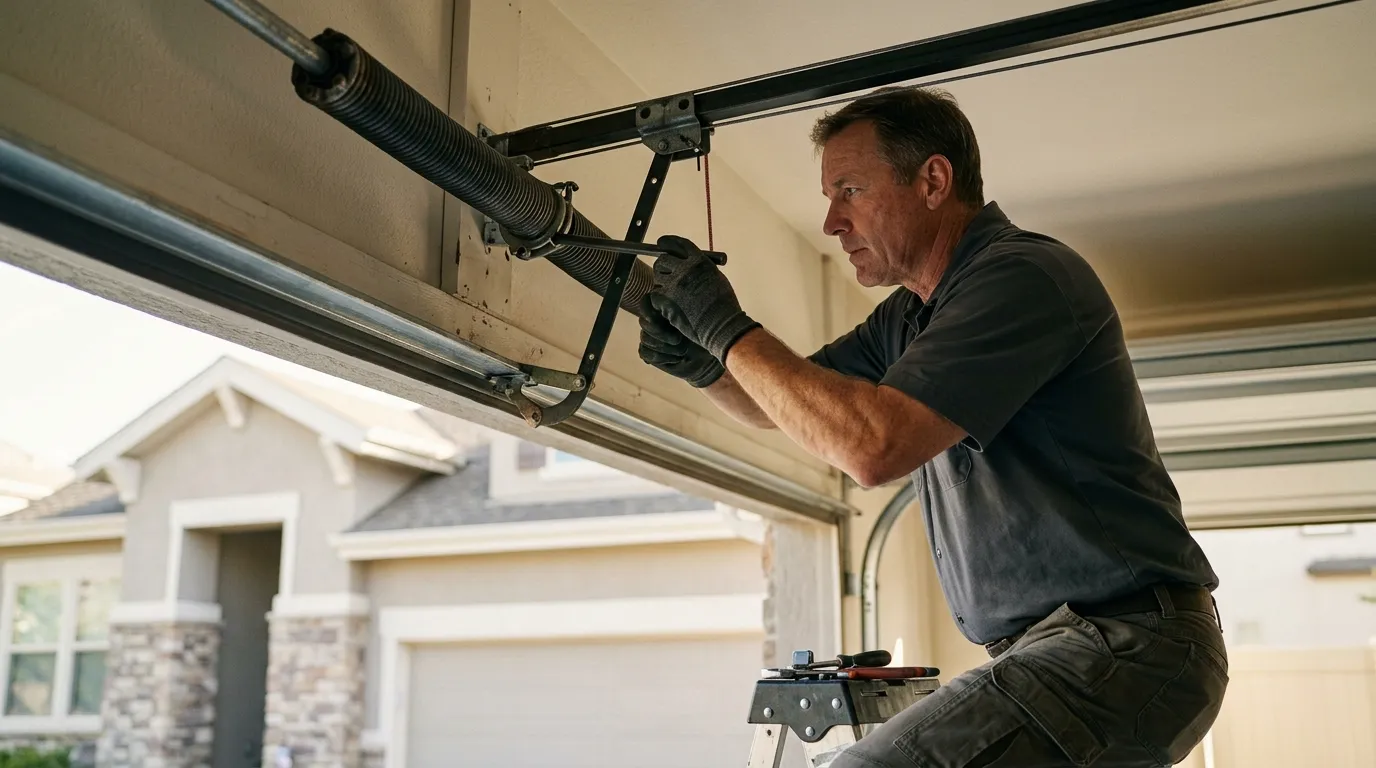
The most common failure on Chino Valley's 1999-median housing stock is a torsion spring that's simply reached the end of its cycle count - these springs are rated for a number of open-close cycles, not a number of years, and a door used daily for two decades has usually burned through that rating regardless of how well it was maintained. Second most common: original openers with drive gears worn down to the point the chain or belt slips under load, which sounds like a weak motor but isn't.
We also see bent tracks from a door that's been forced past a jam, and end bearing plates that have worked loose over years of vibration - both minor on their own but both accelerate wear on everything else on the door once they start.
Why This Fails Locally
This isn't a generic wear story - it's specific to what got built here and when. A house with a median build year of 1999 is old enough that its original torsion spring and opener are past or near end of life, but not old enough that the door itself is usually the problem. That combination - aging hardware on a door panel that's often still sound - is exactly the case where repair beats replacement, and it's why the income figure matters as much as the age figure. At $59,733 median household income, most homeowners here are better served putting money into the spring, cable, and opener than into a full door swap, unless the panel itself is cracked, warped, or rusted through.
We won't push a replacement job on a door that just needs its spring and bearings redone. That's the honest limitation worth stating plainly: we sell what the door needs, not what pays more.