How It Shows Up
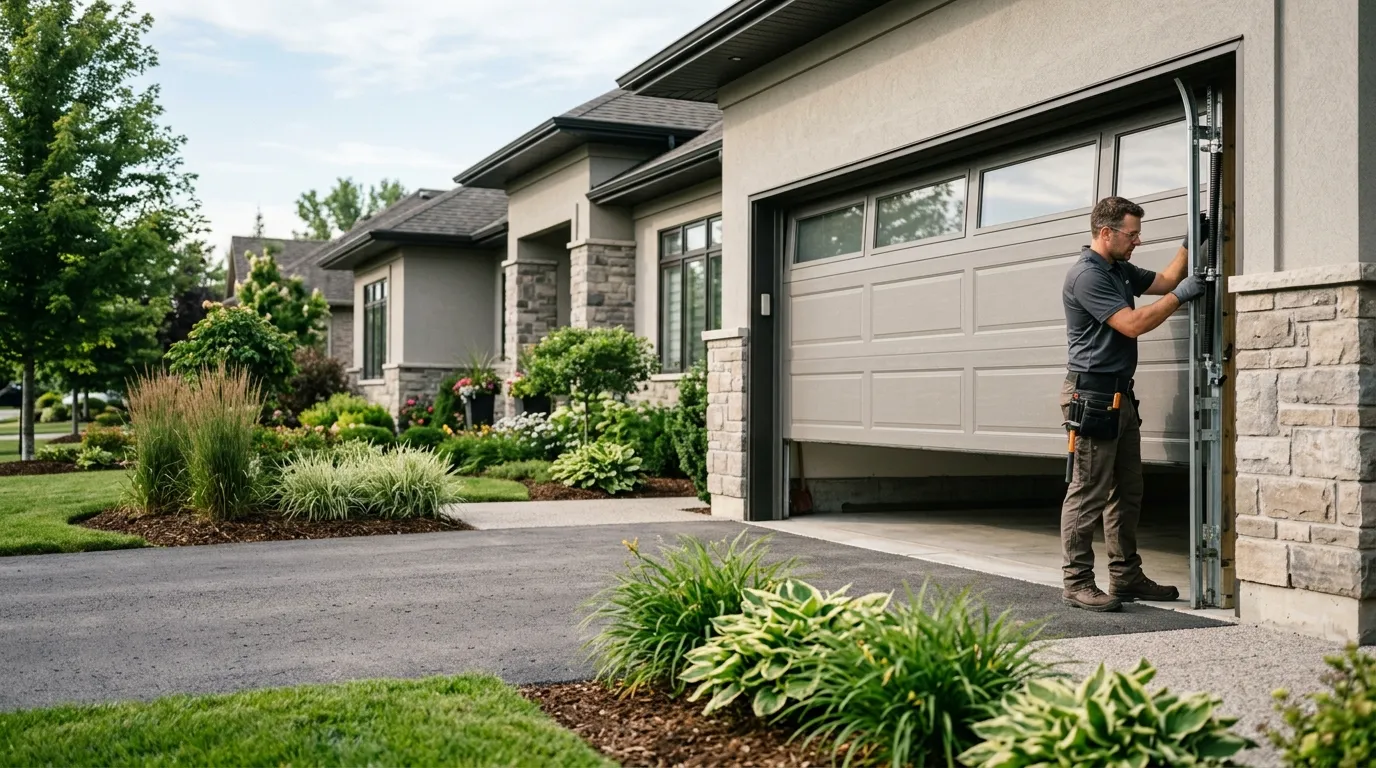
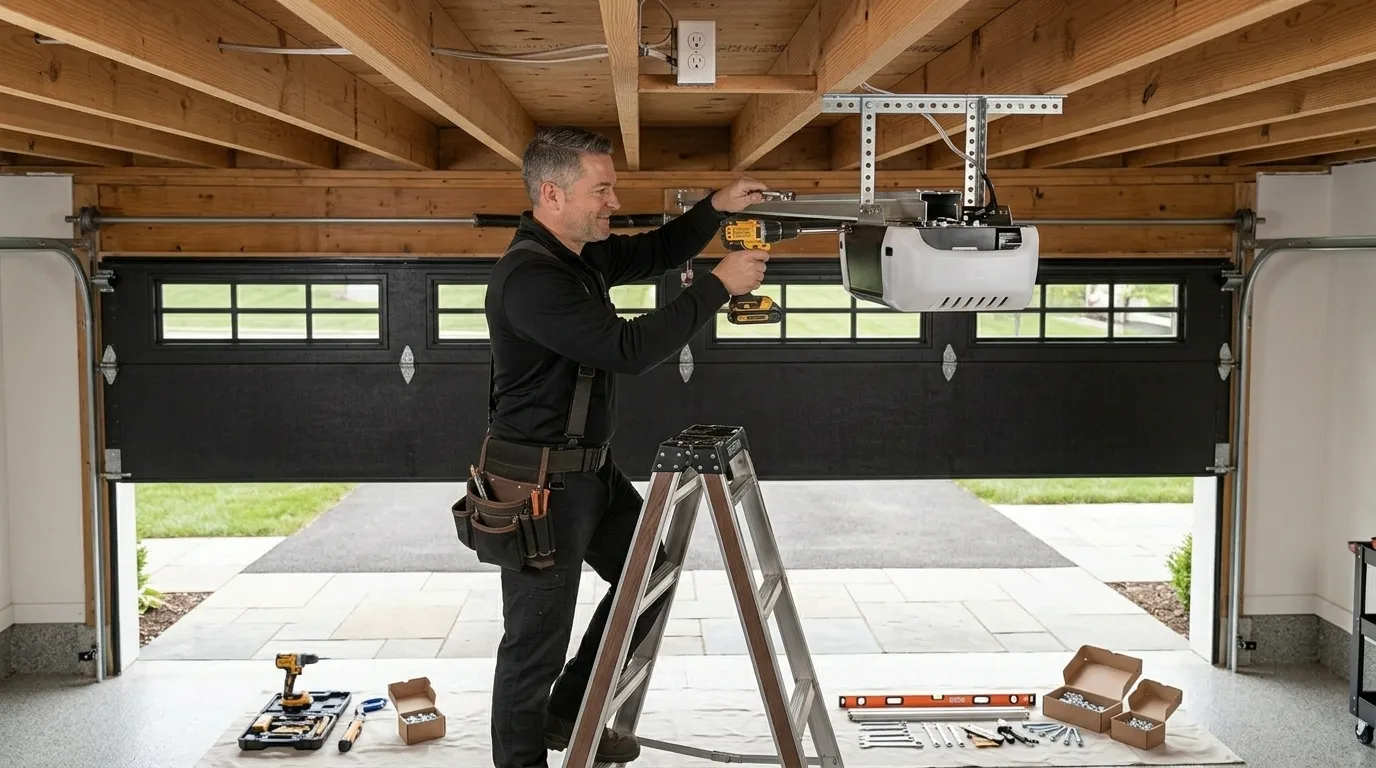
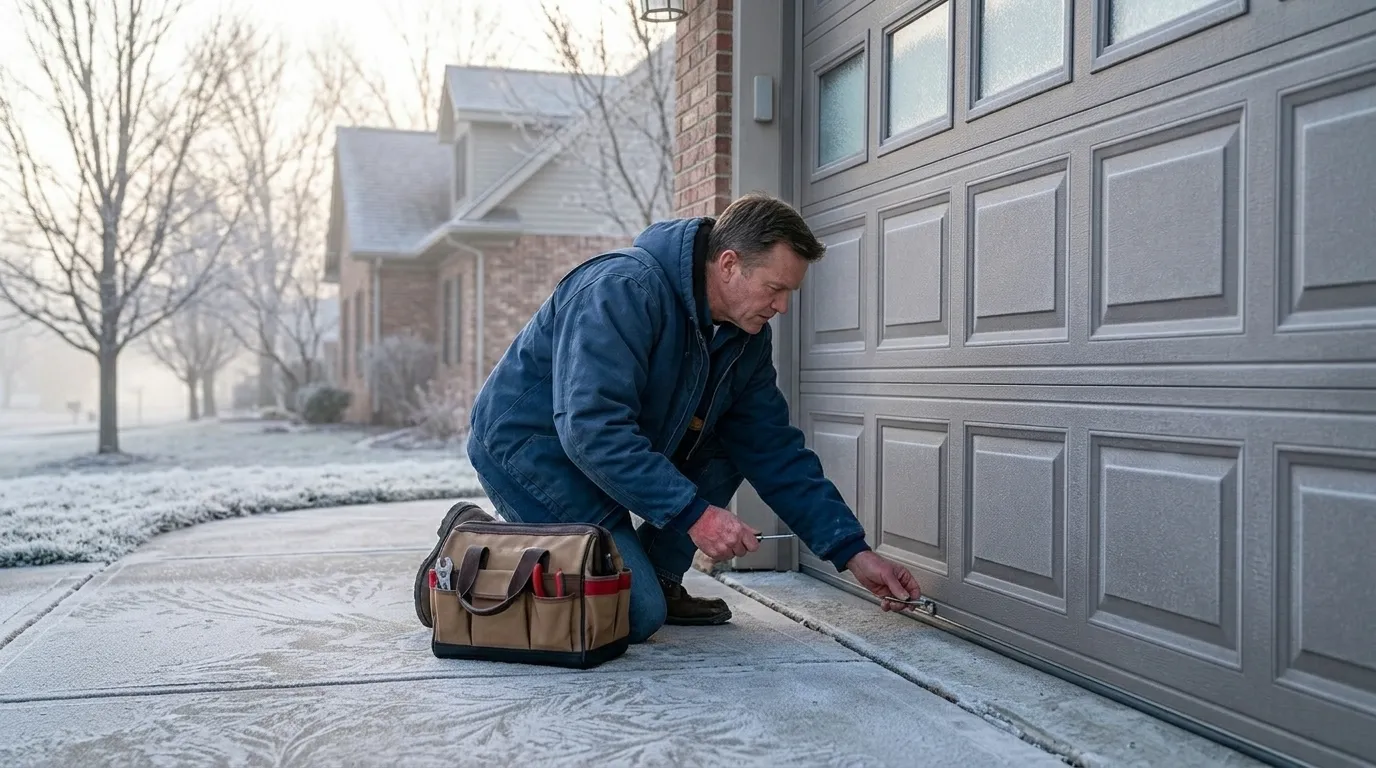
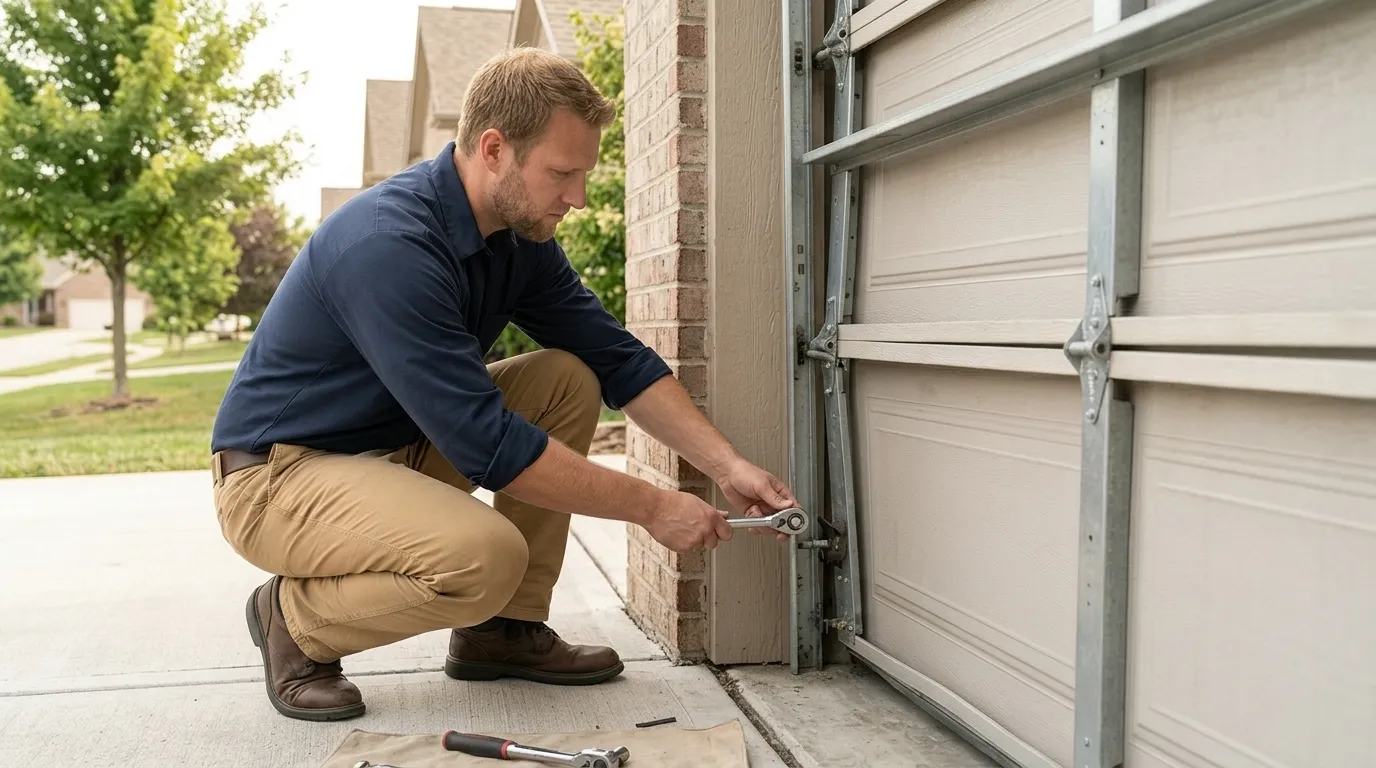
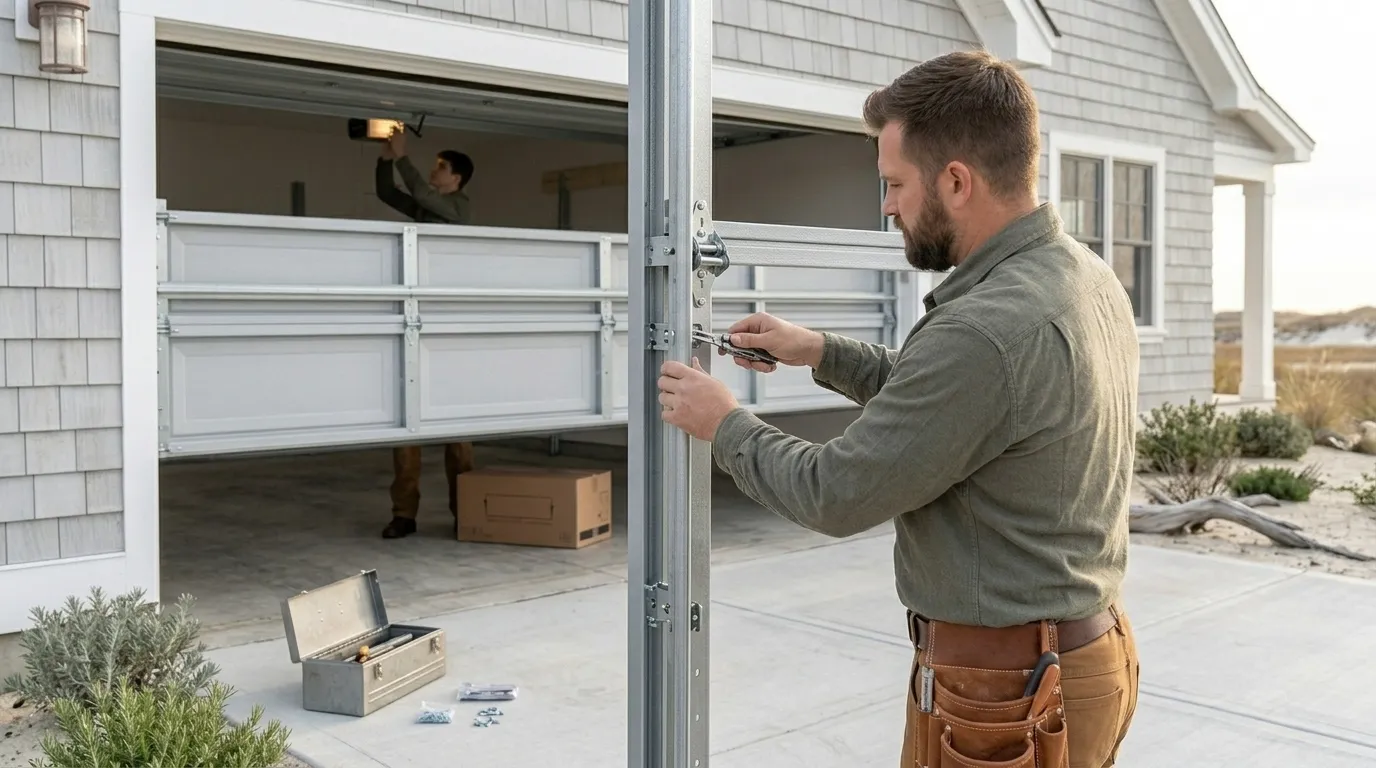
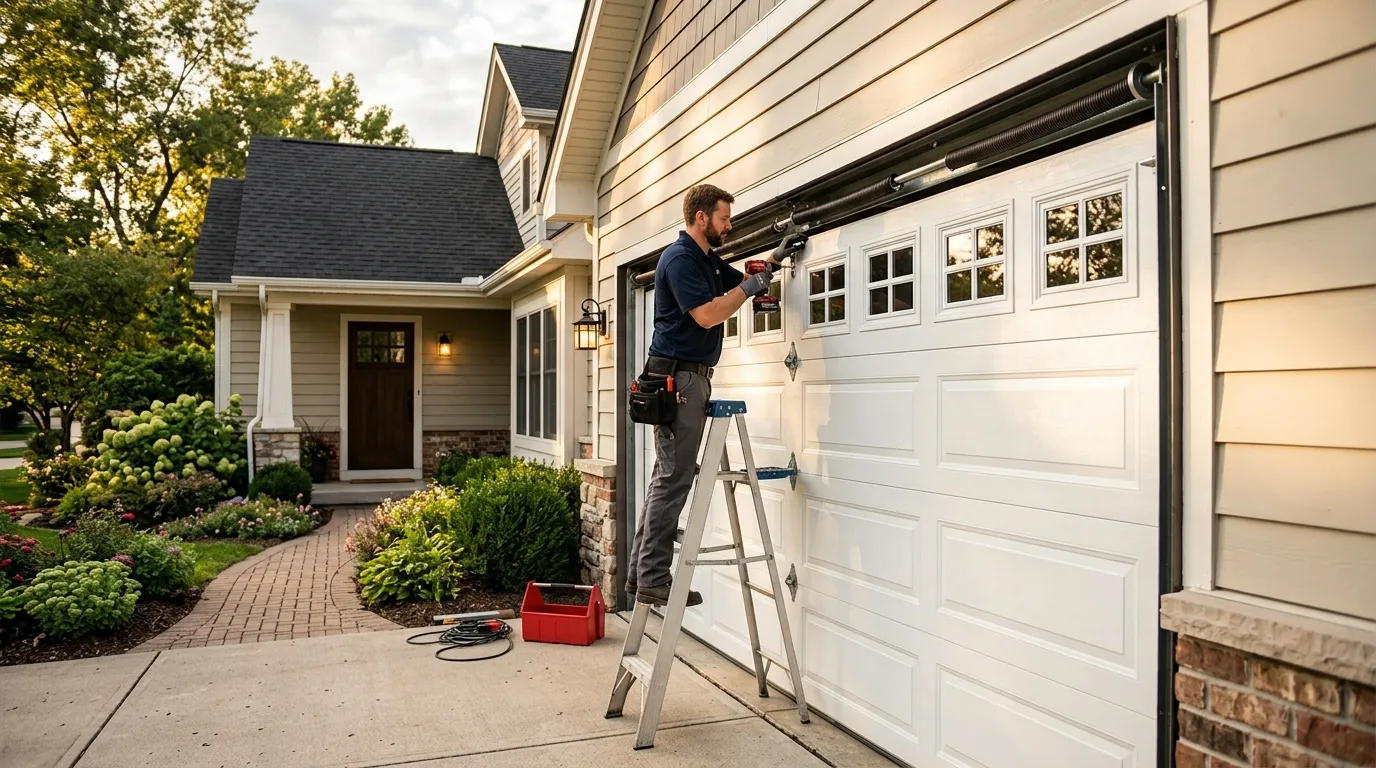
Most calls we get start the same way: the door won't go up, or it goes up crooked and stops halfway. In a town where the housing stock is mostly 1980s and 90s builds spread across five main areas, that usually points to the same handful of parts wearing out at the same time. A torsion spring that's been cycling since the house was built in the early 90s finally lets go, often on a cold morning when the metal is stiff and the extra tension needed to lift the door snaps it. Openers from that era are also reaching the end of their gear life, so a dead opener and a tired spring showing up in the same month isn't a coincidence - it's the age of the neighborhood catching up all at once.
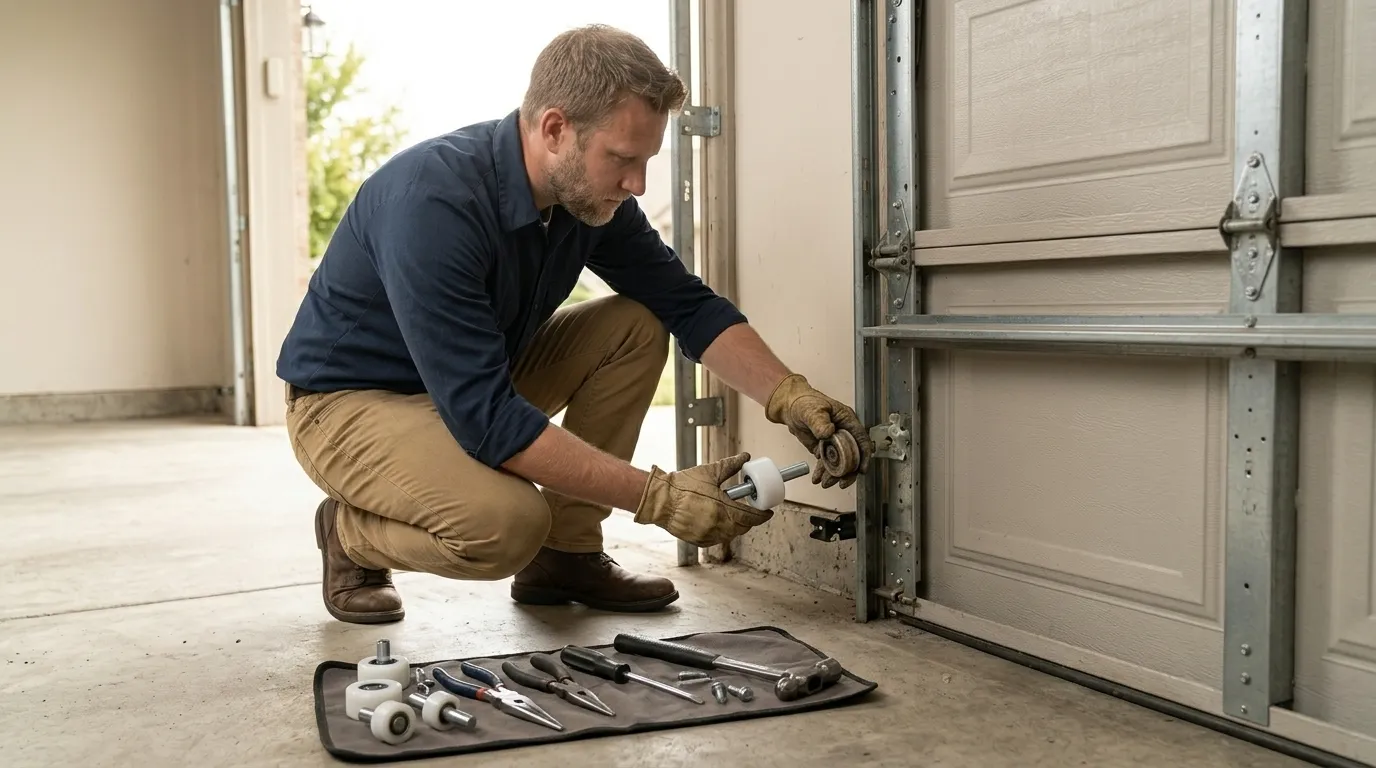
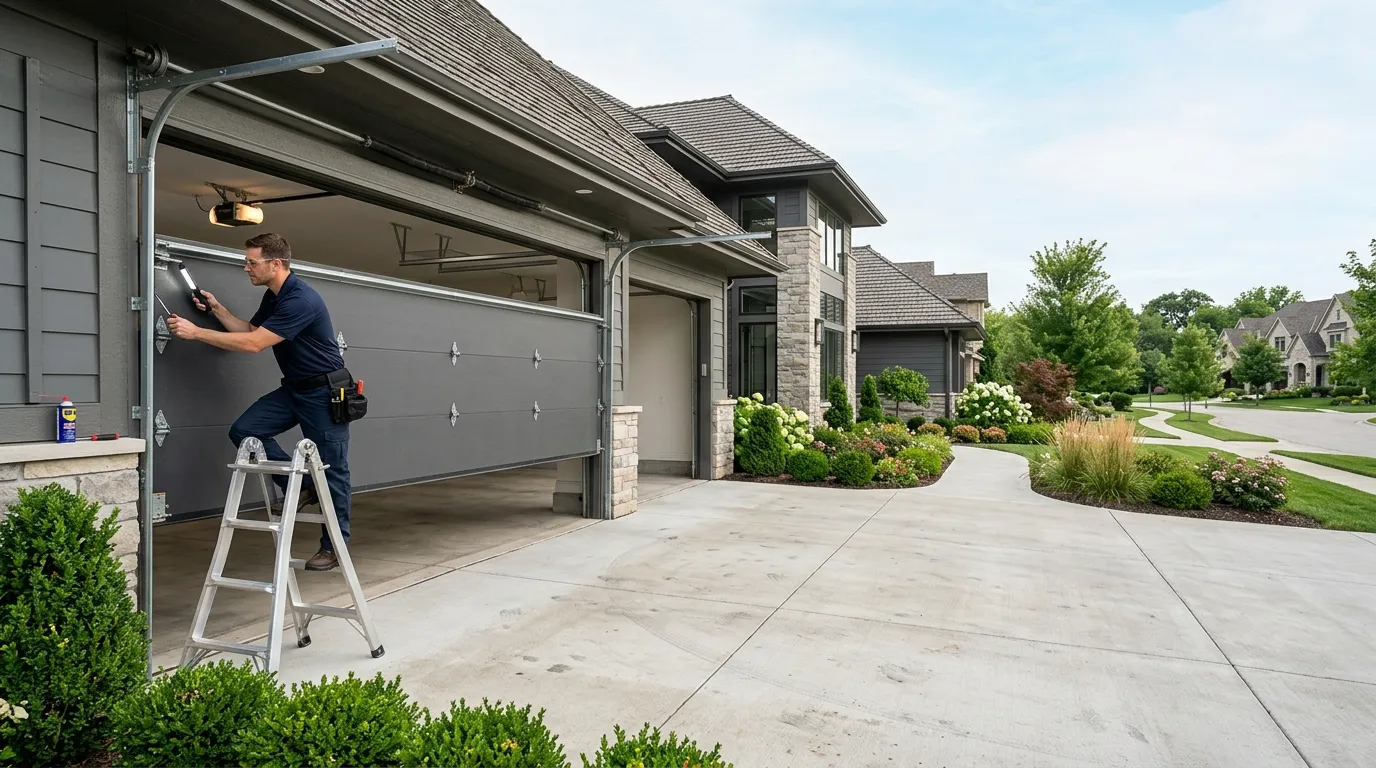
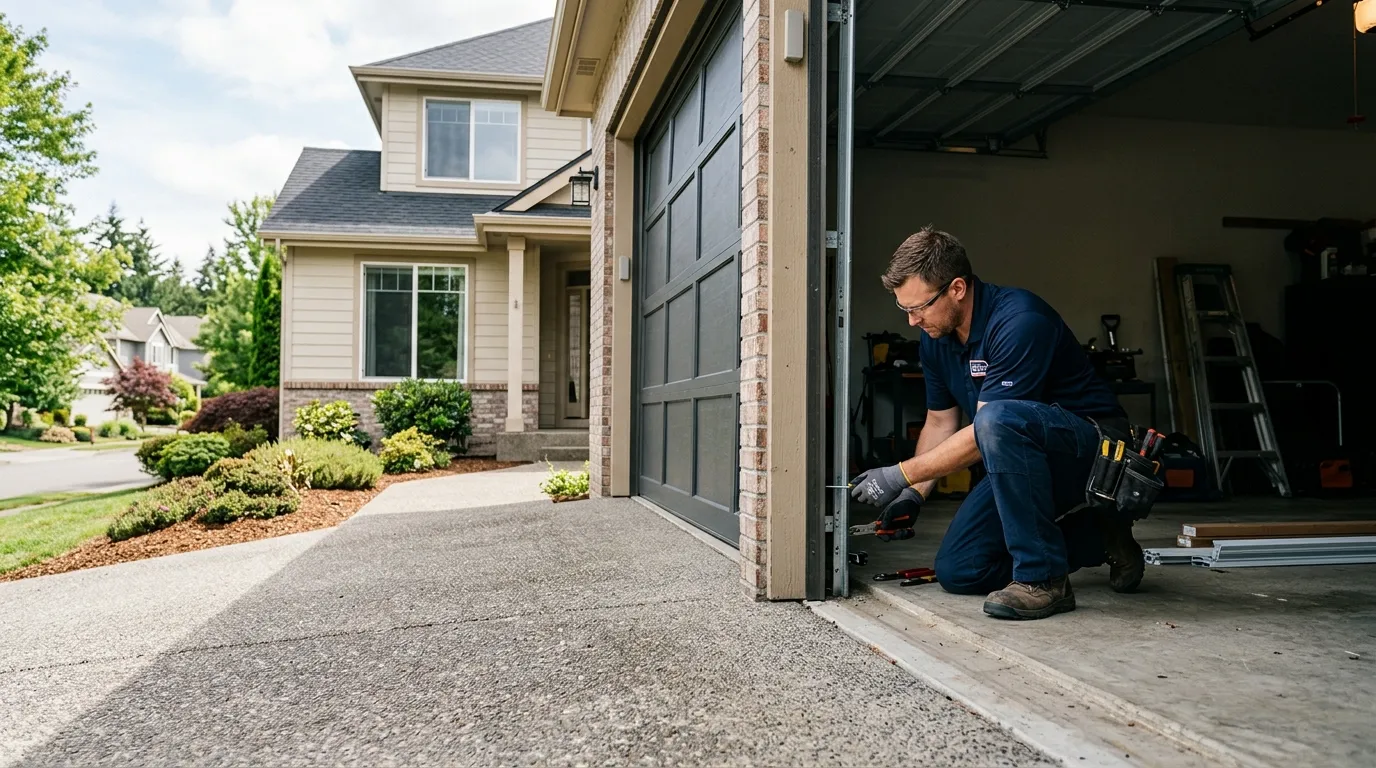
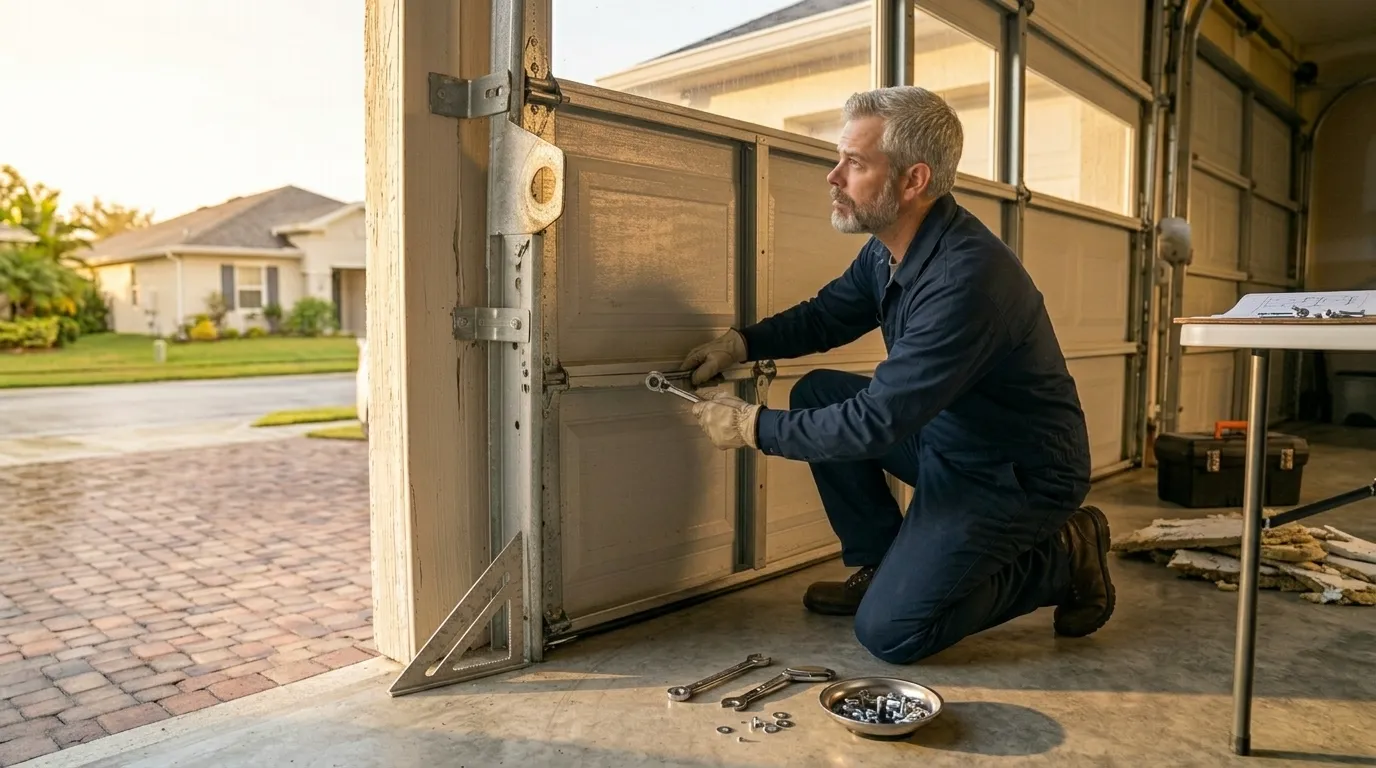
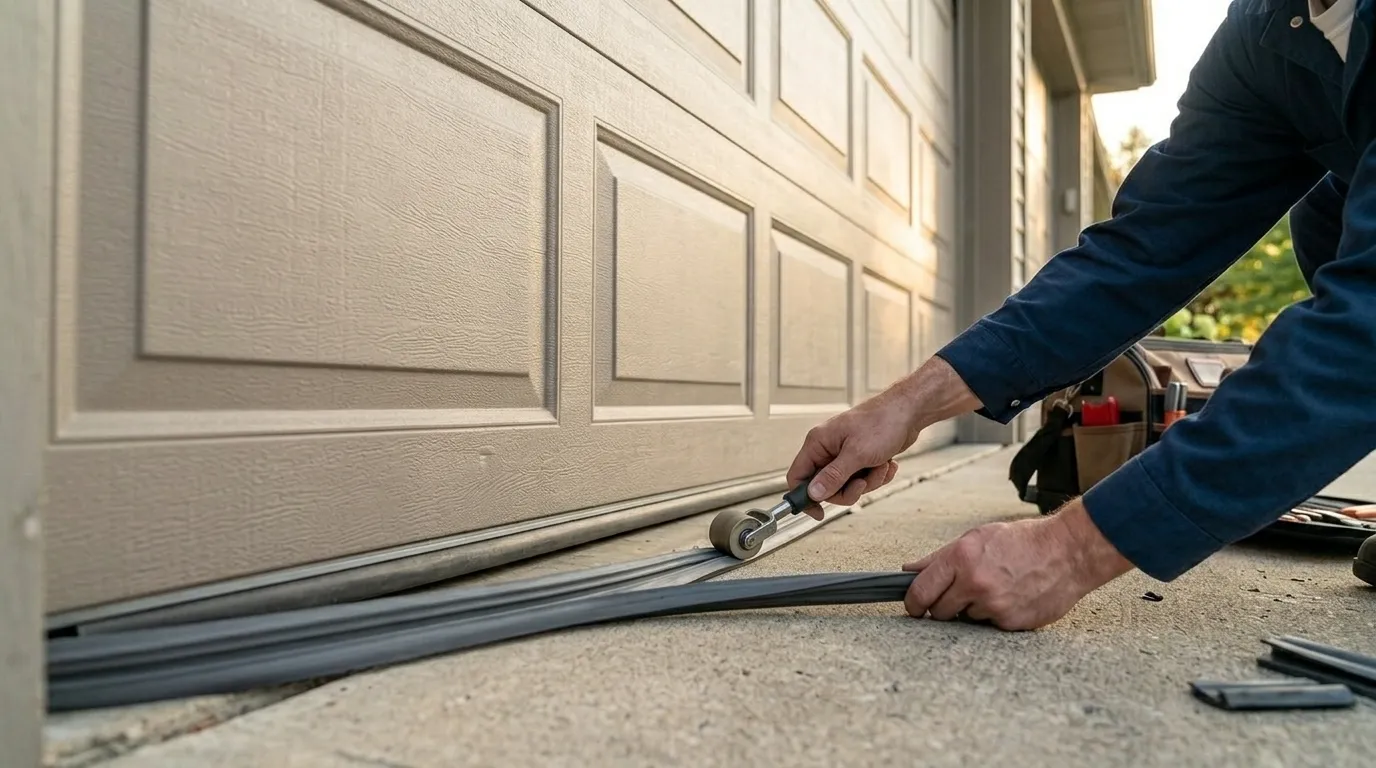
Rollers rattling in the track, cables fraying at the bottom bracket, and panels that won't seat right against the weather seal are the other common ones. None of these are exotic problems. They're what you'd expect from a door system that's been doing its job for two to three decades without anyone touching the hardware.
Why This Fails Locally
Prescott Valley sits in a cold-moderate climate band, which means real temperature swings between summer afternoons and winter mornings - not extreme heat like the low desert, but enough cold to matter for steel. Torsion springs lose flexibility as the temperature drops, and a spring that's already near the end of its rated cycle count is far more likely to snap on a cold morning than a mild one. With most homes here built between 1987 and 1999, a lot of original springs are past or near their expected lifespan right when the daily cold-to-warm swing is putting the most stress on them.
The other piece is consistency of build. Since the housing stock across the service area is fairly uniform - 80s and 90s construction rather than a mix of old and new - a huge share of doors in town are aging out on a similar timeline. That's different from a town with scattered construction decades; here, when one spring on a street goes, the neighbor's is usually close behind on the same wear curve.
The Cost of This Job
What a repair runs depends on what's actually broken - a single spring replacement is a different job than a spring plus rollers plus a cable, and an opener swap is different again. We don't publish a flat number because the honest answer is it varies with the parts needed and the door size.
What we can say is that with median household income in the service area at $59,733, we know most jobs here need to be priced like a repair bill, not a remodel. We'll always look at whether a repair gets the door back to reliable first, and only recommend full replacement when the door or opener is old enough that patching it means paying twice.