Checking It Yourself
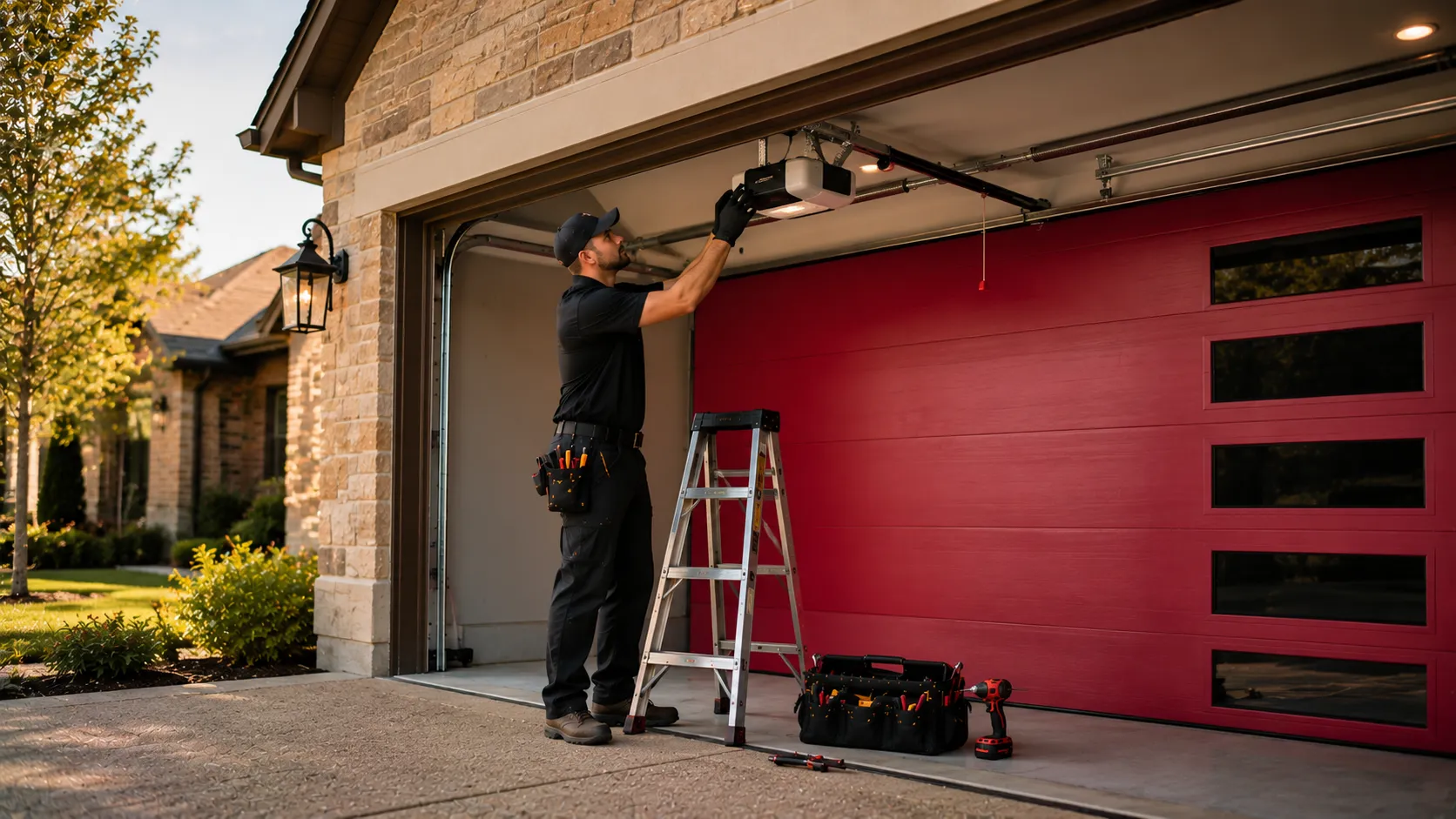
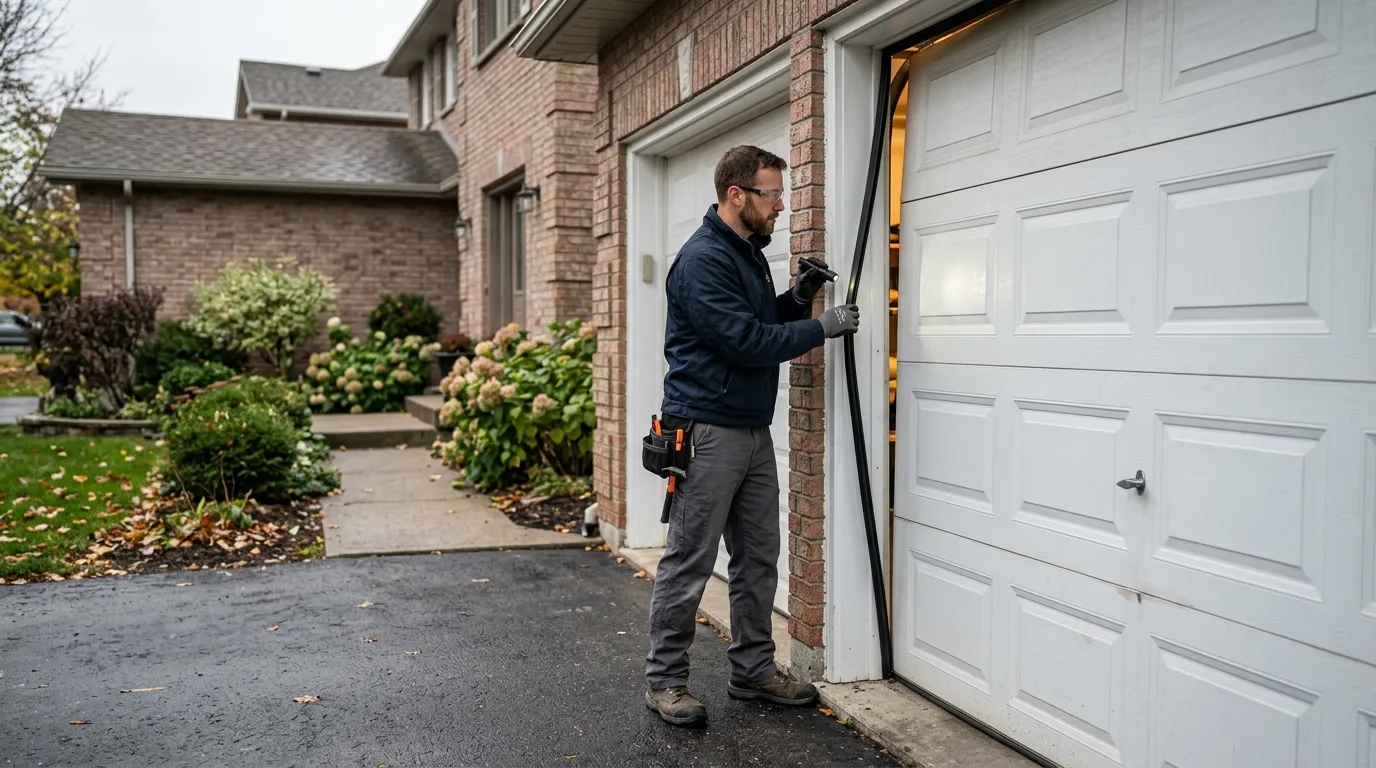
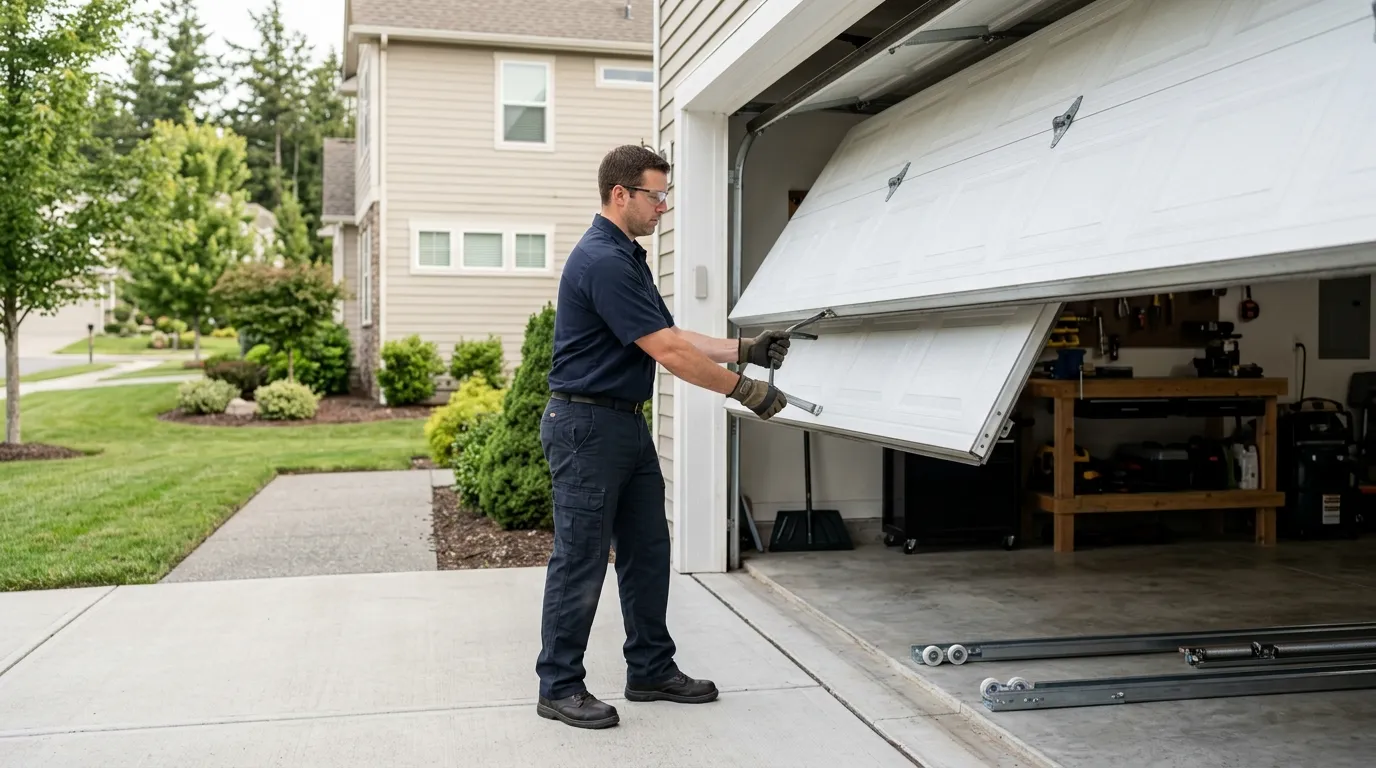
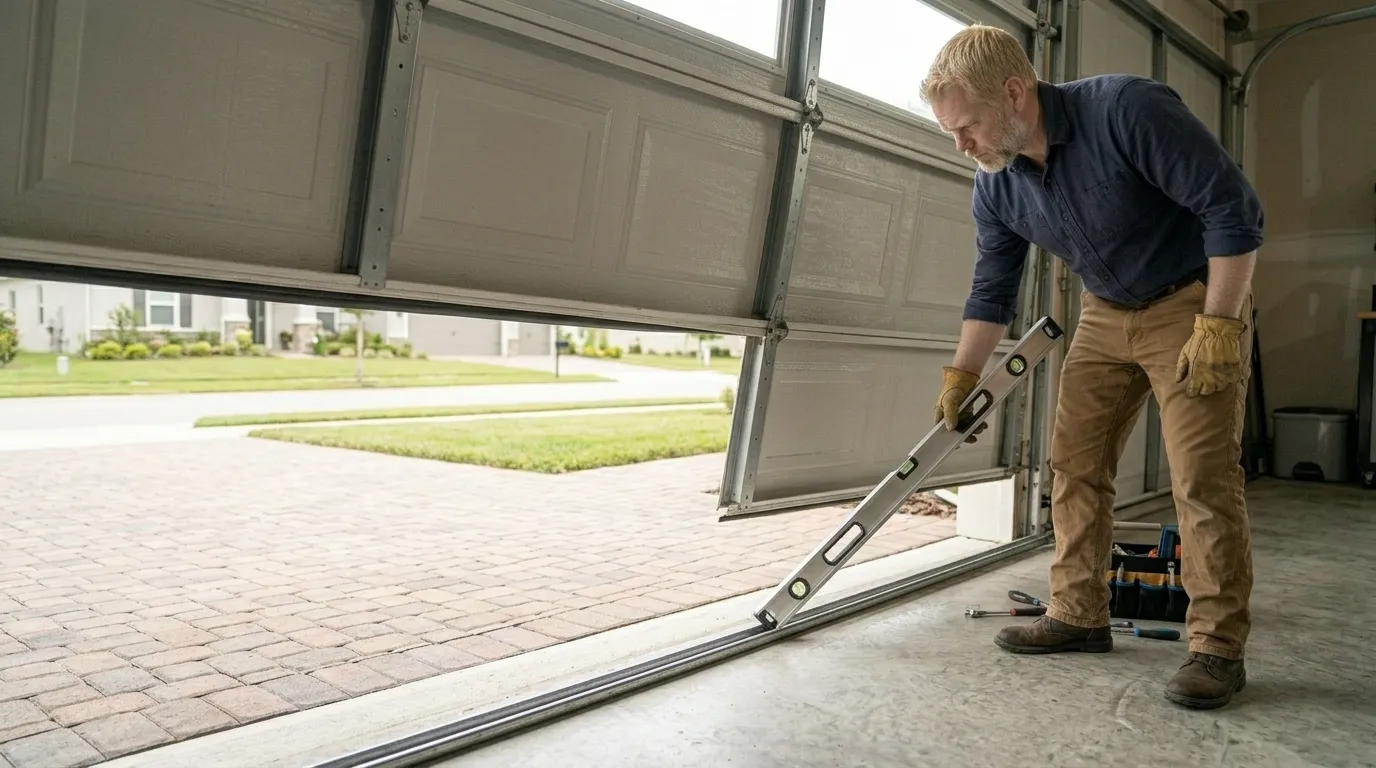
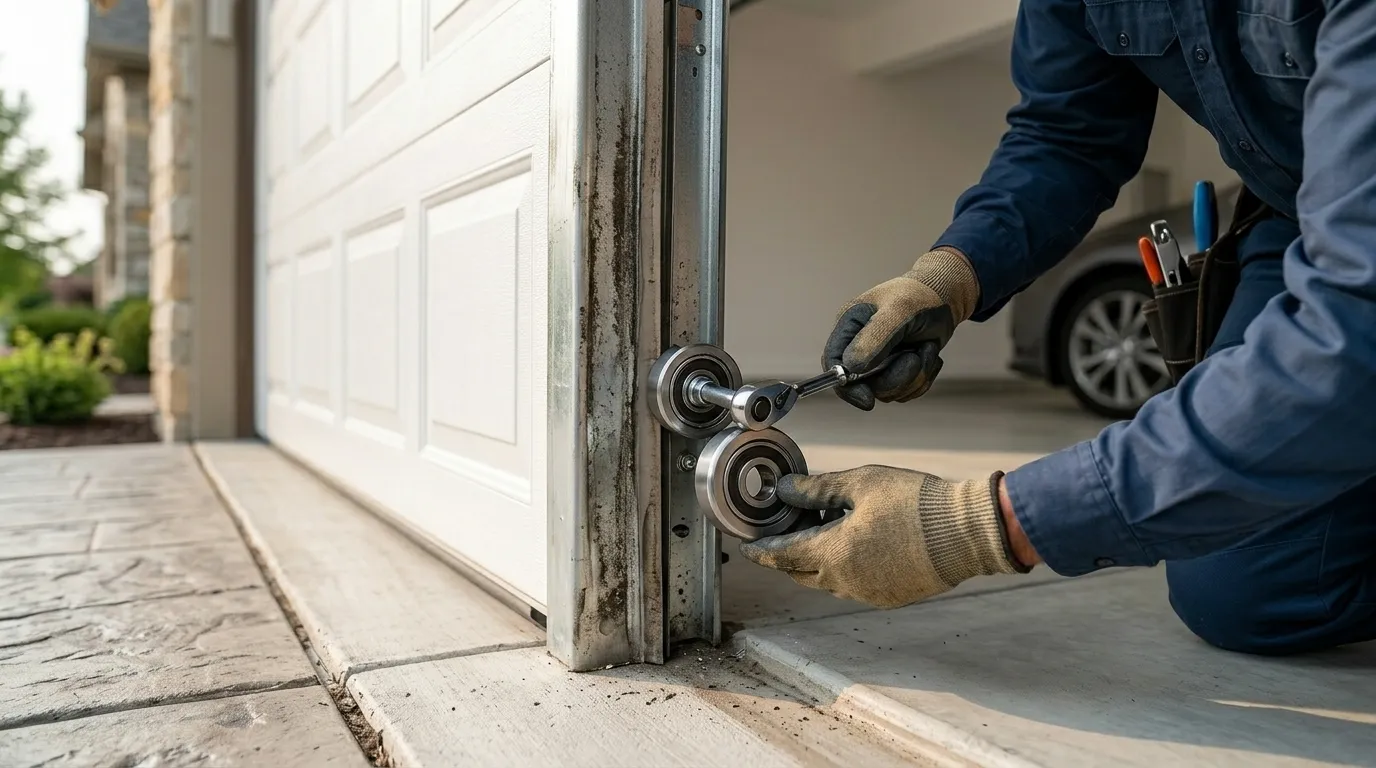
Before you call anyone, look at three things. First, the springs - if you see a gap in the coil or hear a bang followed by a door that won't lift, that spring is done, and on a door this age it's a straightforward swap, not a sign the whole unit is failing. Second, the track. Run your hand along it (door closed, opener unplugged) and feel for rust pitting or bends where the rollers ride. Surface rust is fine. Pitting deep enough to catch a fingernail means the track is wearing unevenly and will keep throwing rollers. Third, the panels themselves. Most doors in Prescott Valley date to the 1987-1999 building wave, and steel panels from that era don't rust through the way an older wood door would - but the foam-core insulation inside can separate from the skin after enough winters, which shows up as a hollow sound when you knock on the lower panel. None of this takes more than ten minutes, and it tells you whether you're calling about a $200 part or a $2,000 decision.
The Problem
A door built between 1987 and 1999 is now on its third or fourth decade, and the hardware that came with it wasn't built to last that long - it was built to code for that year. Torsion springs from that era are rated for fewer cycles than what's sold today, and a lot of homes here are hitting that cycle limit within a few years of each other, simply because the houses went up around the same time. That's a pattern we see across the five main housing pockets in town, not a one-off. The honest limitation: once a panel's insulation has separated or the bottom section has rusted through at the weather seal, we won't spend your money patching it. At that point the door is worth replacing, not repairing, and we'll tell you that instead of billing for a fix that won't hold.
Season by Season
Fall is the time to check weatherstripping and lubricate track and hinges before the cold sets in - a five-minute job that keeps hardware from binding once temperatures drop. Winter is when fatigued springs actually fail, so if a spring is showing wear signs in October, don't wait for it to break on a January morning. Spring is worth a full hardware check once the freeze-thaw cycling eases up - look for hinges that loosened over winter and cables that frayed under the extra cold-weather load. Summer is the slow season for us and the right time for anything non-urgent: track alignment, panel inspection, or planning a replacement if your door's insulation has failed. Given the median household income here, a lot of owners choose to spread a full replacement into the summer rather than face it as an emergency repair in January - and that's a reasonable way to plan it if the door isn't already leaving you stuck.