Checking It Yourself
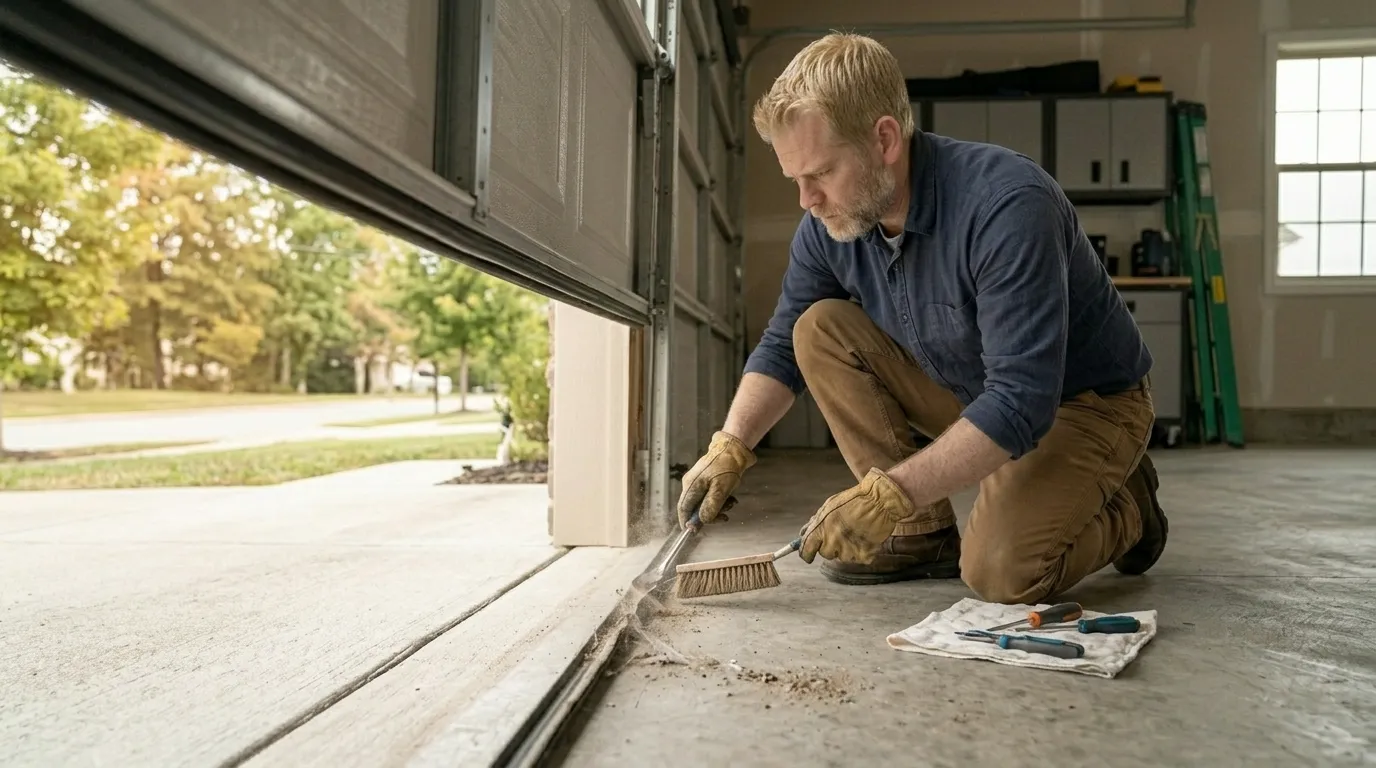
Before you call anyone, look at the spring itself. Most garage doors in Prescott Valley are still running the torsion spring that came with the house, and if your place went up in that big 1987-1999 building push, that spring is doing its job on borrowed time. Stand clear of the door and look at the coils above the header. A gap between coils, or one coil sitting noticeably wider than the rest, means the spring has already given way even if the door still moves.
Next, check the lift cables on either side of the door. Fraying near the bottom bracket, or a cable that looks slack on one side and tight on the other, tells you the spring on that side has lost tension and the cable is compensating. Don't try to open the door by hand to test this - a spring under partial load can move fast.
One honest note: if you hear a loud bang from the garage on a cold morning and the door won't budge, stop opening it with the wall button. Running the opener against a broken spring puts the full weight of the door through the opener's gears, and that's a second repair you don't need. Disconnect the opener, leave the door down, and get it looked at.
The Problem
A torsion spring is wound steel, and wound steel behaves differently at 25 degrees than it does at 75. Cold makes the metal less forgiving right at the moment it's already fatigued from years of cycling. That combination is why so many spring calls here land in the cold months rather than spread evenly through the year.
Age is the other half of it. With most housing in Prescott Valley dating to 1987-1999, a lot of original springs are now 25 to 37 years old. Across the roughly 8,835 owner-occupied houses in the service area, a meaningful share were built in that same window, which means a meaningful share are carrying original hardware that was never meant to last this long.
We won't tell you every old spring is about to go. Plenty of them are fine. But a spring that's already stressed from age doesn't need much of a push from a cold snap to finish the job. That's the pattern we see, not a guess.
Season by Season
Late fall through early spring is when we see the most spring calls, tracking with the cold-moderate pattern here rather than any one dramatic storm. The door doesn't know the calendar, but the metal responds to overnight lows, and those start showing up well before what most people think of as winter.
Summer is quieter for springs specifically, though heat brings its own wear on openers and rollers - a different conversation. If your house falls in that 1987-1999 build range and you haven't had the spring looked at, the shoulder seasons - the stretch when nights start getting cold but days are still mild - are a good time to have it checked, before the hardware is asked to work in the cold for the first time that year.
If you're out toward Dewey-Humboldt or Chino Valley, the pattern holds the same way; the age of the housing stock matters more than which side of town you're on. What changes is just how far a truck has to travel to reach you.