Checking It Yourself
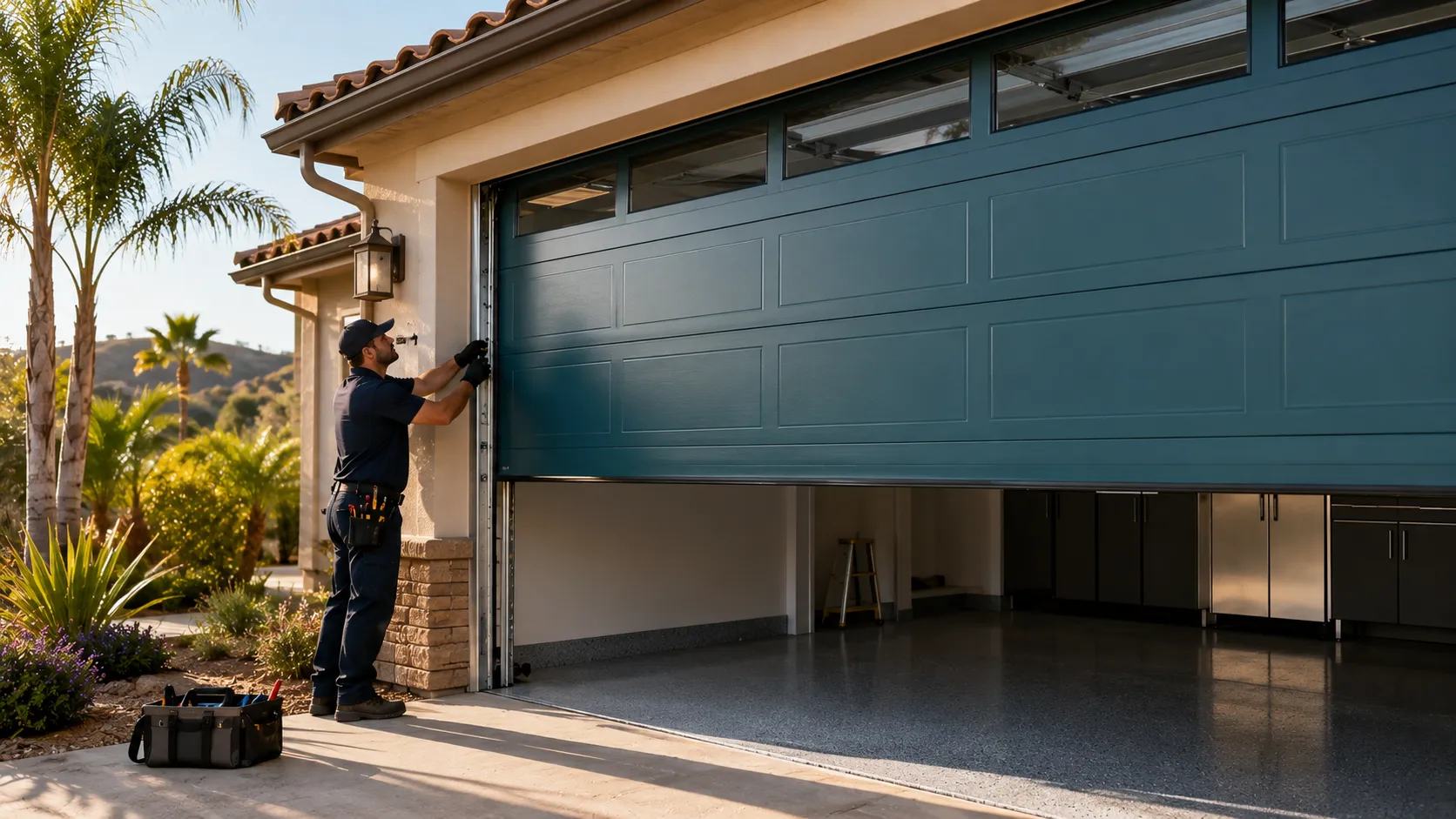
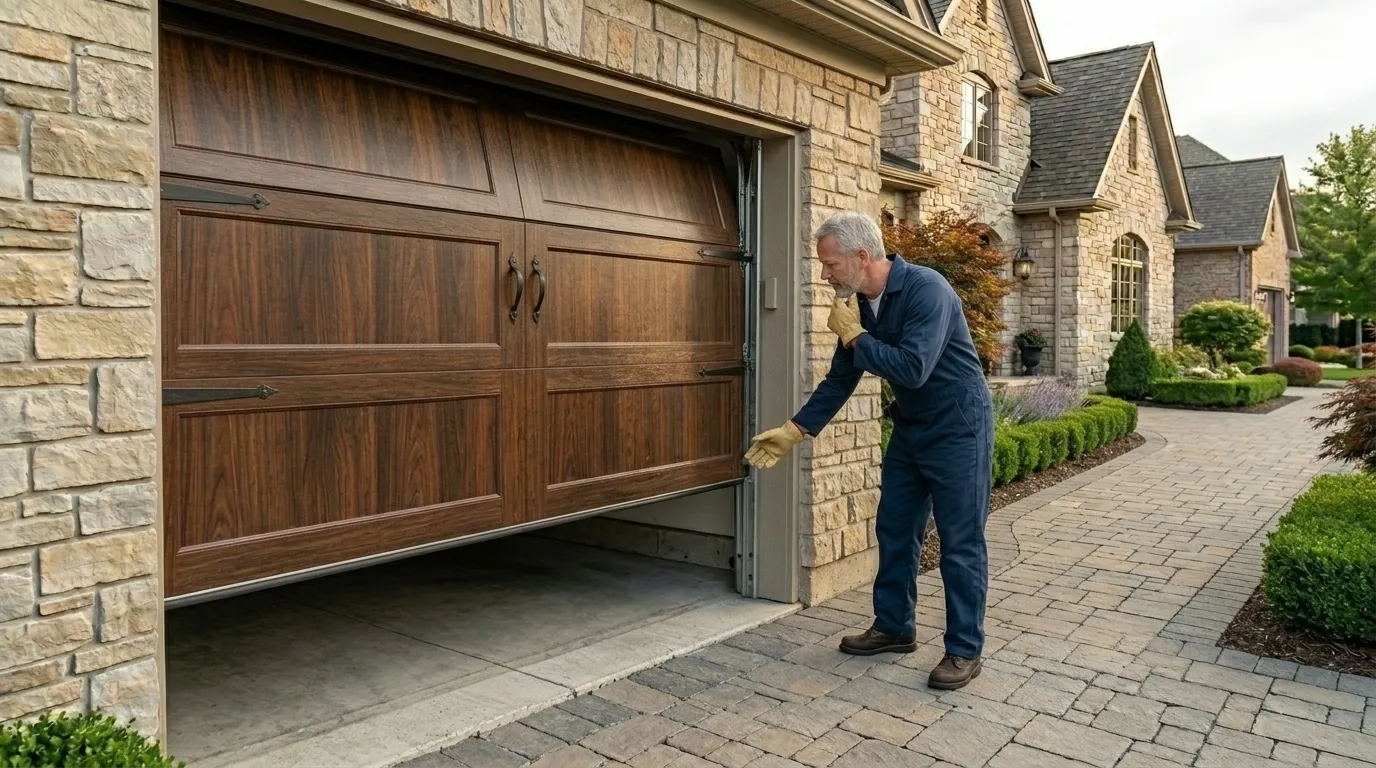
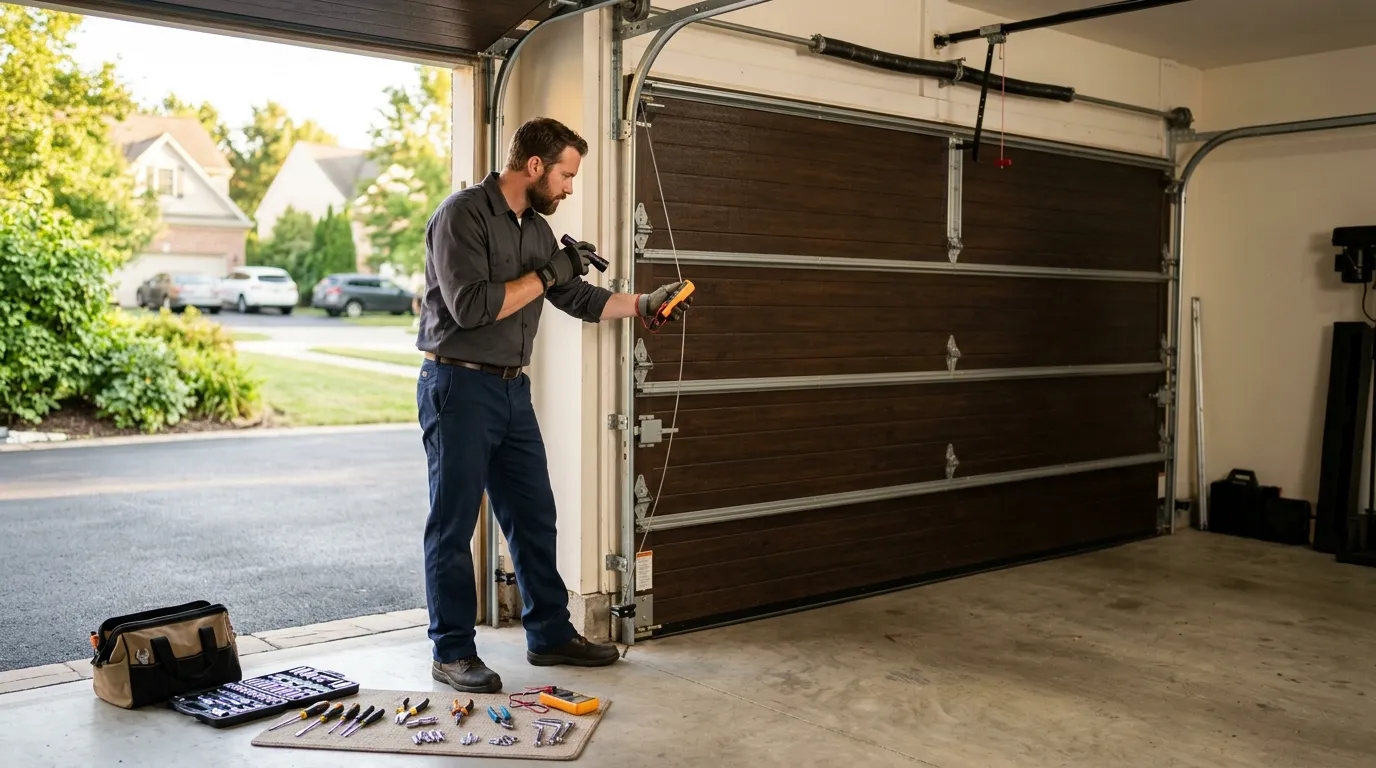
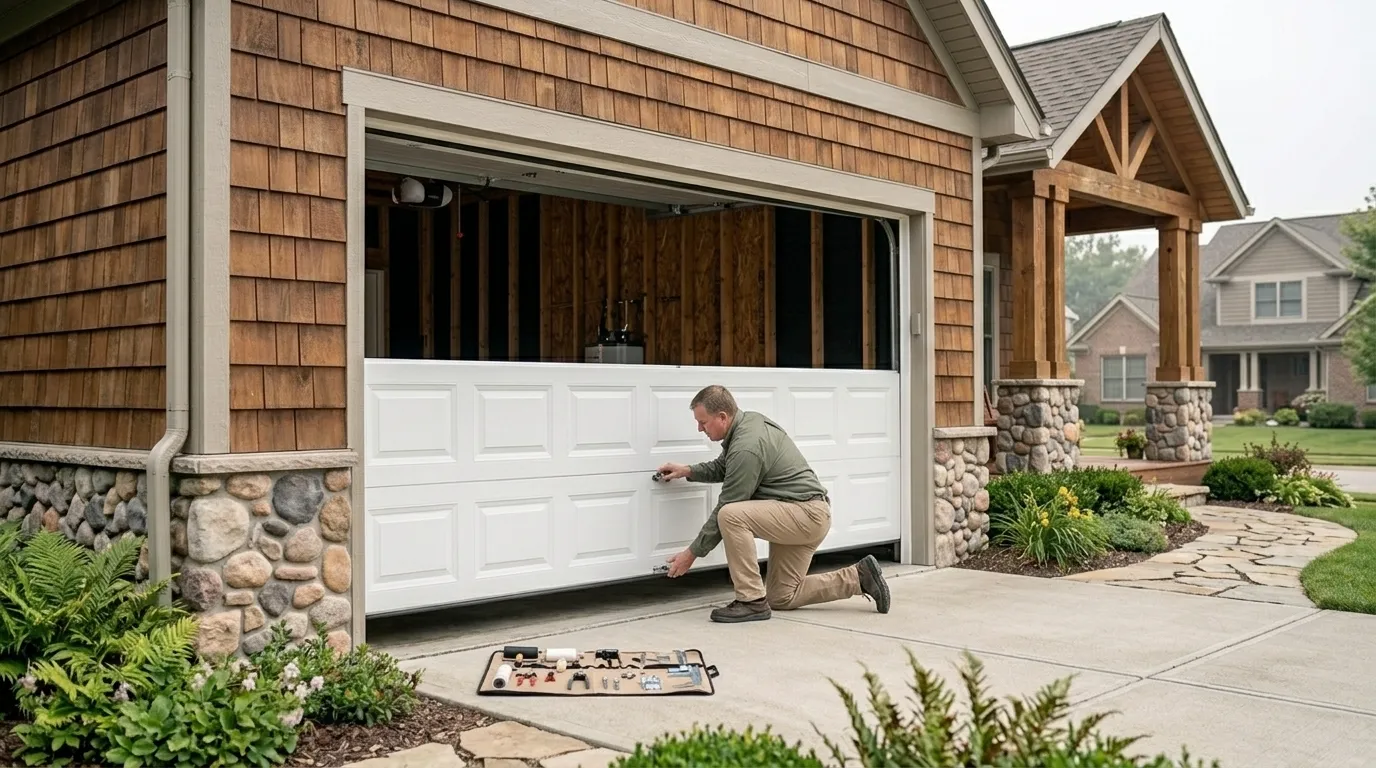
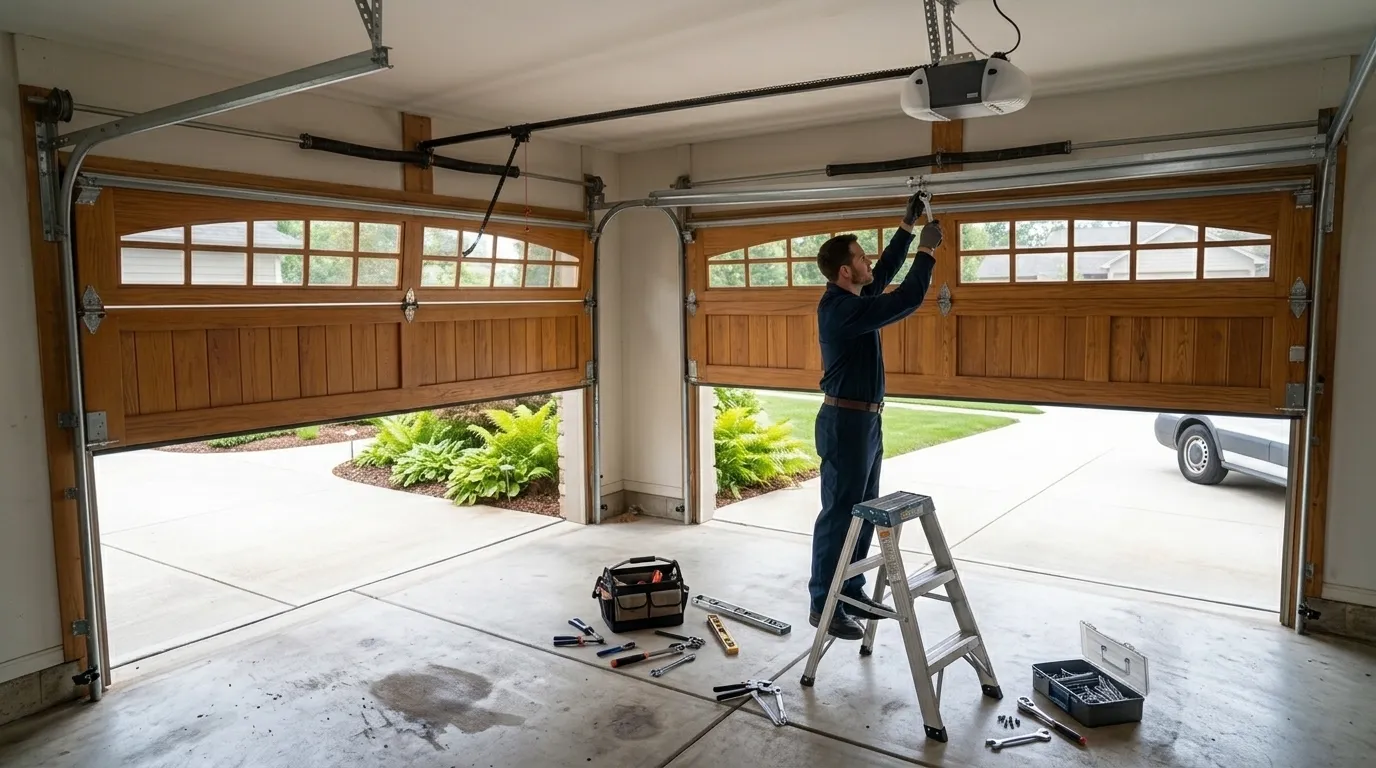
Before you call anyone, look at three things. First, the springs above the door - are they stretched apart with a visible gap, or does one side sag lower than the other? Second, listen to the opener. A grinding or clicking chain-drive unit, common in this area since so much of the housing here was built between 1987 and 1999, tells you the drive gear or sprocket is worn, not necessarily the motor. Third, pull the manual release and lift the door by hand. If it's heavy or drops on its own, that's a spring problem, not an opener problem, and no amount of opener adjustment will fix it.
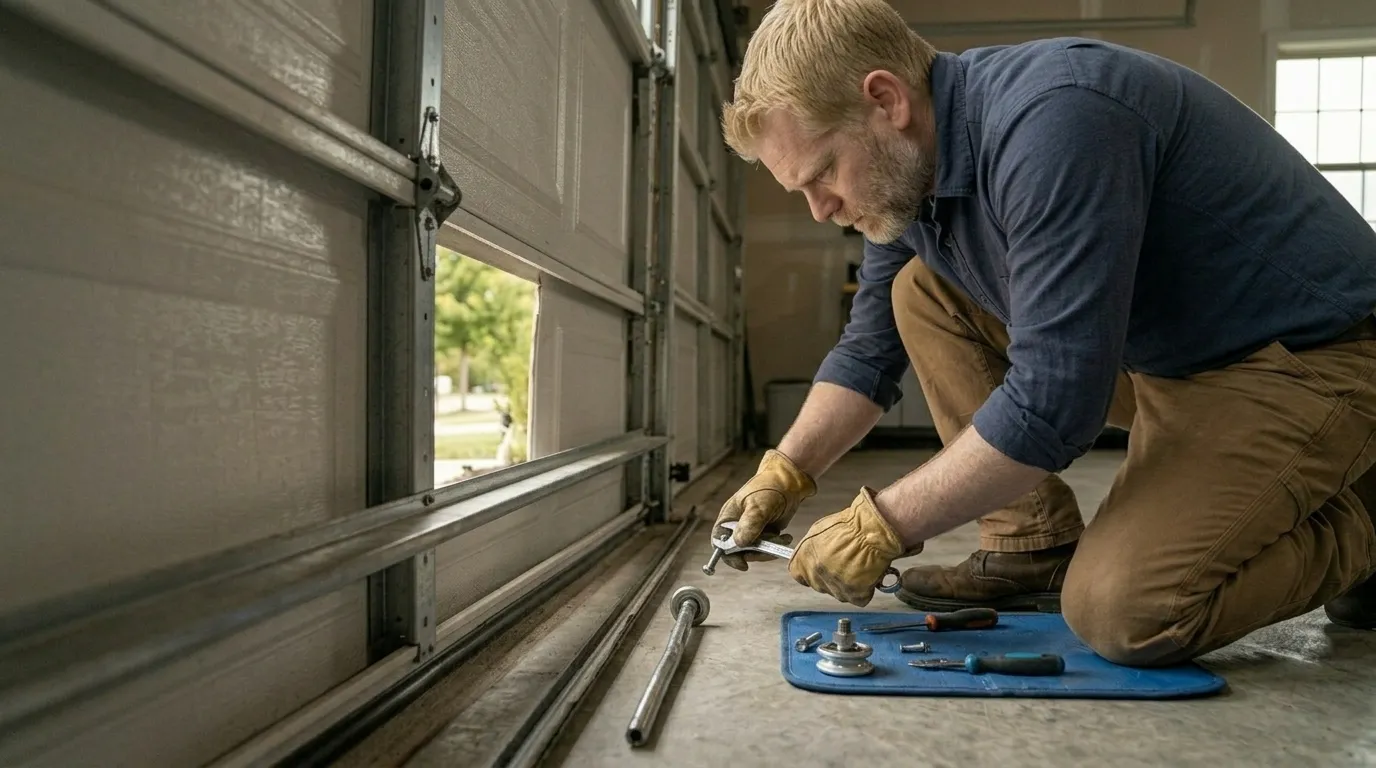
Check the tracks for daylight gaps where the rollers sit - with houses in this service area running 25 to 35 years old now, roller wear and track misalignment show up together more often than either shows up alone. None of this requires tools beyond a flashlight and a step stool. What it does for us: when you call, you can tell us which of the two big systems - spring or opener - is the actual problem, and we bring the right parts on the first trip instead of a second one.
The Problem
Most of the housing across this service area - Prescott Valley and the five nearby areas built out in that same wave - went up between 1987 and 1999, with a median build year around 1992. That means a large share of garage doors here are running original torsion springs and original openers that are now past or close to their rated cycle count. Springs don't fail gradually; they fail on a Tuesday morning when the tension finally lets go, usually after years of small stress cycles you never noticed.
With 8,835 owner-occupied houses across the service area, a lot of them built to the same code in the same decade, we see the same failure repeat house after house on a given street: same spring size, same opener brand, same wear pattern. That's not a coincidence, it's the housing stock. The honest limitation here - if your opener board is original to a 1990s build and it's the logic board itself that's fried, not the motor or gears, we often can't source a matching board. At that point replacing the opener costs less than chasing a part that doesn't exist anymore.
Season by Season
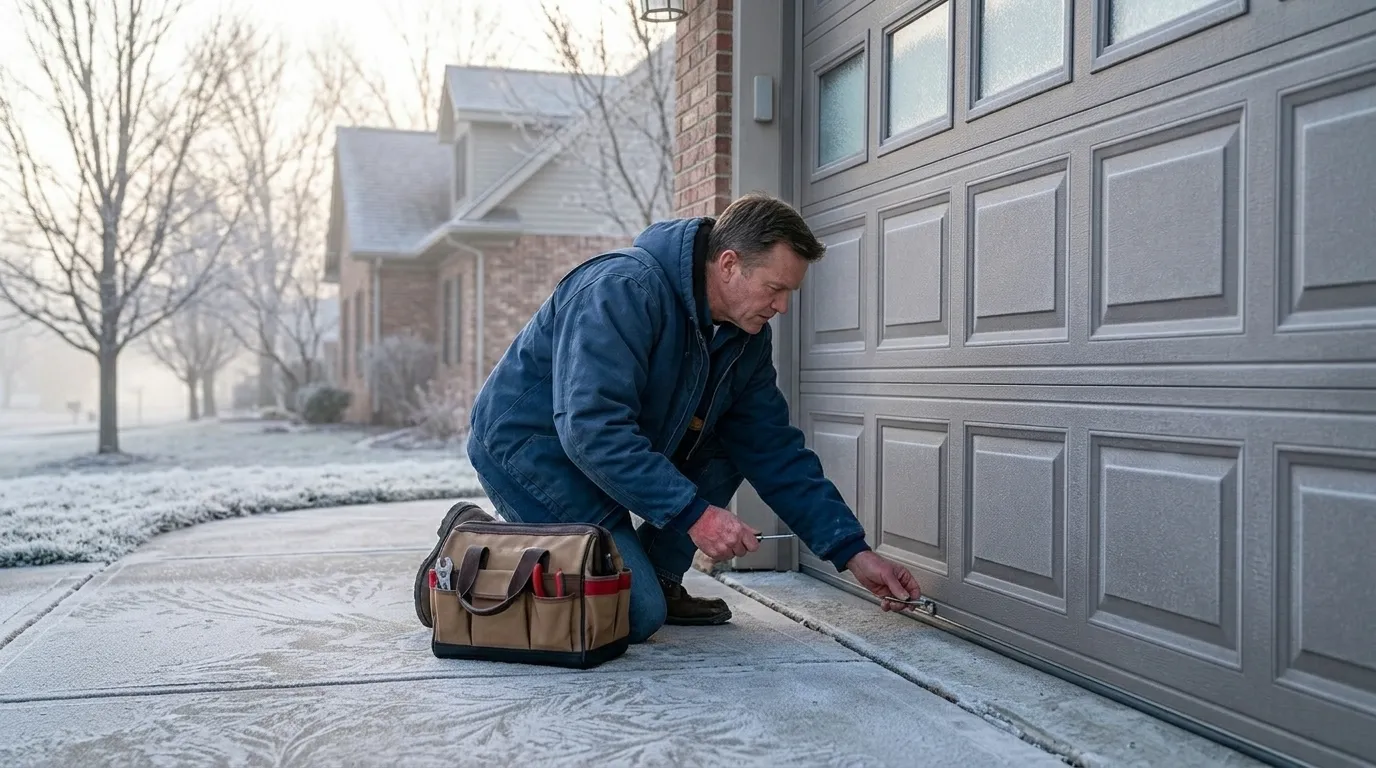
Late fall through winter is when spring failures cluster. The steel has spent all year cycling through Prescott Valley's cold moderate swings, and the first hard cold snap is often what finishes off a spring that was already near the end of its life. If your door has felt heavier or slower over the past month, don't wait for the morning it doesn't open at all.
Spring and early summer bring a different problem: as temperatures climb back up, expansion can loosen fasteners and hardware that contracted tight over winter, so this is a good window to check that track bolts and hinges haven't worked loose. Summer heat itself is less hard on springs here than the cold is, since this area doesn't sit in the same high-heat band as the desert floor towns nearby.
We don't run a set maintenance calendar that's the same for every door - a 1992-built house with its original spring needs a different check-in than a door replaced five years ago. What we do recommend, given the housing stock across this service area, is a spring and hardware check once temperatures start dropping each year, before the cold does the work of finding the weak spring for you.