How It Shows Up
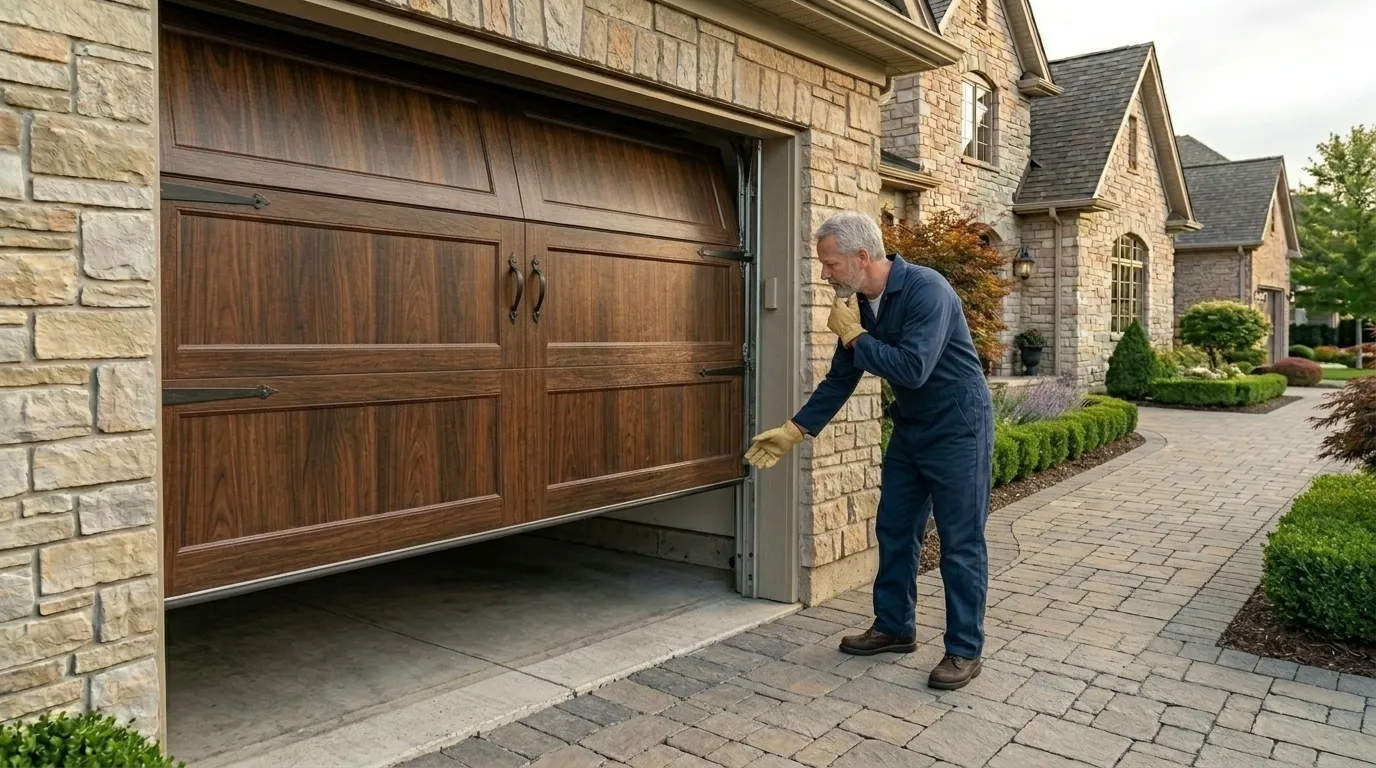
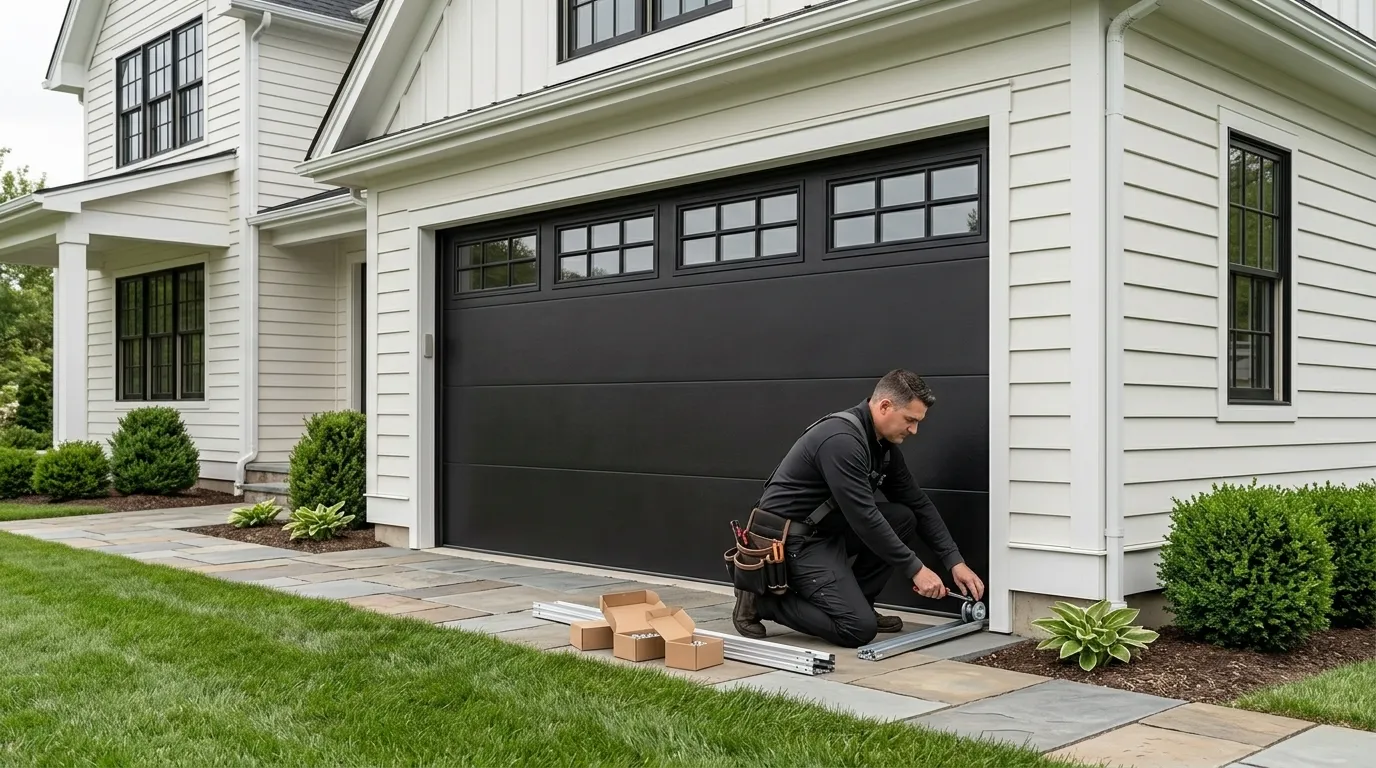
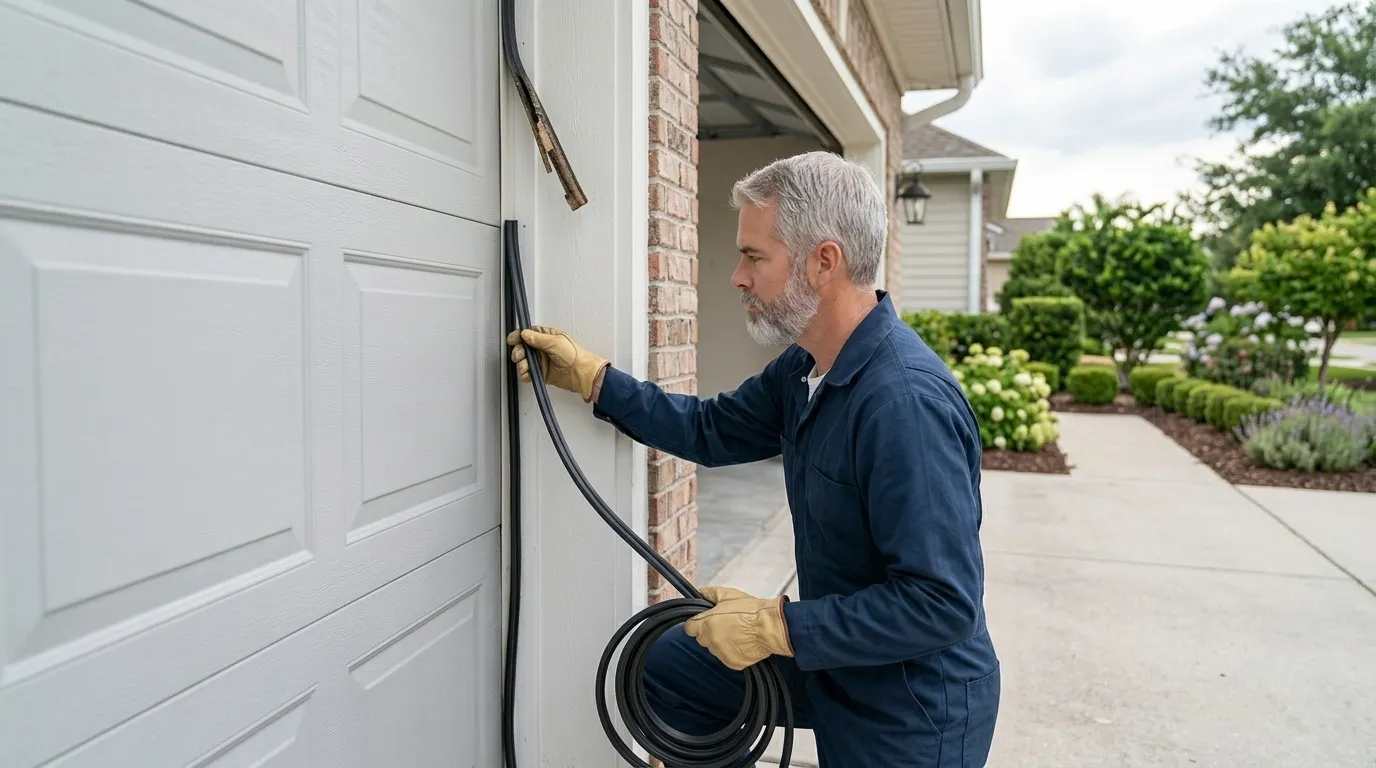
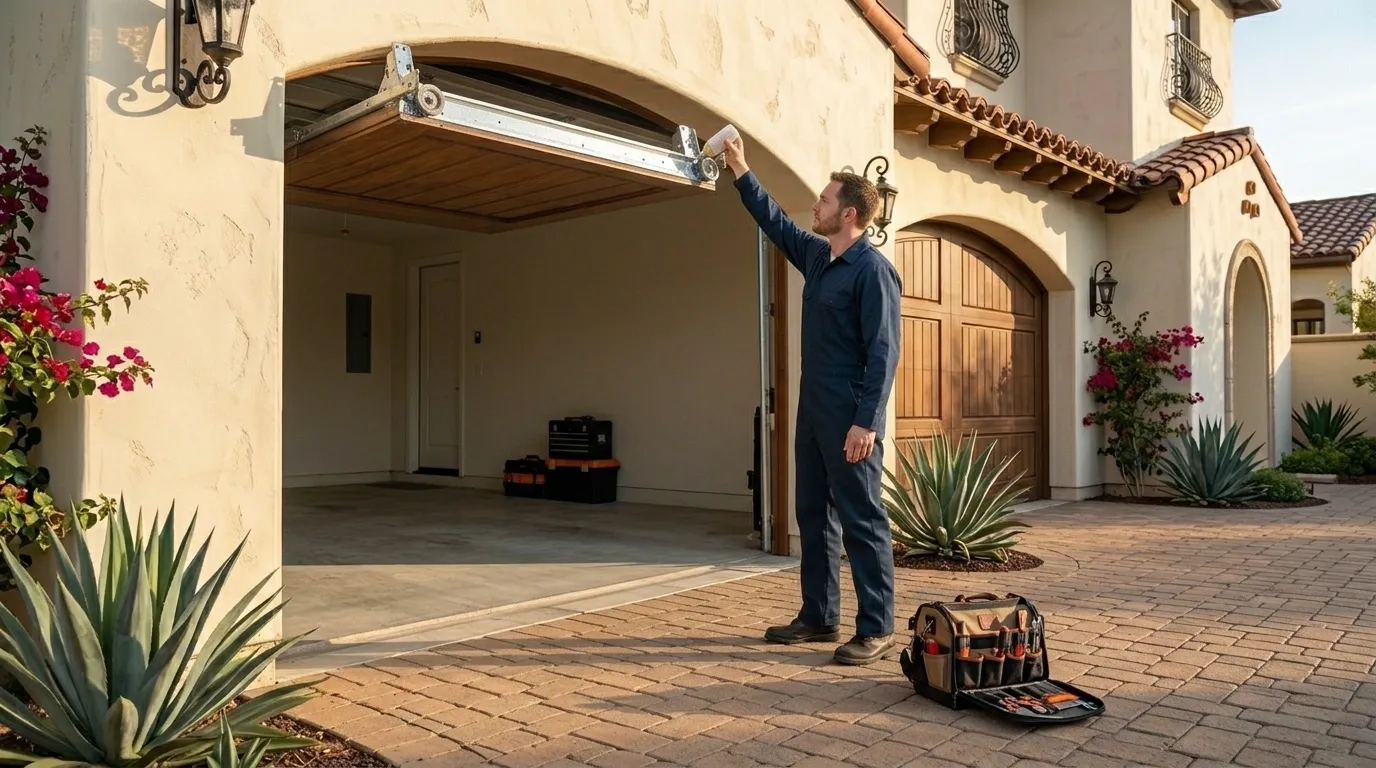
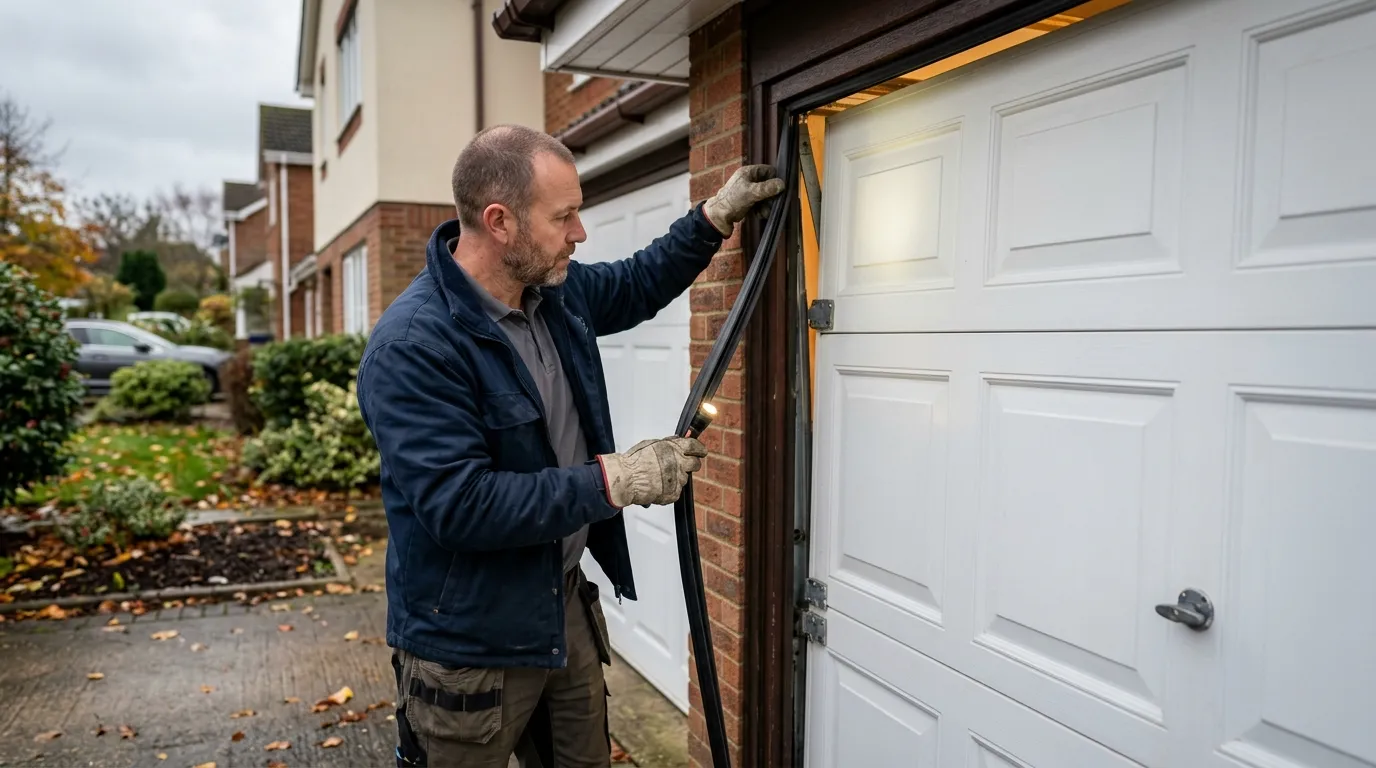
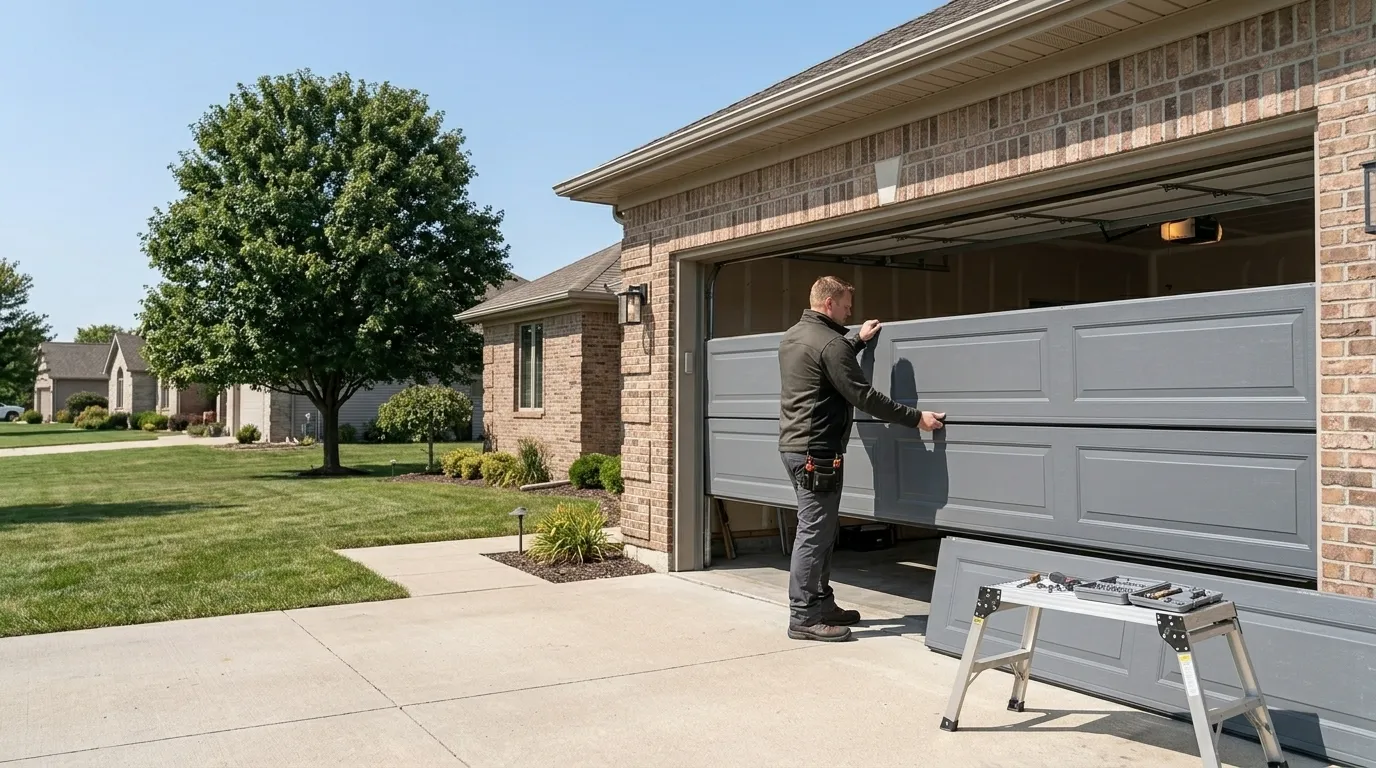
Dewey-Humboldt sits about 7 miles from our shop in Prescott Valley, and most of the doors we open out here went up with houses built between 1987 and 1999 - the same window that set the tone across the wider service area's roughly 8,835 owner-occupied houses. A door that old runs on whatever track and roller set it shipped with unless someone already swapped it, so when a cable slips a drum or a bottom roller pops its channel, the door doesn't stop level. It leans, one bottom corner drops toward the slab, and the panel starts racking against the jamb instead of riding straight in the track.
You'll usually catch it before it's a full off-track situation: the door running with a grinding scrape on one side only, a gap opening up at the bottom corner, or the opener straining and reversing itself partway up. Push the wall button and if the door only moves a few inches before the opener gives up, stop there. Running the opener against a door that's already binding in the track is how a bent track becomes a bent track and a cracked stile.
Booking a Visit
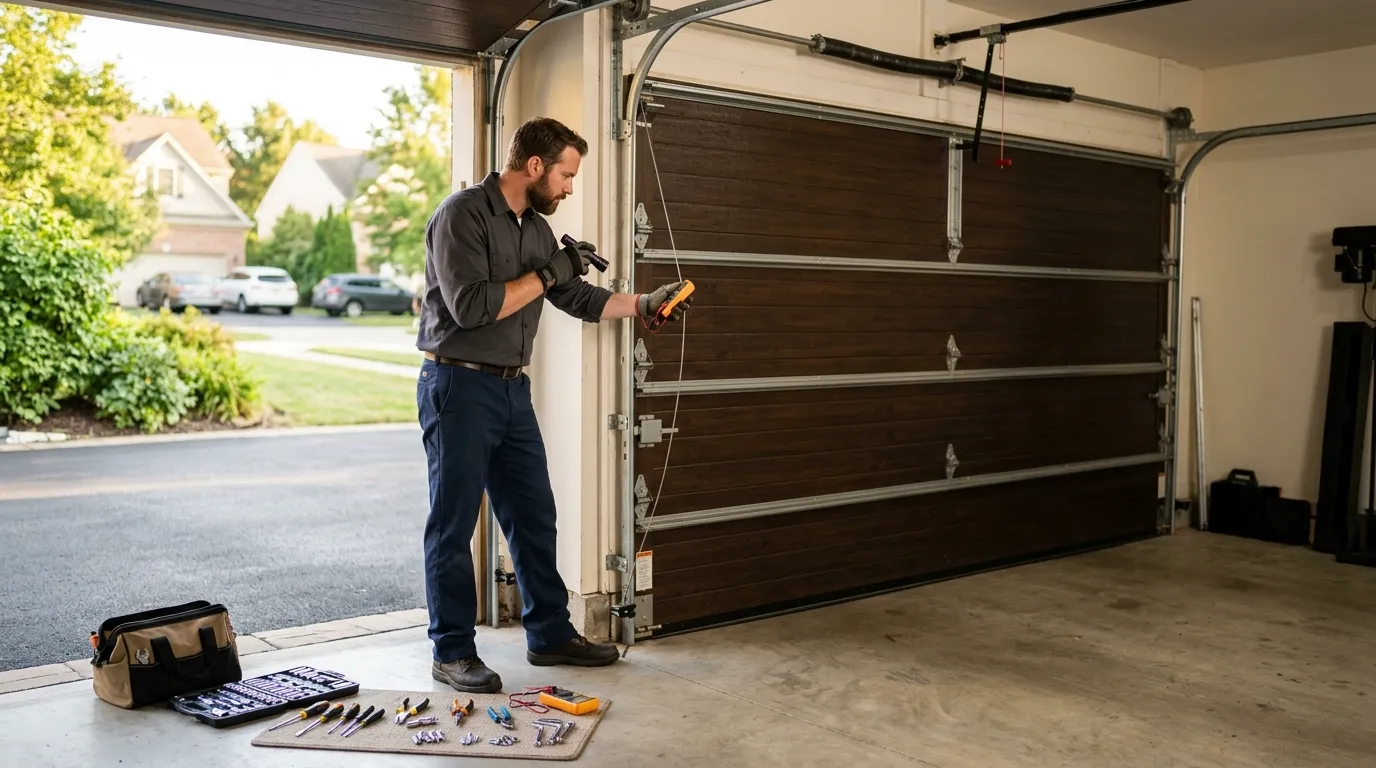
We work Dewey-Humboldt from our Prescott Valley shop, about 7 miles out, so when you call we're asking what the door is doing right now - which side it's dragging on, whether it's a two-car double door or a single, whether the opener still runs the door at all. That tells us whether we're bringing a spring bar and new rollers or whether the track itself needs to come off the jamb and get reset or replaced.
With 1,701 households in Dewey-Humboldt and most of the housing stock landing in that late-1980s-to-1999 range, we see a fairly narrow band of door and track hardware out here compared to older parts of the region, which helps us guess right on what to load before we leave. It doesn't replace looking at the actual door - a door that's been re-tracked once already, or had a panel replaced off-brand, can throw that guess off, and we'll say so on the phone rather than promise a fix we haven't seen yet.
The Cost of This Job
We don't quote a number for off-track repair on this page, because the range depends on whether we're re-seating a track that popped clean or replacing a bent track section, a snapped cable, and a couple of rollers at the same time - and we won't know which until we're looking at the door. What we can tell you is what drives the difference: a door that's been run on a bent track for even a day or two usually needs the track section replaced, not just re-hung, because a bent rail keeps throwing rollers no matter how many times you reset it.
Dewey-Humboldt's median household income sits at $64,183, a bit above the wider service area's $59,733, and that gap doesn't change what parts cost - it just means the math on repair versus replacement lands differently for some households here than it might elsewhere. If a door has already been off-track twice in a year, replacing the track and hardware outright is usually the cheaper path over time, even though the single repair invoice looks smaller.
What Can Go Wrong
The most common mistake we get called out to fix isn't the original off-track event - it's what happened after, when someone tried to push the door back onto the rail by hand while a spring was still under tension. A torsion spring that's partially unwound but still loaded can move the shaft hard enough to take a finger with it, and we've seen bent center brackets from exactly this kind of DIY reset.
The other failure mode is cosmetic patching: forcing a dented track back into rough alignment with a rubber mallet gets the door moving again, but a track that's been hammered straight rarely holds its line under a full-weight double door for long. It usually pops again within a season, often worse than the first time because the roller channel is no longer a clean, even width along its length. If your door has come off track more than once in the same spot, that's a sign the bracket or the jamb behind it has already given way, not that the roller is at fault.