How It Shows Up
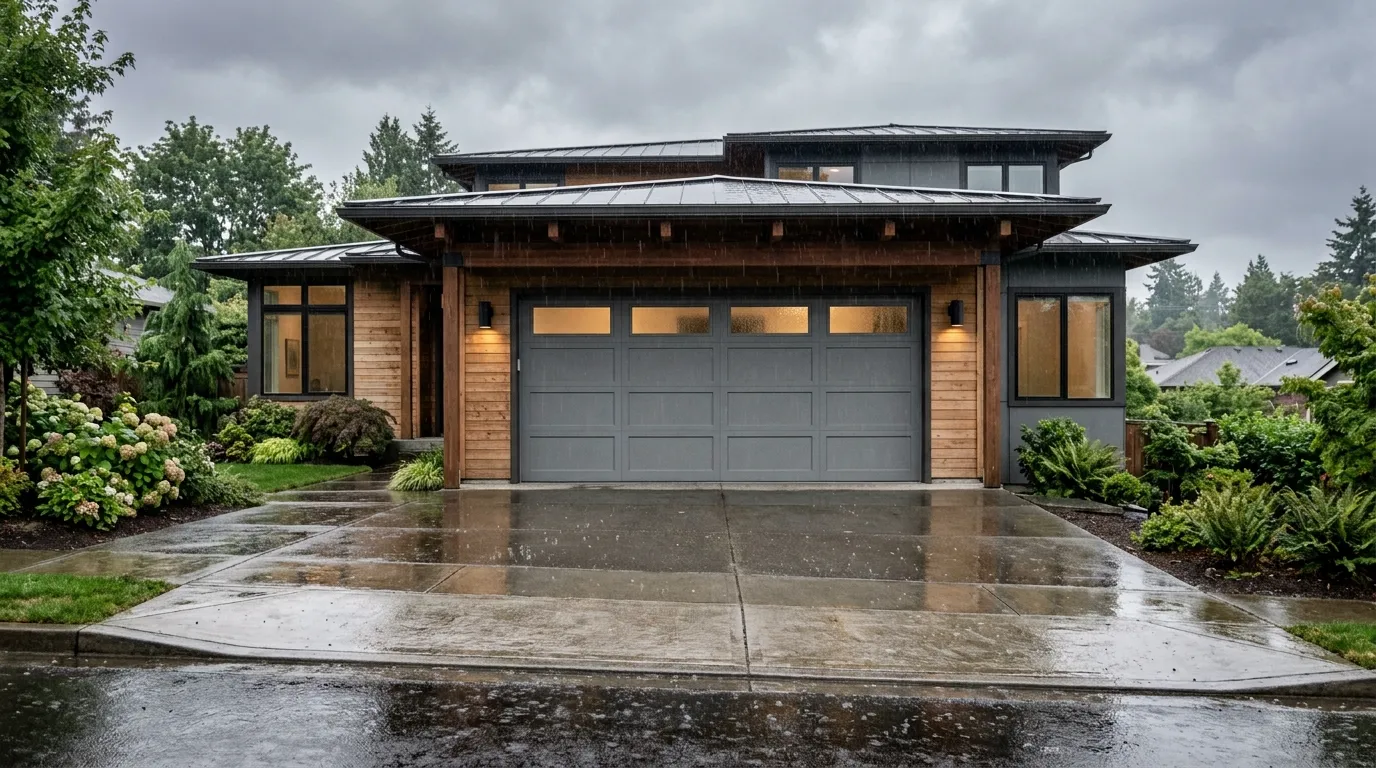
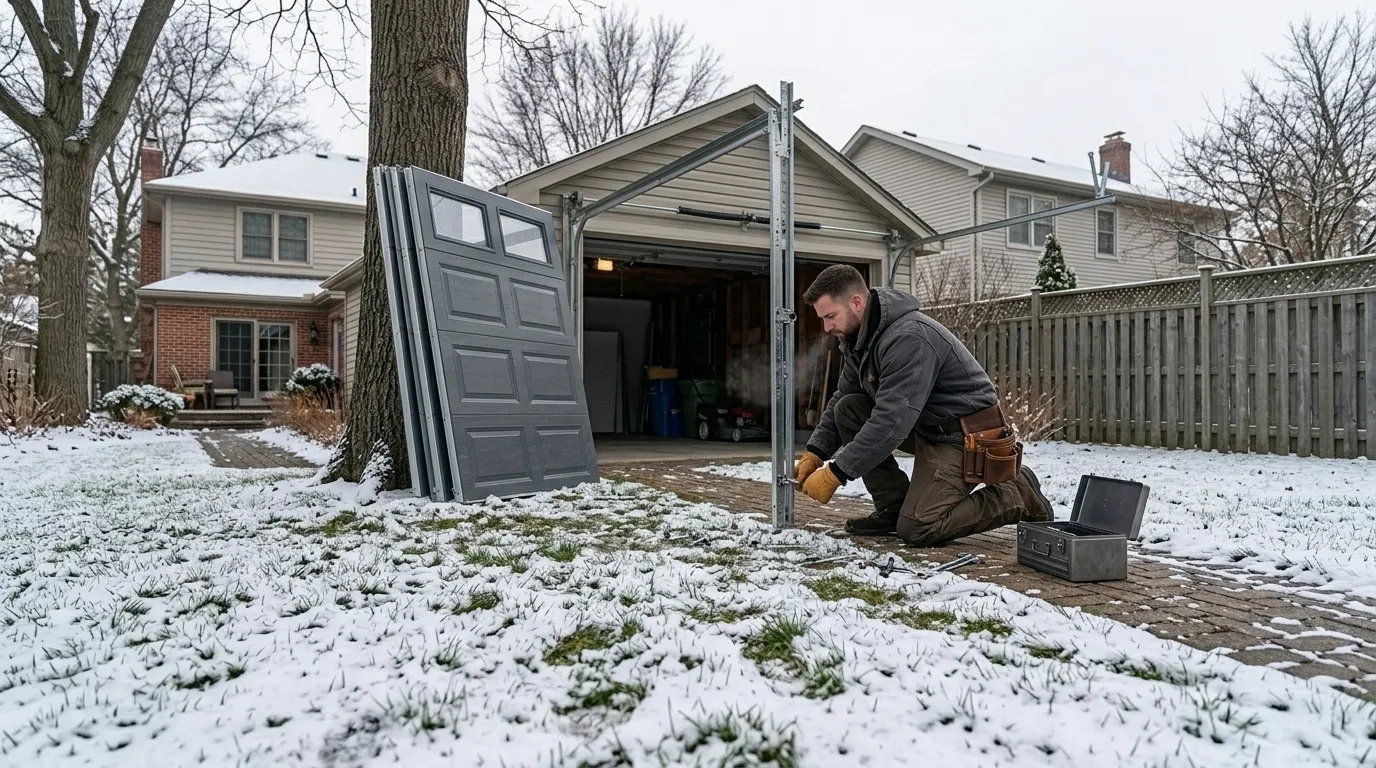
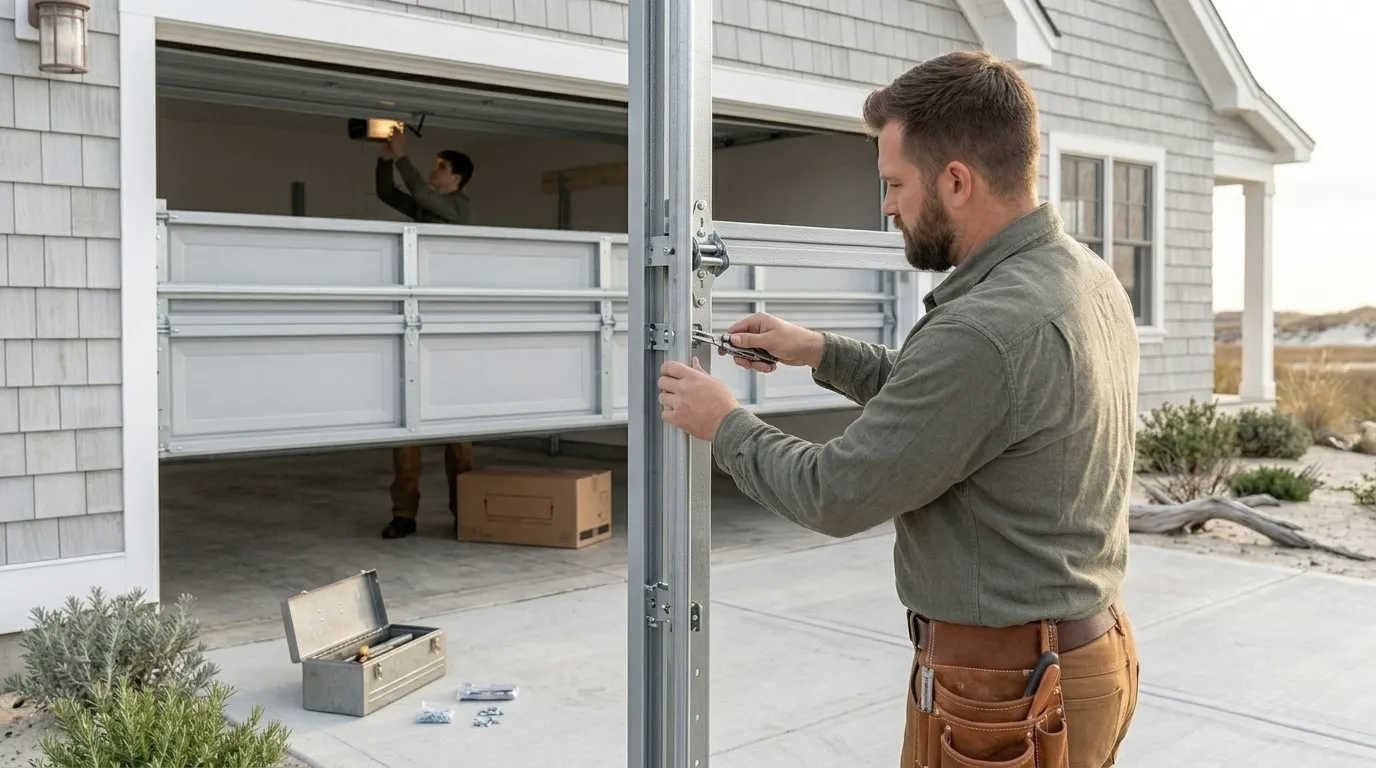
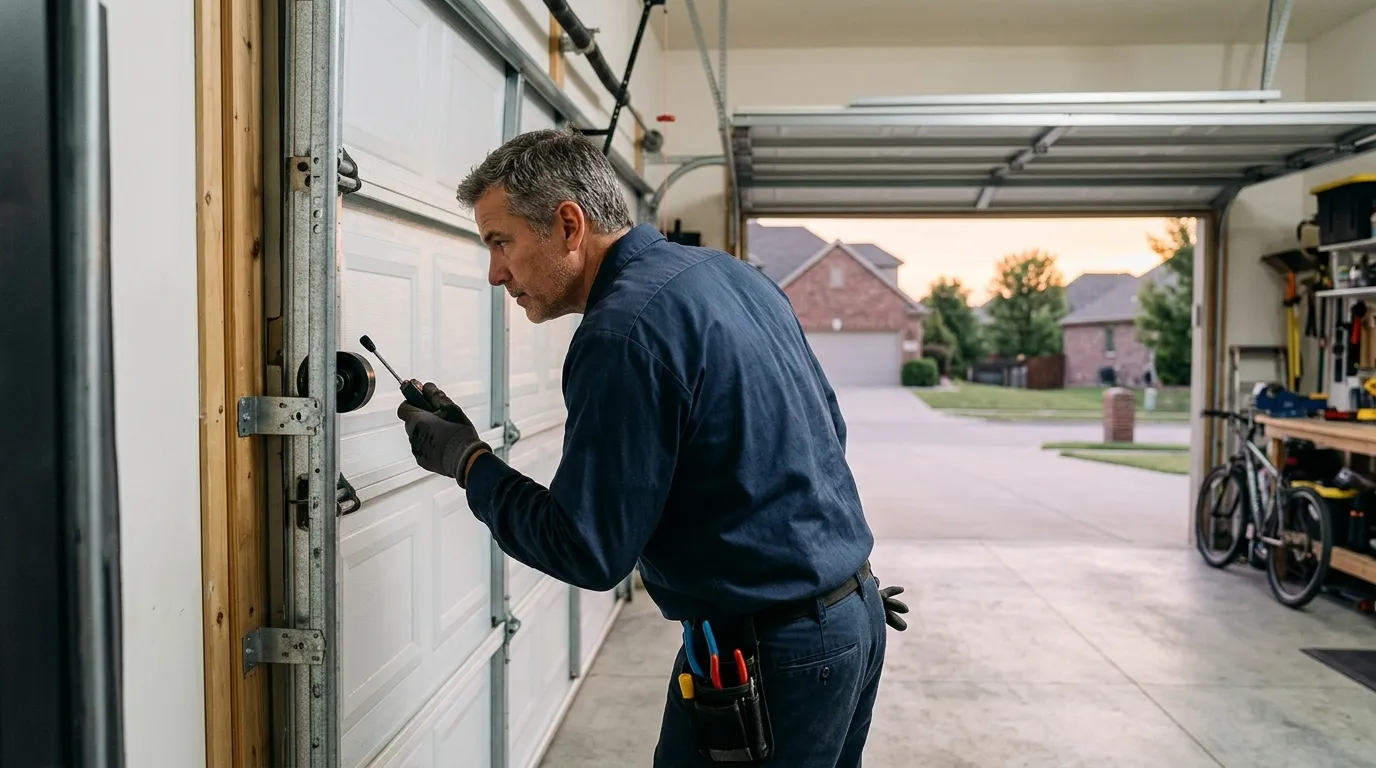
Dewey-Humboldt is a seven-mile run from our shop in Prescott Valley, which changes how a new-install job actually goes here versus somewhere farther out. We can usually do the measure visit and the install trip close together instead of stretching a job over a week of scheduling gaps. That matters more than it sounds like, because most houses in this town went up between 1987 and 1999, with the median landing right at 1992. That means the garage door bolted to the house is almost always the original one, on the original track, running an opener from the same era. Thirty-plus years in, the door itself is usually fine to swap out on its own terms, not because it failed catastrophically, but because the springs are past their rated cycle count and the panel steel has thinned from three decades of sun and temperature swing. What we see when we pull up is rarely a door that fell off the track mid-cycle. It's a door somebody decided to replace before it did that, or one where the opener died and the owner realized the door underneath it was never going to be worth motorizing again.
Booking a Visit
Because the drive is short, we don't need to bundle Dewey-Humboldt jobs into a single day trip the way we would for something farther down our service area. That gives more flexibility on timing, but there's no local branch here, no drop-off point, no parts sitting in town. Everything comes out of the Prescott Valley truck, so what you tell us on the phone about door size, opening height, and whether you want insulation matters more than it would if we were driving past the house daily anyway. A short measure visit up front avoids a second trip for a door that doesn't fit the opening. For most of this town's 1,701 households, the openings are a standard size for the era, but we still measure rather than assume. See what a visit here covers at Dewey-Humboldt service page, or read the full rundown of installation work at our Prescott Valley installation page.
The Cost of This Job
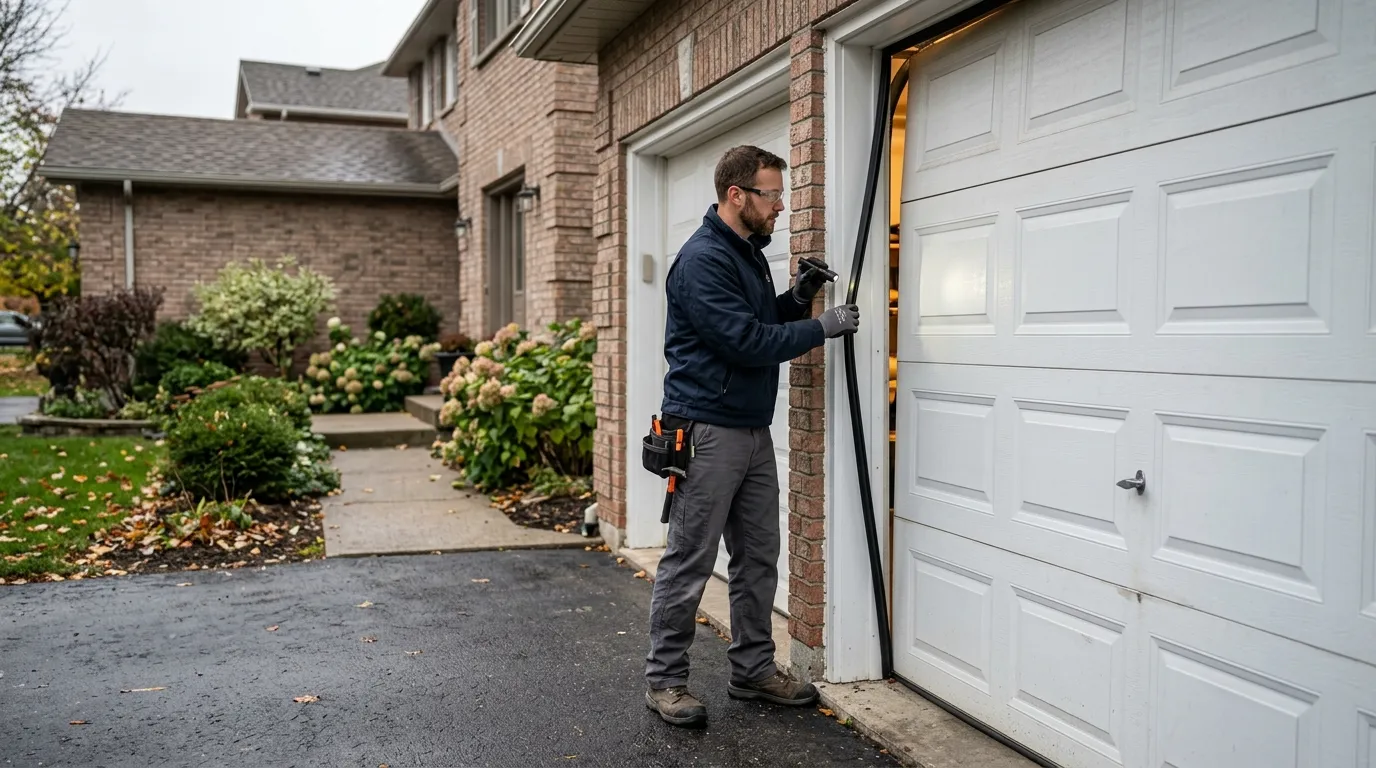
We don't have a fixed price to quote here, and giving one without seeing the opening would be guessing. What actually drives the number on a new install in Dewey-Humboldt: whether it's a single or double door, whether you want factory insulation, and whether the opener needs replacing alongside it. That last one comes up more than people expect. A lot of the openers still running in this town's 1990s-built garages predate the current safety-sensor requirement, meaning the photo-eye pair at the base of the track either isn't there or was added later as a retrofit. If we're putting in a new opener, that sensor pair comes with it by code, no way around it. One honest limitation: if your existing track or jamb hardware is bent or rusted through, we're not going to reuse it to save you money on this job. Mounting a new door to compromised hardware is the kind of shortcut that turns into a second service call.
What Can Go Wrong
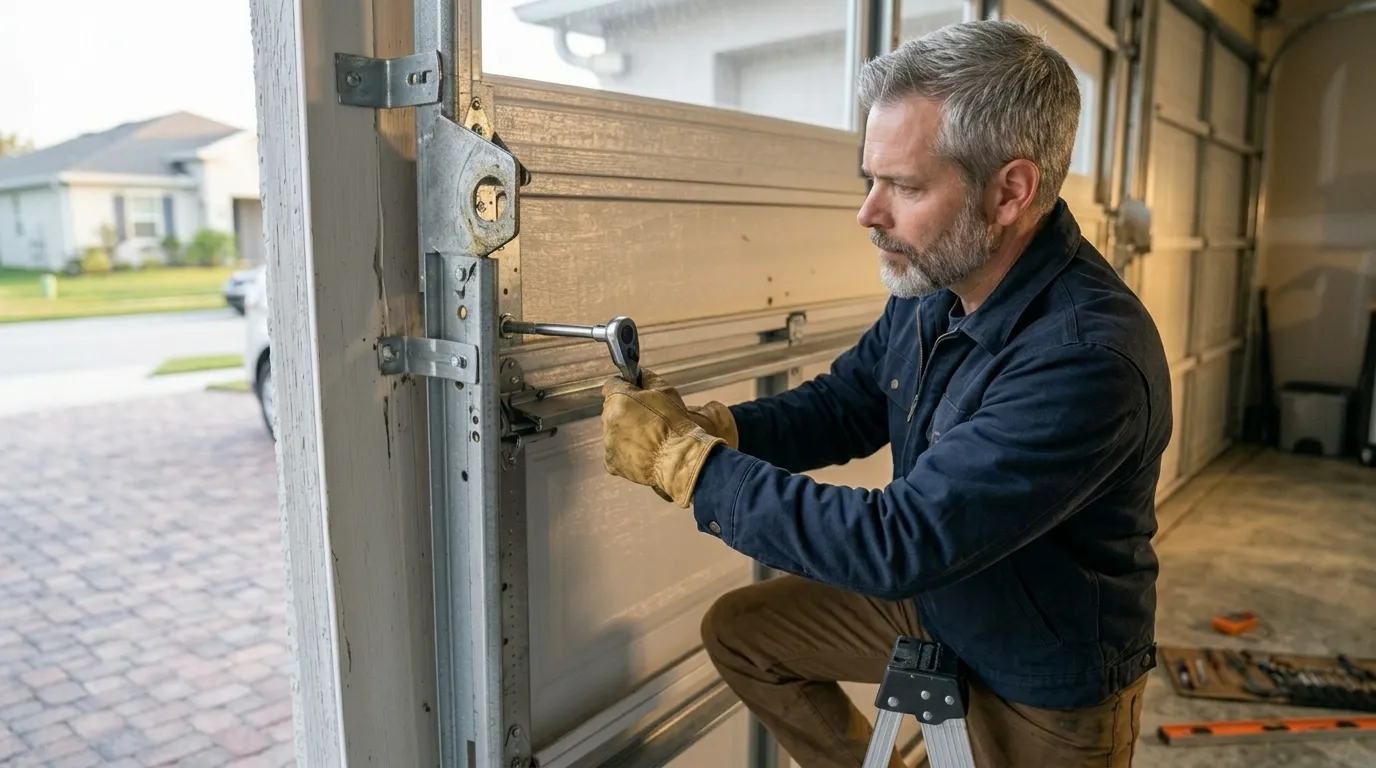
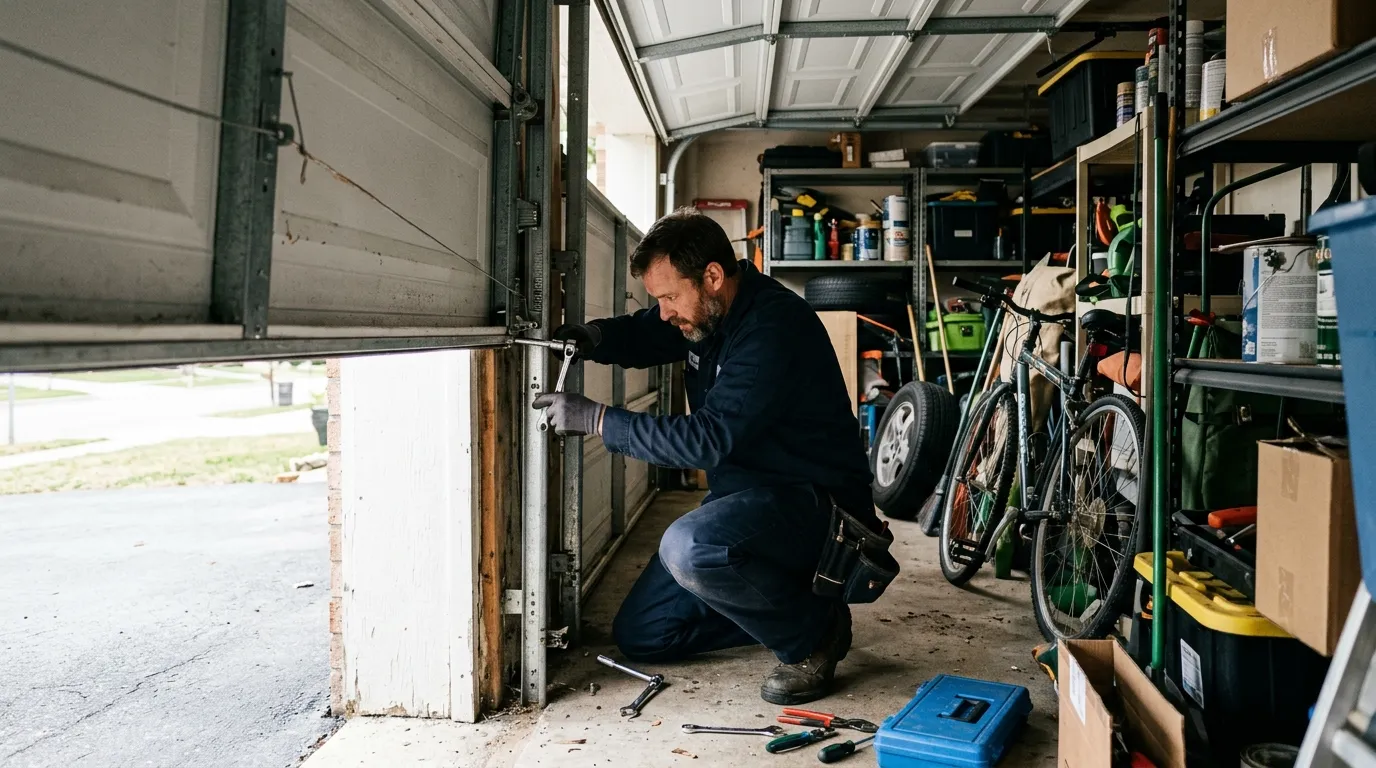
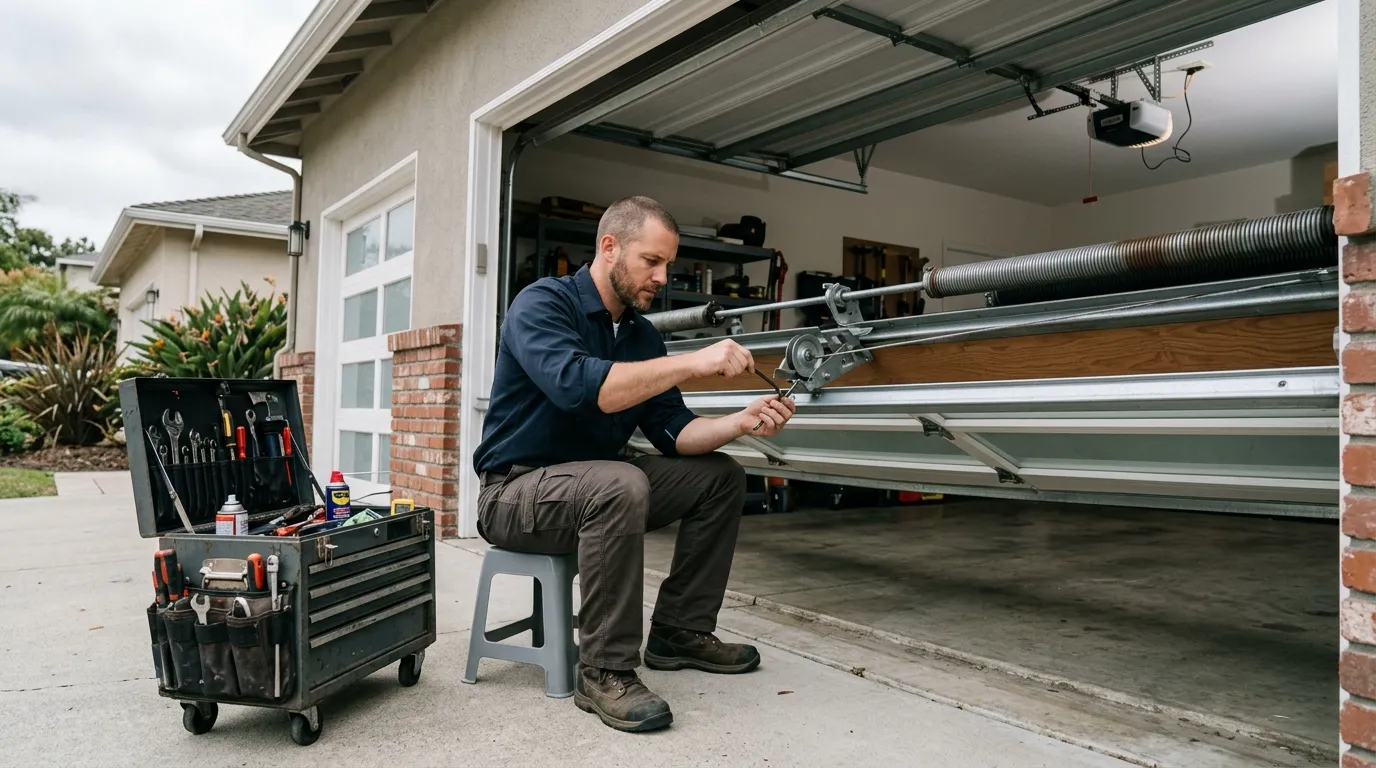
The most common issue on a house this age isn't the door failing outright, it's a mismatch nobody catches until install day: the rough opening was framed slightly out of square in the original 1987-1999 build run, and a new standard-size door doesn't sit flush without shimming the track. We catch that at the measure visit, not after the door's already on the truck. Cold moderate winters here also mean torsion springs need to be wound to spec for the temperature they'll actually run in, not just torqued to a generic setting; get that wrong and the door feels heavy or slams on the last foot of travel. The other thing worth naming plainly: sometimes the header above the opening isn't rated for a heavier insulated door, and reinforcing it is its own small job. We'll tell you if that's the case rather than hanging a door that stresses the frame.