What Can Go Wrong
Williamson's houses went up mostly around 1998, which puts most openers here squarely in the chain-drive and early screw-drive generation. That era's logic boards are old enough now that capacitors drift and solder joints fatigue from years of heat cycling in an unconditioned garage. The most common failure we find isn't the motor itself - it's the circuit board that reads the wall button and the remote signal. Gear-and-sprocket kits in chain-drive units from this period also wear down after two decades of use, and the drive gear can strip teeth quietly for months before it lets go all at once. Safety-eye sensors, required on openers built after 1993, are original equipment on a lot of these units, and their alignment shifts as garage floors settle over 25-plus years. None of this is dramatic. It's ordinary wear on hardware that's now old enough to have outlived its own parts run.
What the Fix Involves
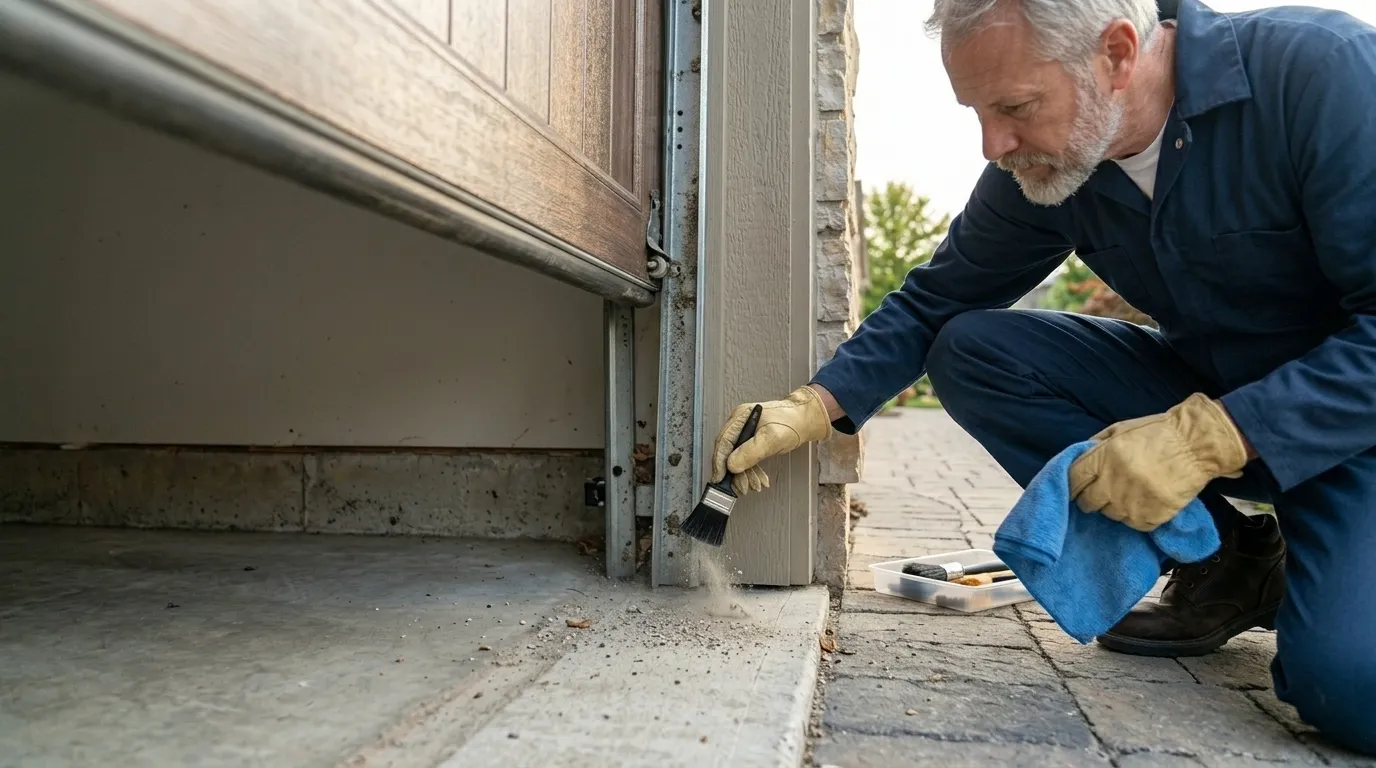
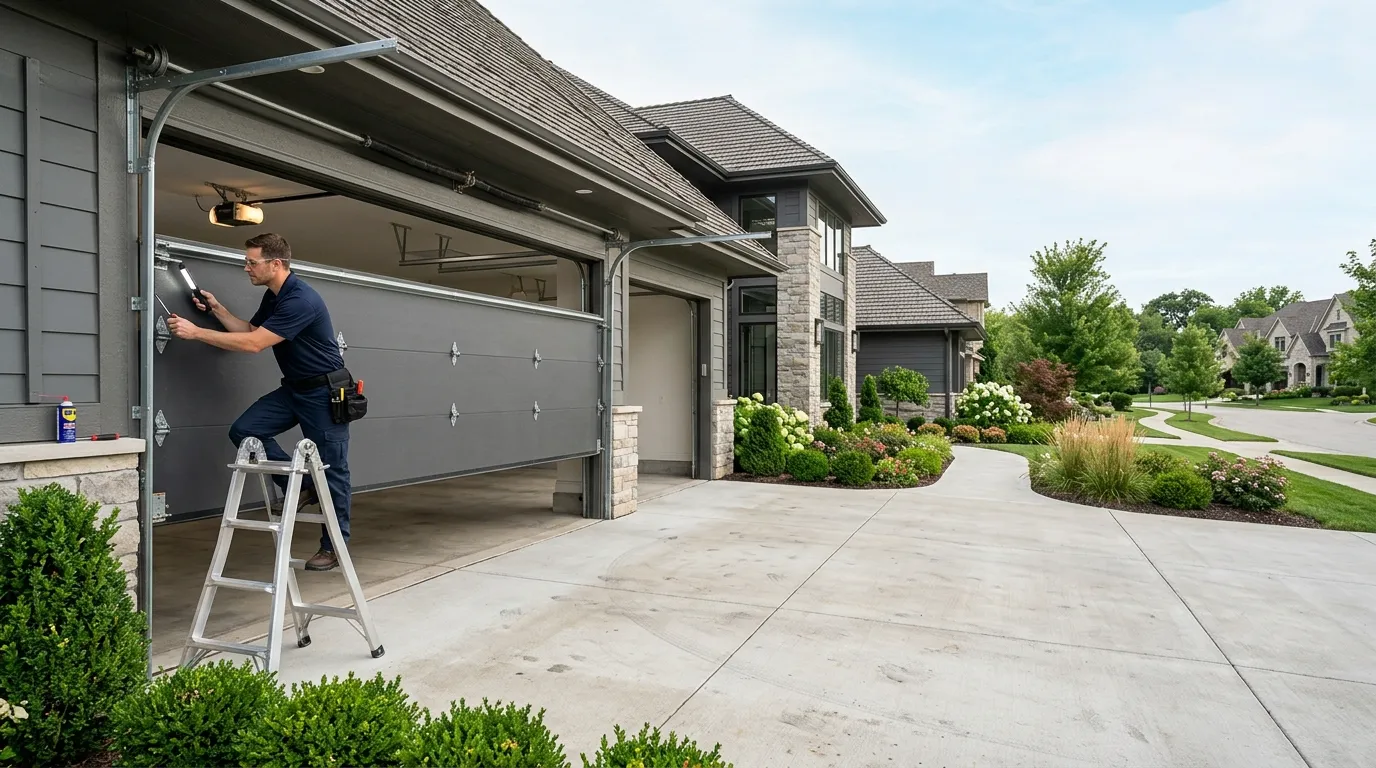
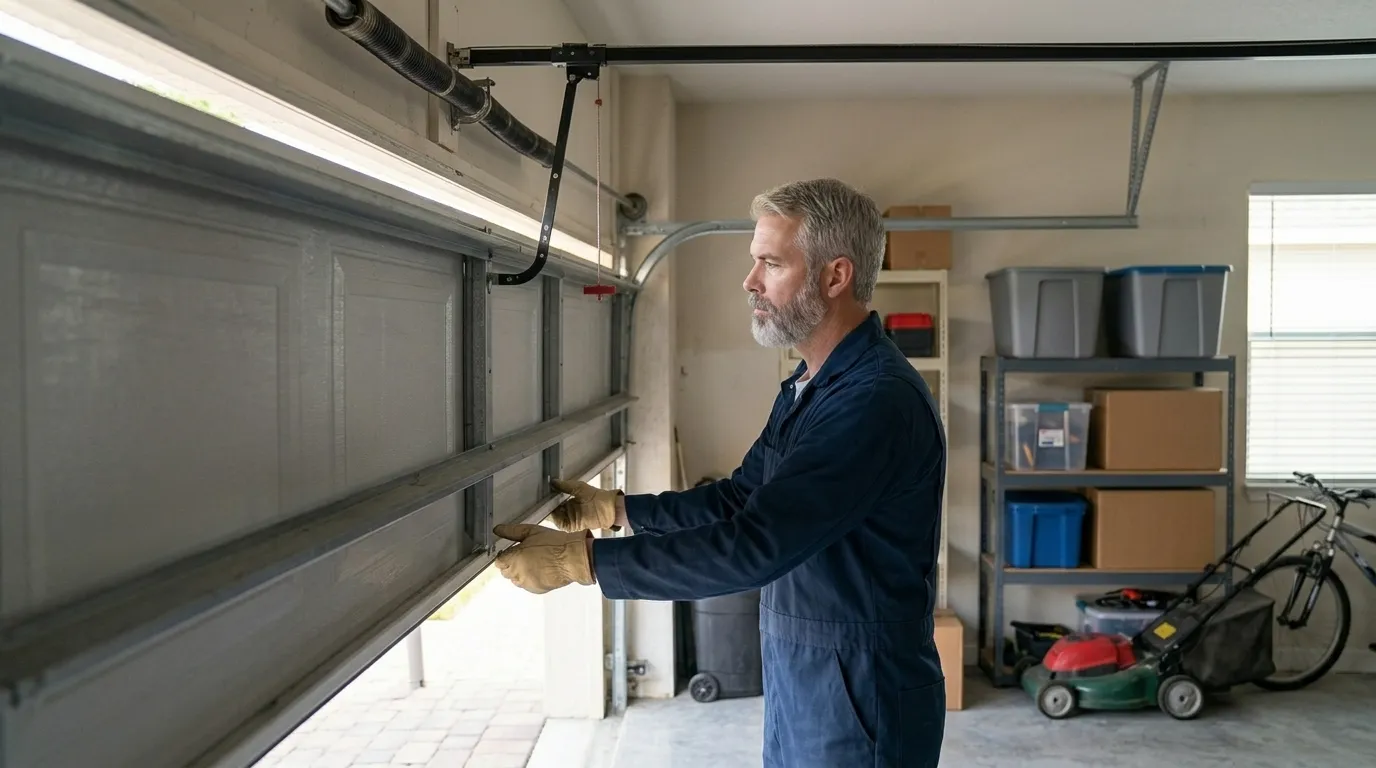
We start by testing the logic board with the wall switch and remote separately, because a board that answers one but not the other points at the input, not the motor. If the safety sensors are out of alignment - common once a slab has settled - we re-level them and clear the eye lenses, since dust film alone can trip a false-obstruction stop. Chain-drive units get a tension check and a look at the sprocket teeth; if they're rounded, the gear kit gets replaced rather than adjusted, since a slipping chain will strip a new gear just as fast. Remote reprogramming and travel-limit resets are part of most calls too, since a board swap or a sensor realignment throws off both. We test the door through five full cycles before we call it done, not one.
The Cost of This Job
Williamson's median household income is $89,083, well above the wider service area's $59,733, and that changes where the repair-or-replace line sits for a lot of these calls. On a household budget like that, a straightforward board or sensor repair on an opener from 1998 is worth doing - the unit still has useful life and the fix is a fraction of a new install. Where it stops making sense is when the drive gear, the board, and the sensors are all failing at once on a 25-year-old unit; at that point you're paying repair labor twice, once now and once in a year, and a new opener with a modern board is the better spend. We'll tell you straight which side of that line your call falls on before we start work, not after.
How Long It Takes
We come out from Prescott Valley, 14 miles away, so figure that into the window you book rather than expecting a walk-up response. Once the truck's on site, most opener repairs - board swap, sensor realignment, gear kit - run inside a couple of hours. The one thing that slows a job down is parts: if your opener's board is a discontinued model from the late 90s and we don't have a direct replacement on the truck, we're not going to have you wait a week chasing an obsolete part. In that case we say so on the spot and give you the honest number for a new opener instead, rather than stringing out a repair that isn't worth the wait.