What Can Go Wrong
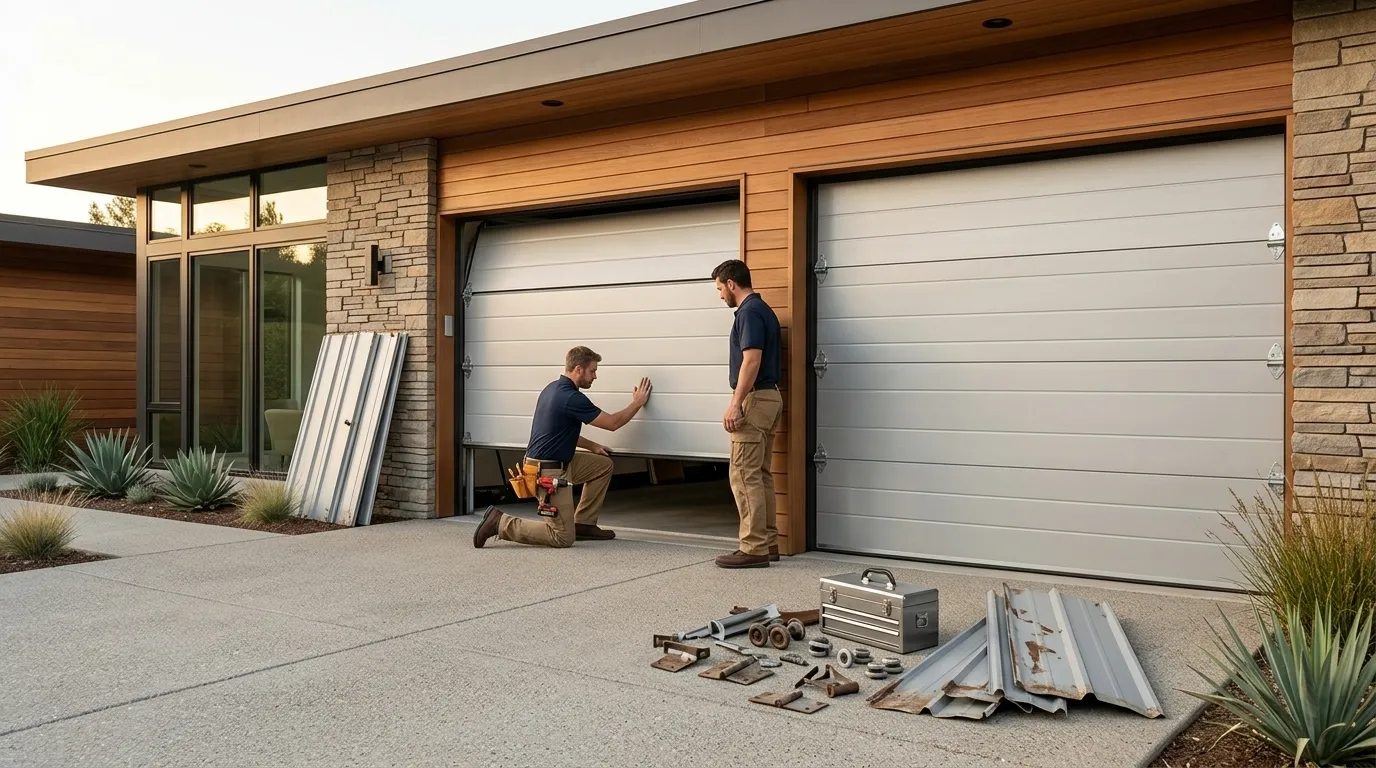
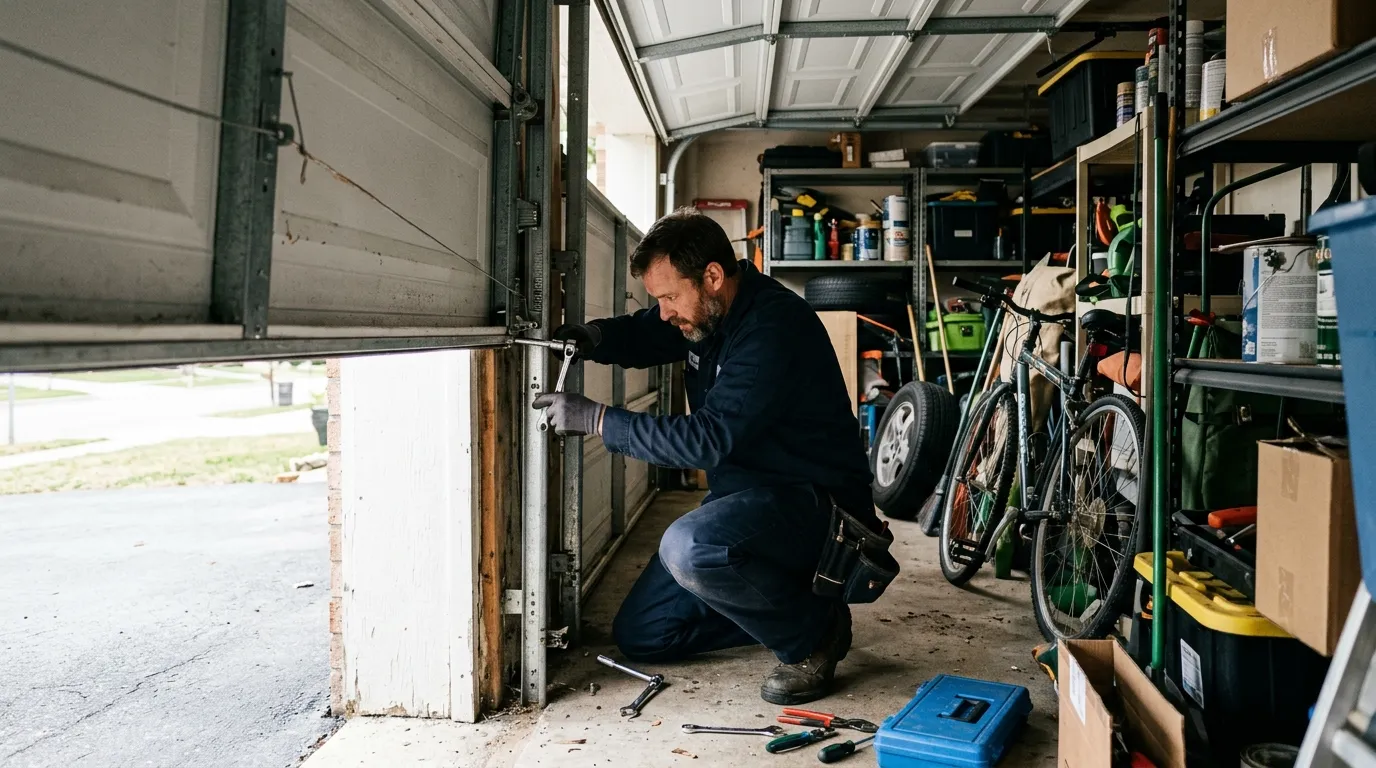
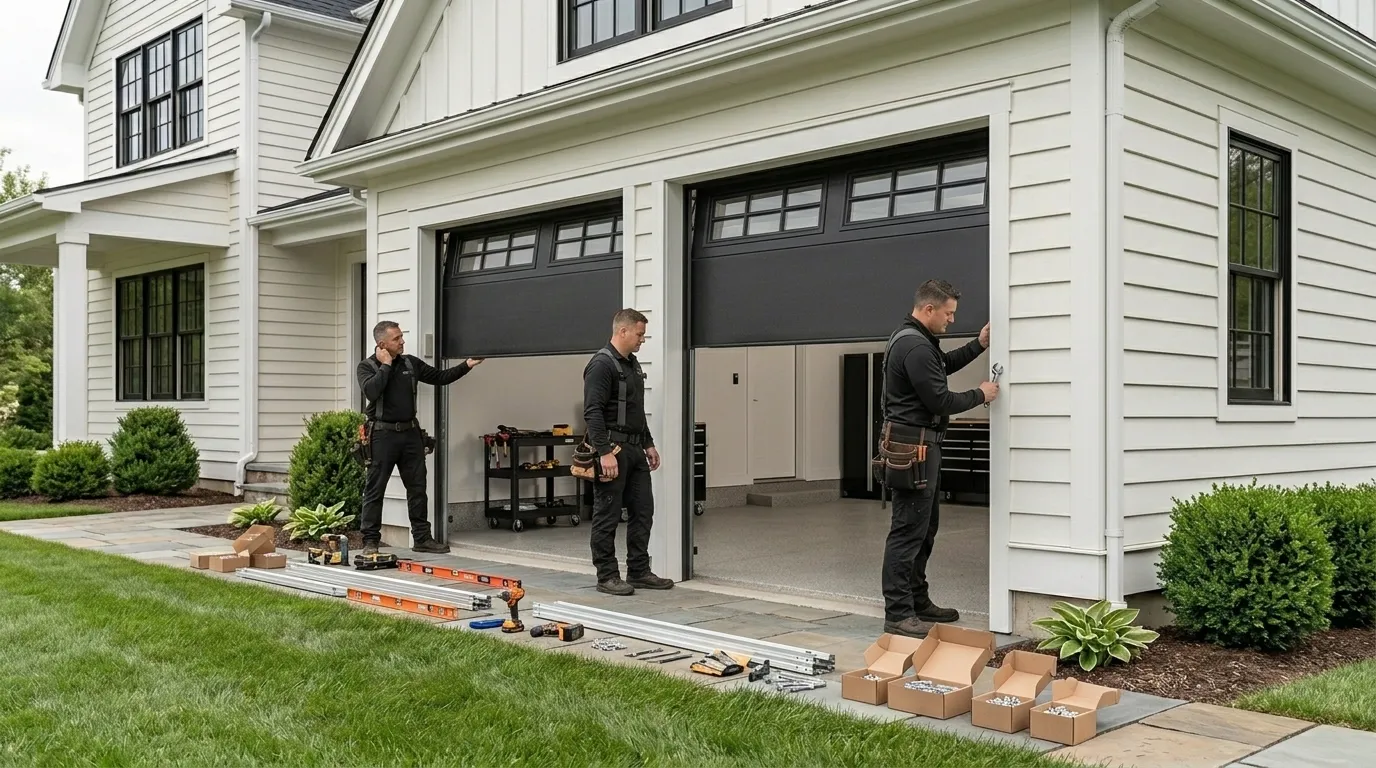
The call we get most from Williamson isn't a broken torsion spring on a double door - it's a pair of stretched-out extension springs on a single-car door, the kind that were standard hardware when this end of the valley was built out. Most houses here went up around 1998, which puts them right at the tail end of a build wave that ran from the late 1980s through the late '90s across this part of the service area. That means steel raised-panel doors on lightweight tracks, sized for openers that were state of the art then and are now well past any parts support. Extension springs stretch and lose tension gradually rather than snapping clean like a torsion spring does, so the failure mode here is a door that gets heavier to lift every month rather than one that stops working overnight. Add in the swing from summer heat to hard winter cold that this area gets, and the steel cable clips and pulley brackets on these older extension setups corrode and seize faster than they would somewhere with a milder range. It's a different fault than what shows up in the older 1980s pockets closer to Prescott Valley, and it's why we don't treat every service call the same way just because the town is next door.
What the Fix Involves
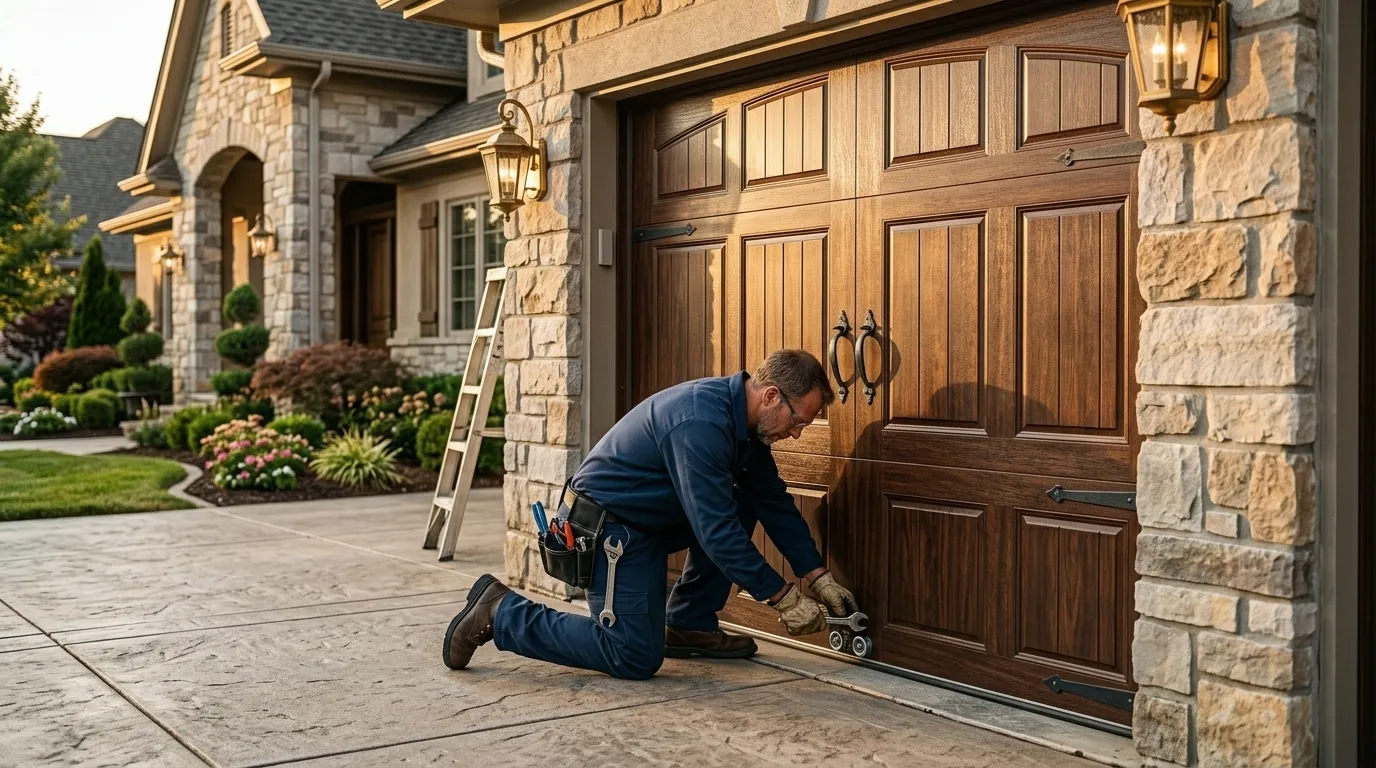
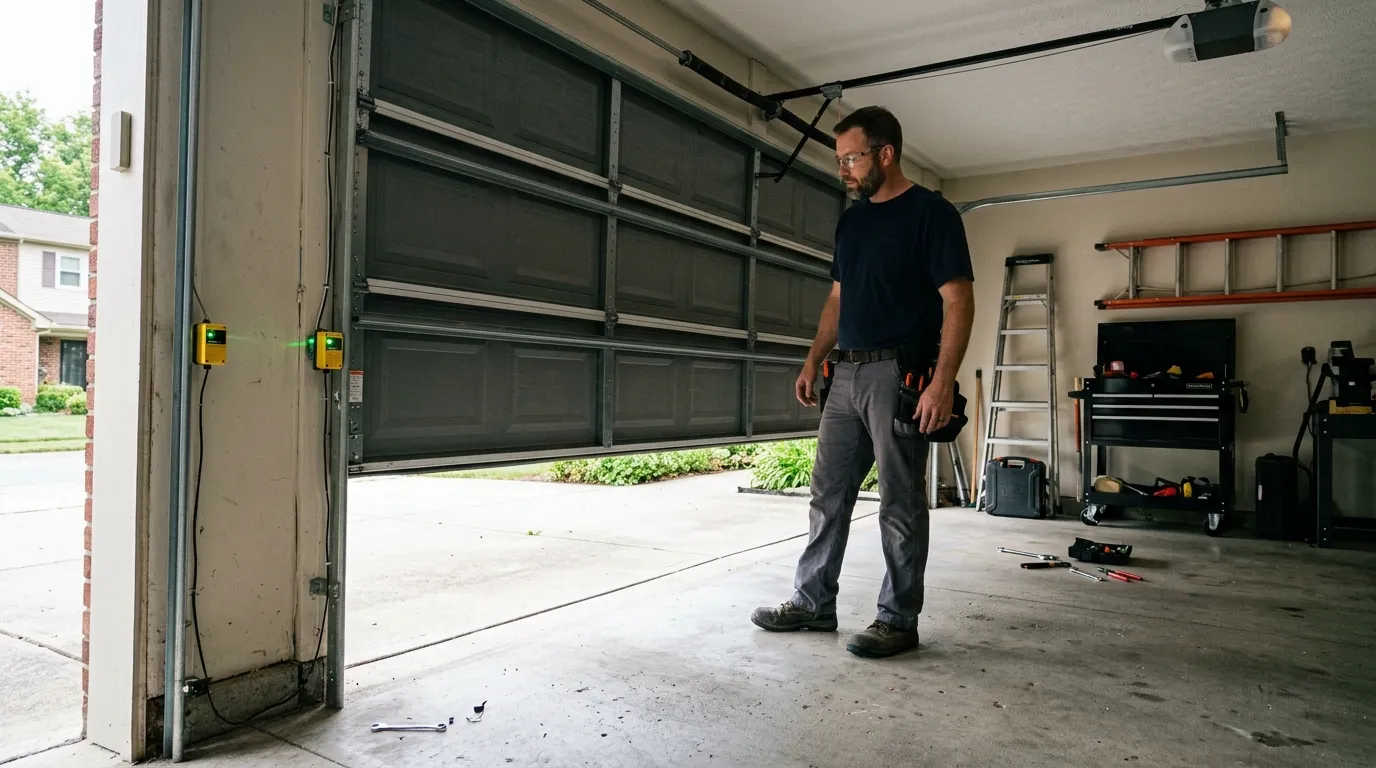
On a door this age, the fix is rarely just "replace the spring." We pull the extension springs, check the pulleys and the safety cables that should be threaded through them - a lot of installs from this era skipped that safety cable, and code now expects it - and we look hard at the track alignment, since these lighter-gauge tracks warp over two decades of use. If the opener is original to the house, it's often a chain-drive unit with an aging circuit board; the symptom is usually a door that reverses randomly or won't respond to the remote from across the driveway. We test the board before we replace anything, because a $40 sensor alignment fixes half the calls that sound like a dead opener. Where the springs are original, we'll usually recommend converting to torsion hardware rather than matching the old extension setup - it's a better system for a door this size and it holds up longer against the temperature swings out here. That's a judgment call we make on site, not something we push as a blanket upgrade.
The Cost of This Job
We don't quote a number here without seeing the door - a spring swap on a single extension-spring door is a different job than a torsion conversion with new track, and the opener board adds or subtracts depending on whether it's repairable or needs replacing. Williamson runs a higher median household income than the broader service area, and we see that reflected less in what people want done and more in when they want it done - fewer people here ride a failing spring to complete failure before calling. What we can tell you honestly: if the opener board is dying and the springs are original, doing both at once usually costs less than two separate trips. If only one system needs work, we don't upsell the other.
How Long It Takes
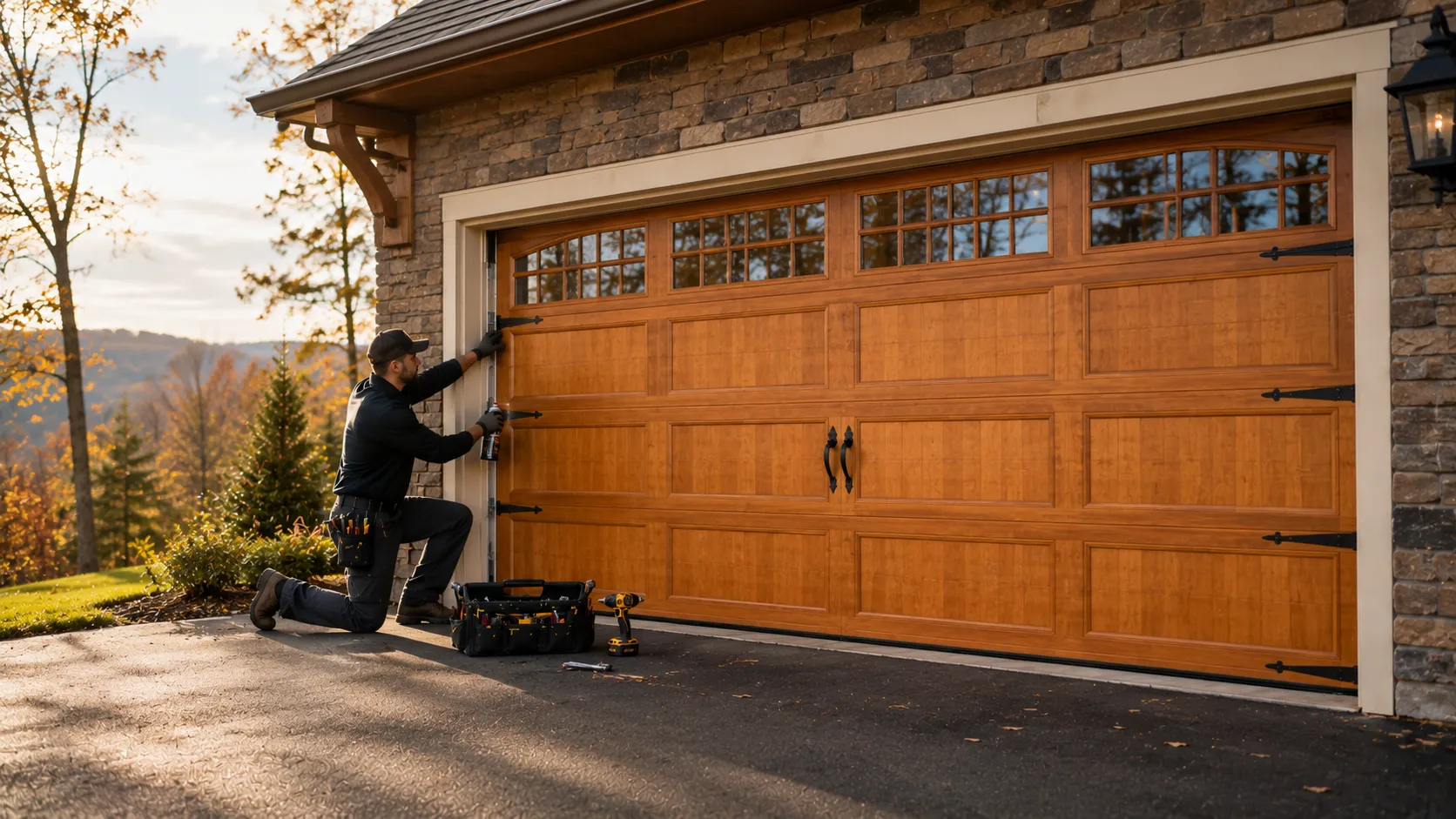
A straightforward extension-spring replacement is a same-visit job once we're on site with the right springs. A torsion conversion takes longer because it means new brackets, a new shaft, and re-hanging the door on different hardware - worth discussing before we start, not something to decide standing in the driveway. Opener board diagnosis is usually quick; ordering a replacement board for a chain-drive unit from this era can take longer than the repair itself if the manufacturer has discontinued the part, which happens on units this old. We're honest with you up front if a part has to be sourced rather than pulled off the truck - that's the one place a same-day promise would be a lie.