Stocked Parts
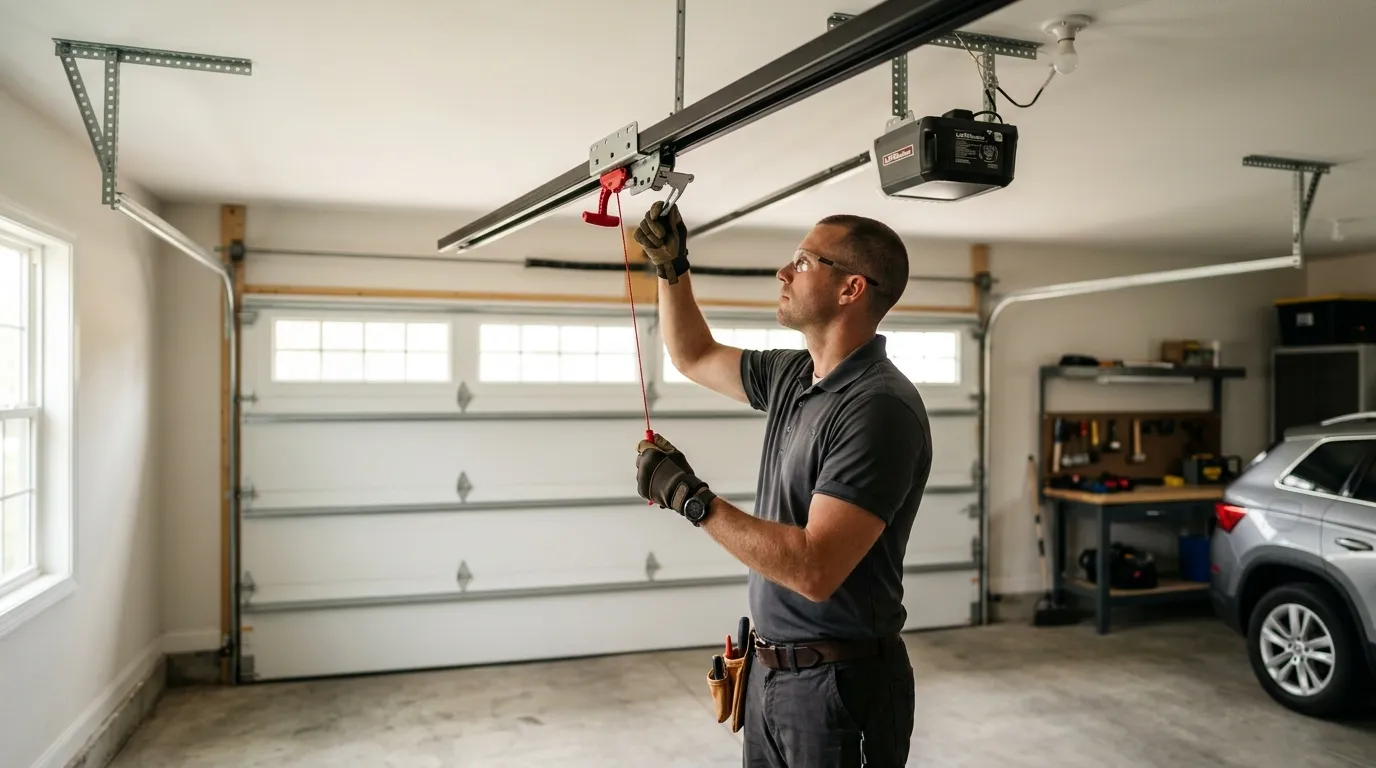
Clarkdale's housing stock centers on 1988, which puts a big share of openers here right at or past the end of their expected service life. A chain-drive unit installed when the house was built has usually had one or two logic board swaps by now, if that, and a lot of them are still running the original drive gear and sprocket that came in the box. We carry replacement drive gears, sprockets, and circuit boards sized for the chain and belt units that were common through the late 1980s and 1990s, along with the sensors and remotes that go with them. What we don't carry on the truck is anything specific to a smart-home retrofit kit someone bolted onto an old unit later - if a prior owner added a Wi-Fi bridge or aftermarket sensor swap, we may need to order that part before we can finish the job in one visit.
What Can Go Wrong
An opener built to run in this area's cold winters and hot, dry summers takes a slow beating on its plastic gears and belt gears long before the motor itself quits. The most common call we get out of Clarkdale is a motor that hums but doesn't move the door - almost always a stripped nylon drive gear, a part that was never designed to last 35 years and usually doesn't. Second most common: a logic board that's failed after enough winters of condensation inside the housing, which shows up as a door that won't respond to the wall button or remote at all. Limit switches drift out of adjustment on units this old too, so the door reverses before it's fully closed or keeps grinding after it should have stopped. None of this is unique to any one house - it's what happens to a drivetrain built when Clarkdale's houses were, running through three and a half decades of temperature swings.
What the Fix Involves
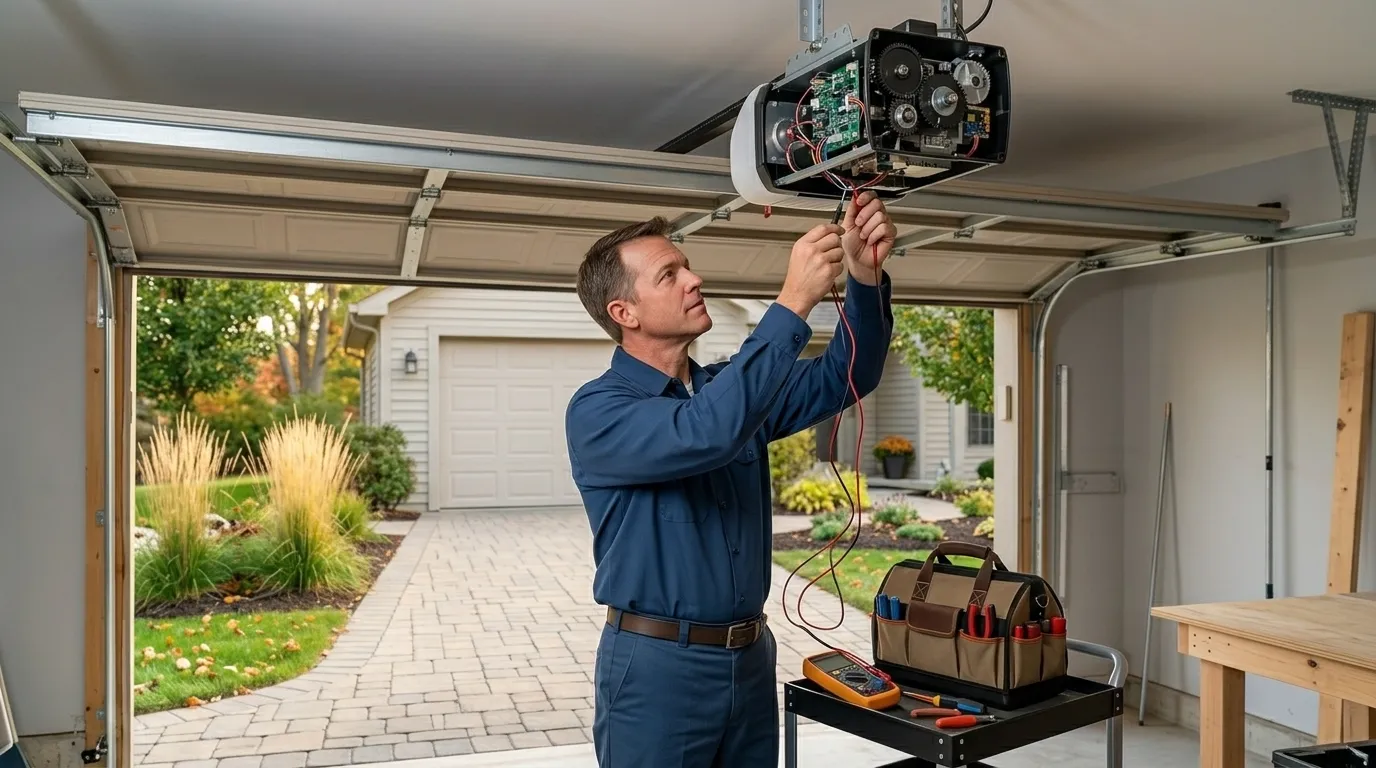
We start by running the opener through its full cycle to see exactly where it's failing - motor engaging but no travel, travel but no full close, or no response at all - because each points to a different part. On a stripped gear, we open the head unit, pull the drive assembly, and replace the gear and any worn bearing surface around it, then re-tension the chain or belt. A dead logic board gets swapped whole; we don't attempt board-level soldering on units this old since parts for that generation aren't something we stock loose. Limit switch and sensor adjustments happen last, after the mechanical drive is confirmed sound, since resetting sensors on a unit that's still skipping teeth just wastes a return trip. We travel to Clarkdale from Prescott Valley, about 18 miles out, so we bring a full opener kit rather than partial parts on a guess.
How Long It Takes
Most drive-gear or sensor jobs run under an hour once we're on site, since the fault is mechanical and the fix is a known swap. A logic board replacement adds time for reprogramming remotes and any wall stations in the house. Where it stretches out is parts: if your opener has a retrofitted smart controller or a board style we don't carry on the truck, we'll need to order it, and that can add a few days before the second visit. We'd rather tell you that up front than promise a same-day fix we can't back for every unit in a town where the opener stock is this mixed in age and add-ons.