
Stocked Parts
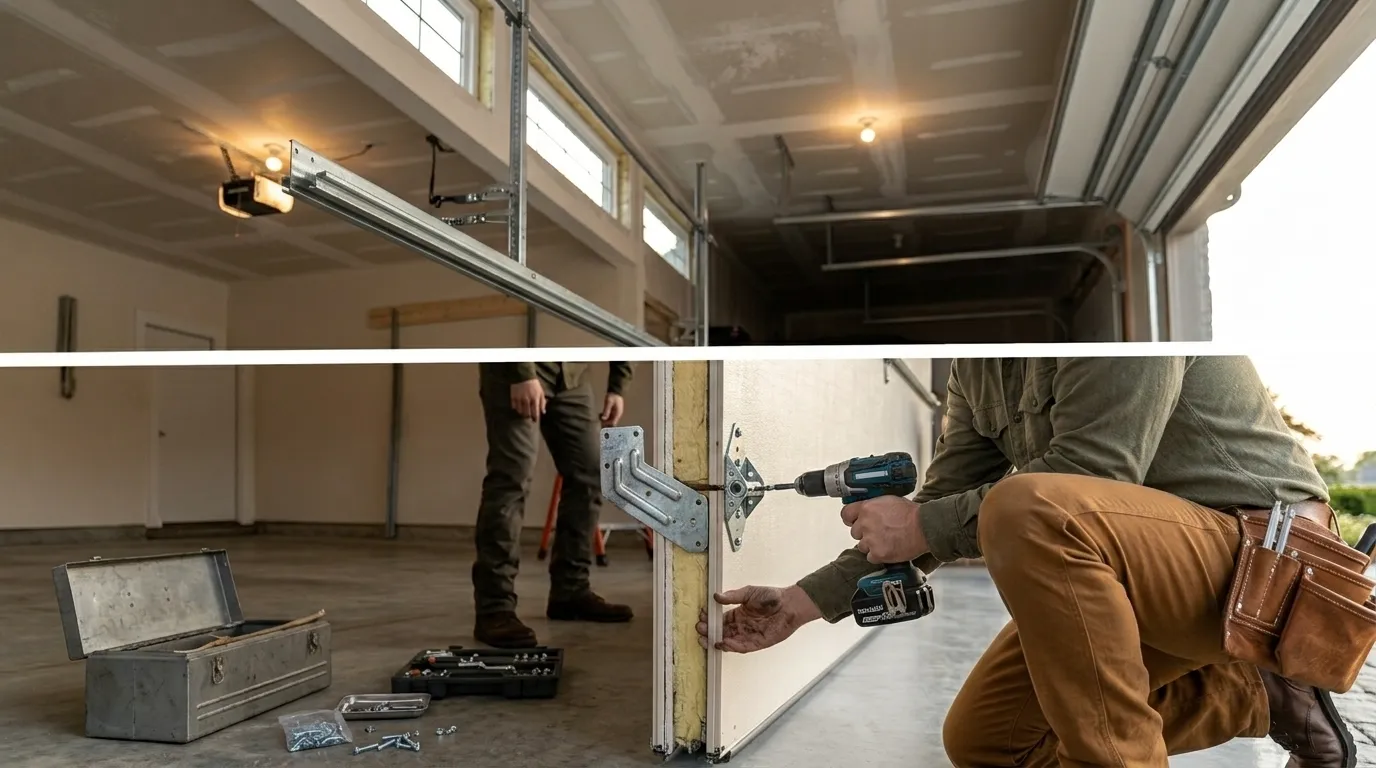
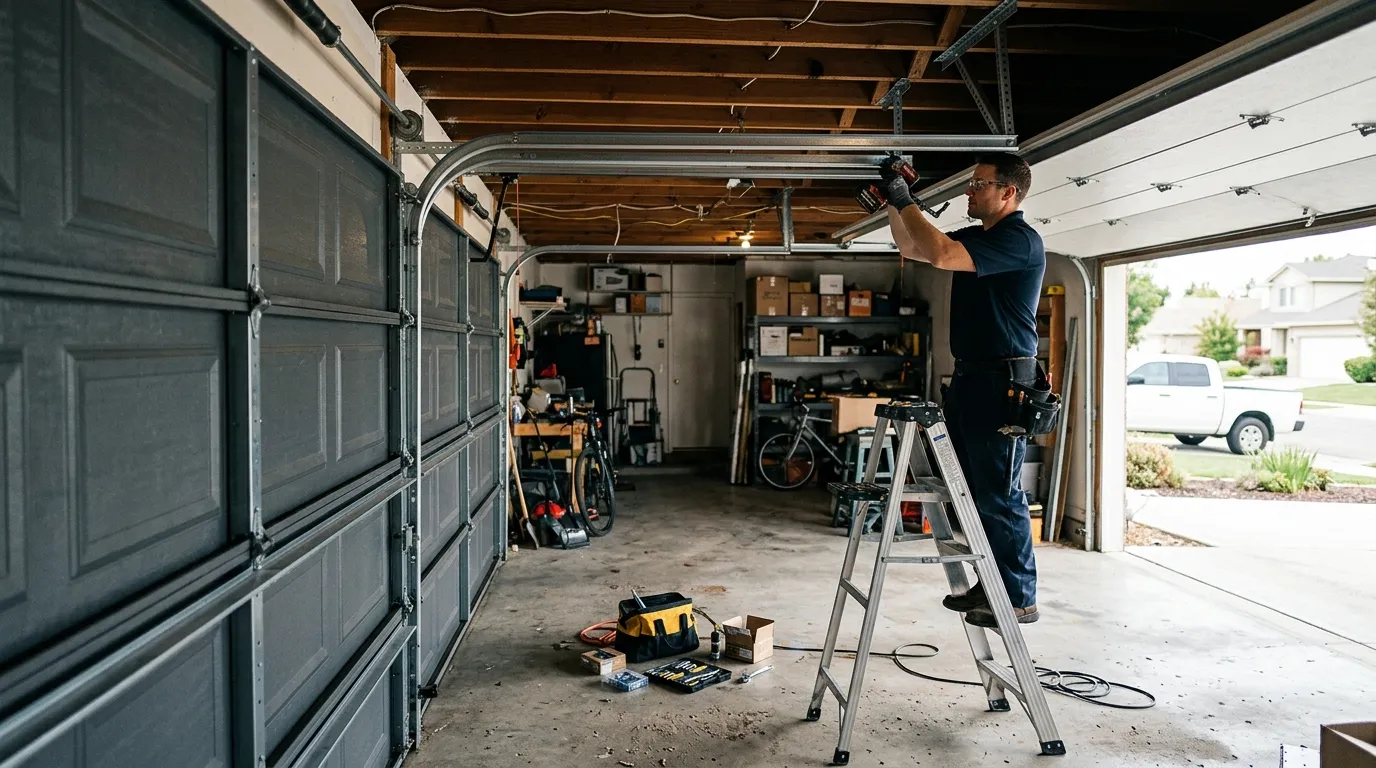
Most garage doors in Clarkdale went in when the house did, and that means a steel sectional door built around 1988 - two or three horizontal panels, non-insulated or single-layer, on a 16x7 double or 9x7 single opening, running on a torsion spring mounted on a shaft above the header rather than the older side-mounted extension setup. That's the hardware our truck carries parts for: torsion springs in the sizes that match a door of that weight and width, ball-bearing rollers to replace the nylon ones that have gone brittle, end hinges, and galvanized lift cables sized for a standard-lift track. What we don't stock is anything custom - if a door's been modified with a non-standard track radius or a spring wound outside the common range, that part has to be ordered, and we'll tell you that up front rather than guess at a fix on the truck. The steel gauge on doors from this era is thinner than what's sold today, so panels dent and bow more easily, which is worth knowing before you lean a ladder against one.
What Can Go Wrong
A torsion spring built in the late 1980s has had roughly 35 years of open-close cycles, and steel spring wire fatigues on a cycle count, not a calendar - so a spring that's held fine for years can let go without warning, often on a cold morning when the coil is stiffest. Clarkdale sits in the same cold-moderate climate band as the rest of this stretch of Arizona, and that temperature swing between a 20-degree overnight and a warm afternoon is what dries out track lubricant and makes rollers bind. On a house from this era you're also likely looking at original hinges worn oval at the pivot hole, and lift cables starting to fray at the drum where they've spooled thousands of times. None of that means the door is done - it means the parts that took the load for 35 years are due.
What the Fix Involves
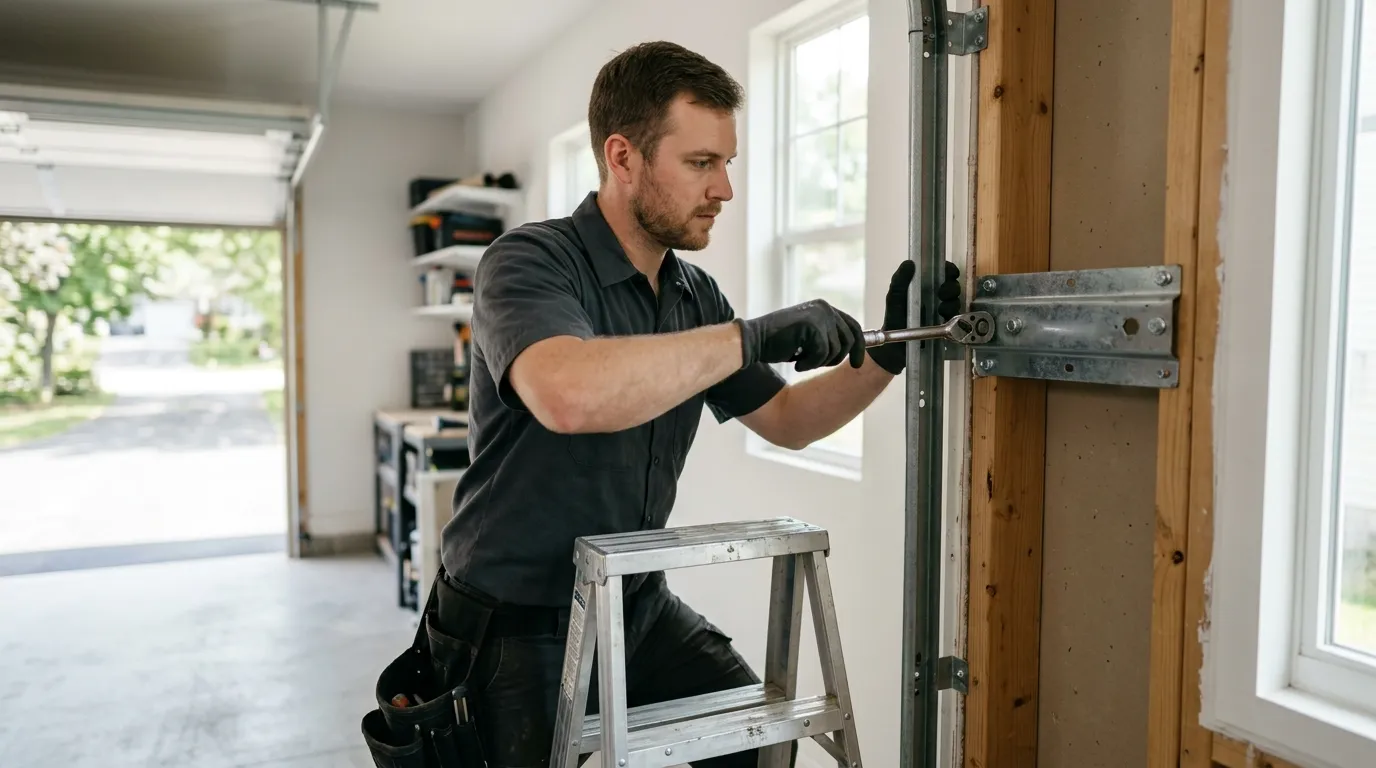
On a typical call here, the job starts with checking the door's balance - lifting it halfway by hand with the opener disconnected to see if it holds or drops, which tells us whether the spring is actually the problem or if it's cables, rollers, or a bent track doing the work of hiding a different fault. If it's the spring, we match the wire size and wind to the door's actual weight rather than swap in whatever's closest, because an undersized spring wears the opener out fast and an oversized one is its own hazard. We check the drums, cables, and rollers at the same time, since on a door this age it's rarely just the one part - a spring failure at 35 years usually means the rollers aren't far behind. Once the new hardware's in, we re-balance and cycle the door several times before calling it done.
How Long It Takes
Clarkdale is about 18 miles from where our trucks run out of in Prescott Valley, which is farther than most of the towns we cover, so travel time is part of the honest answer here - we're not going to promise a same-hour fix the way we might for a job five minutes down the road. Once we're on site, a standard spring or roller job on a door this size usually runs under two hours. Parts we carry on the truck go in the same visit; anything custom for a modified opening means a second trip once it's ordered in. We'd rather give you that real number than a vague promise about speed.