Stocked Parts
Clarkdale is 18 miles from our shop in Prescott Valley, which changes how we handle a new install here compared to a job five minutes from the truck. We don't keep a second stock point in Clarkdale, so every torsion spring, track section, and panel set for your job goes on the truck before we leave Prescott Valley. That means we plan the door, the opener, and the hardware kit around what you tell us on the phone or show us in photos, not around what we can grab on a second trip.
Most of Clarkdale's houses went up around 1988, which puts openings and header heights in a fairly predictable range for that era - we carry standard 16x7 and 9x7 sections and common torsion spring sizes for that vintage on the truck as a matter of course. Where we hit trouble is a non-standard opening or a track configuration that doesn't match what we loaded. If that happens, we tell you straight rather than force a part that's wrong for the header, and the job may need a return trip for the correct piece.
The honest limitation: we don't warehouse every spring wind and drum size for every era of door. If your house has been modified - a widened opening, a custom header - we may need to order that part rather than pull it off the truck the same day.
What Can Go Wrong
A 1988-built house is old enough that the original door, if it's still in, is likely on a torsion spring system that's now over three decades old, and the track and hinges have seen thirty-plus winters of the cold moderate swings this area gets. When we replace rather than repair, the usual reason isn't cosmetic - it's a spring that's fatigued past a safe reset point, or a track bent enough that a new door won't ride straight on it without new rail.
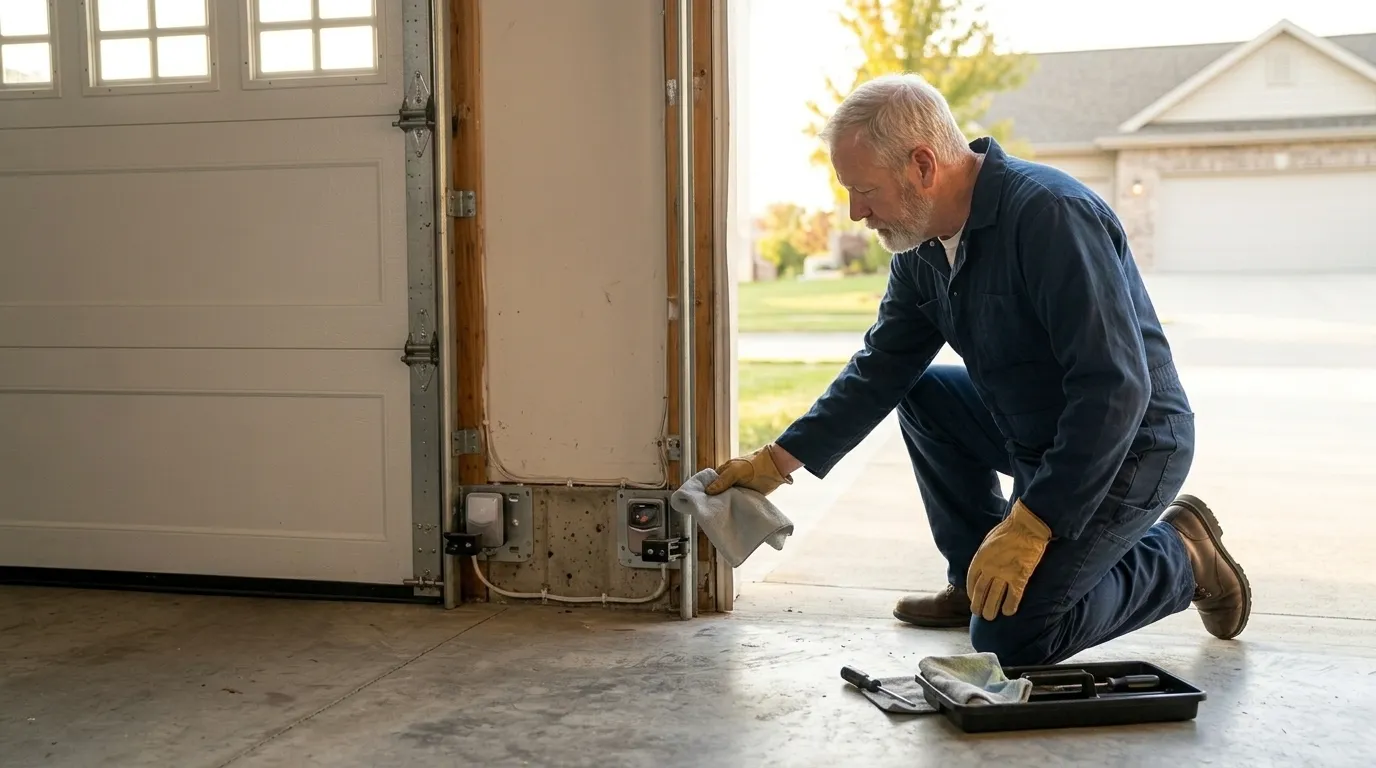
On the drive out, we also see openers that predate today's safety-reversal requirements still wired into a 1988-era door. Swapping the door without addressing an outdated opener is a common mistake - the new panel weight or balance can be wrong for an opener sized to the old one. We check that pairing before we quote the install, not after.
Weather plays a smaller role here than the housing age does. What actually drives most Clarkdale replacement calls is hardware that's simply reached the end of its service life on a house built in the late 1980s, combined with a header or track that needs updating to match a new door rather than the old one.
What the Fix Involves
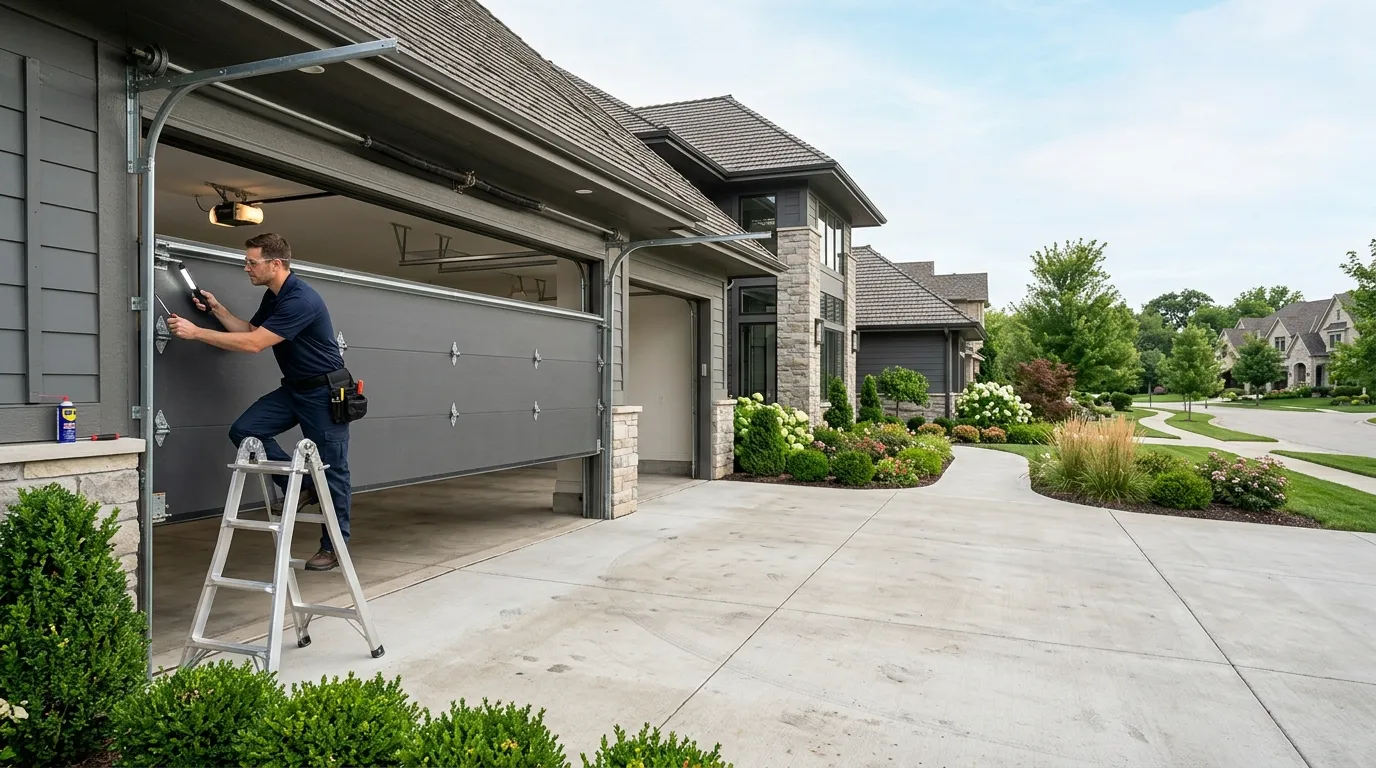
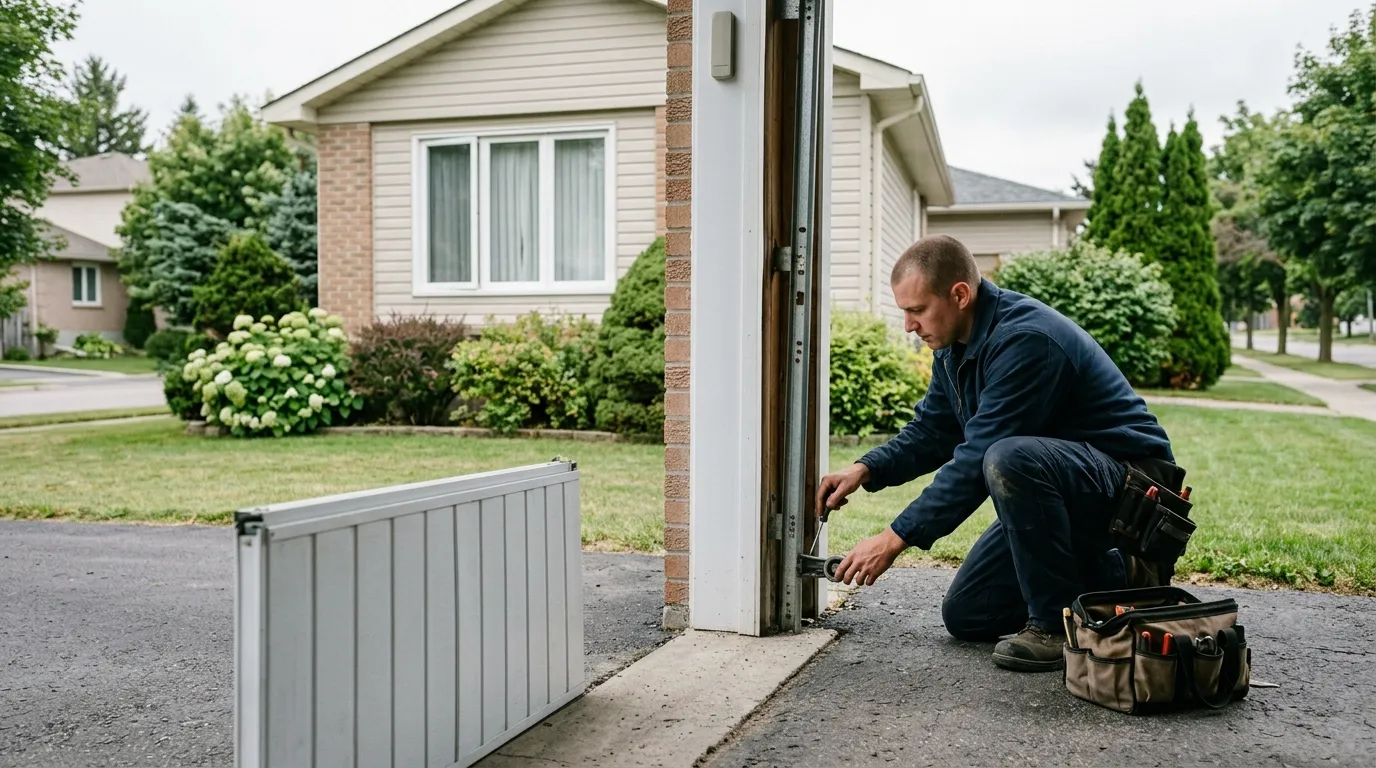
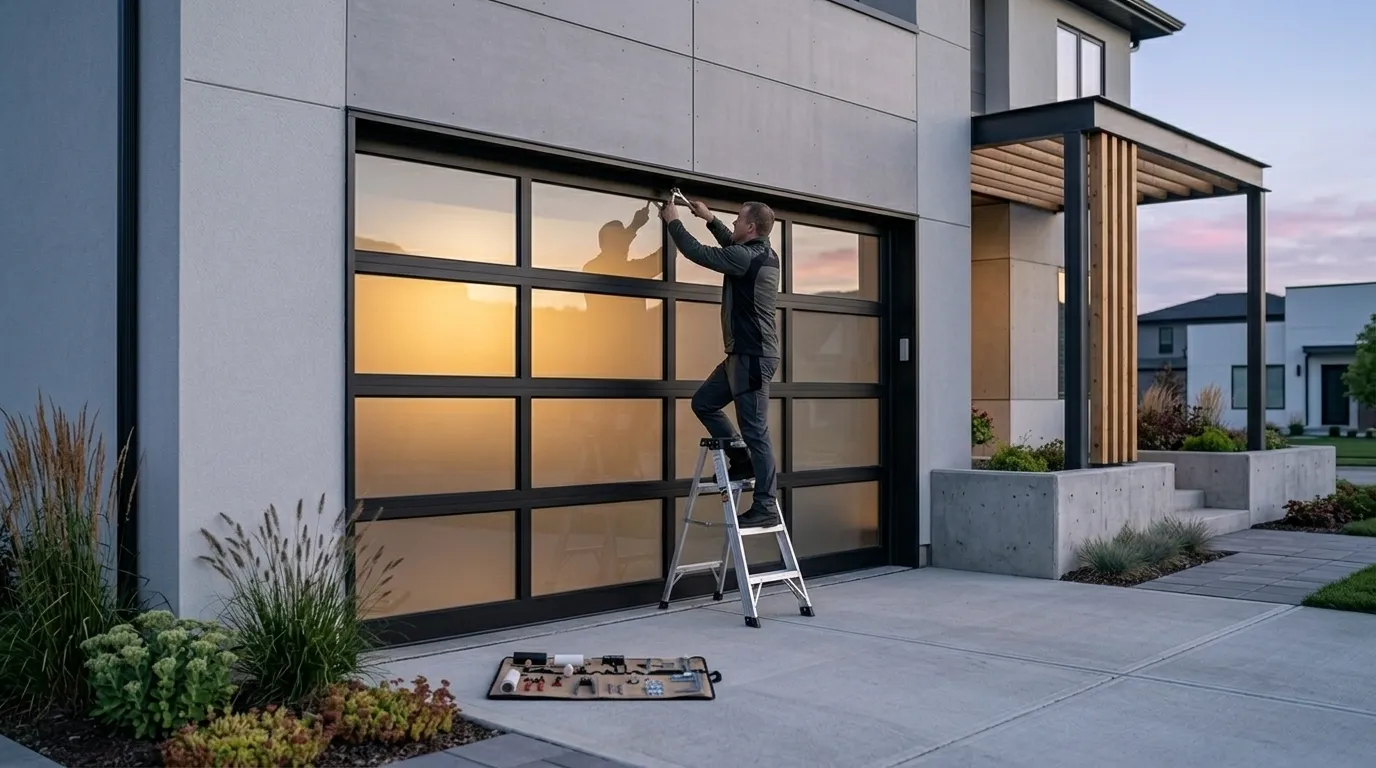
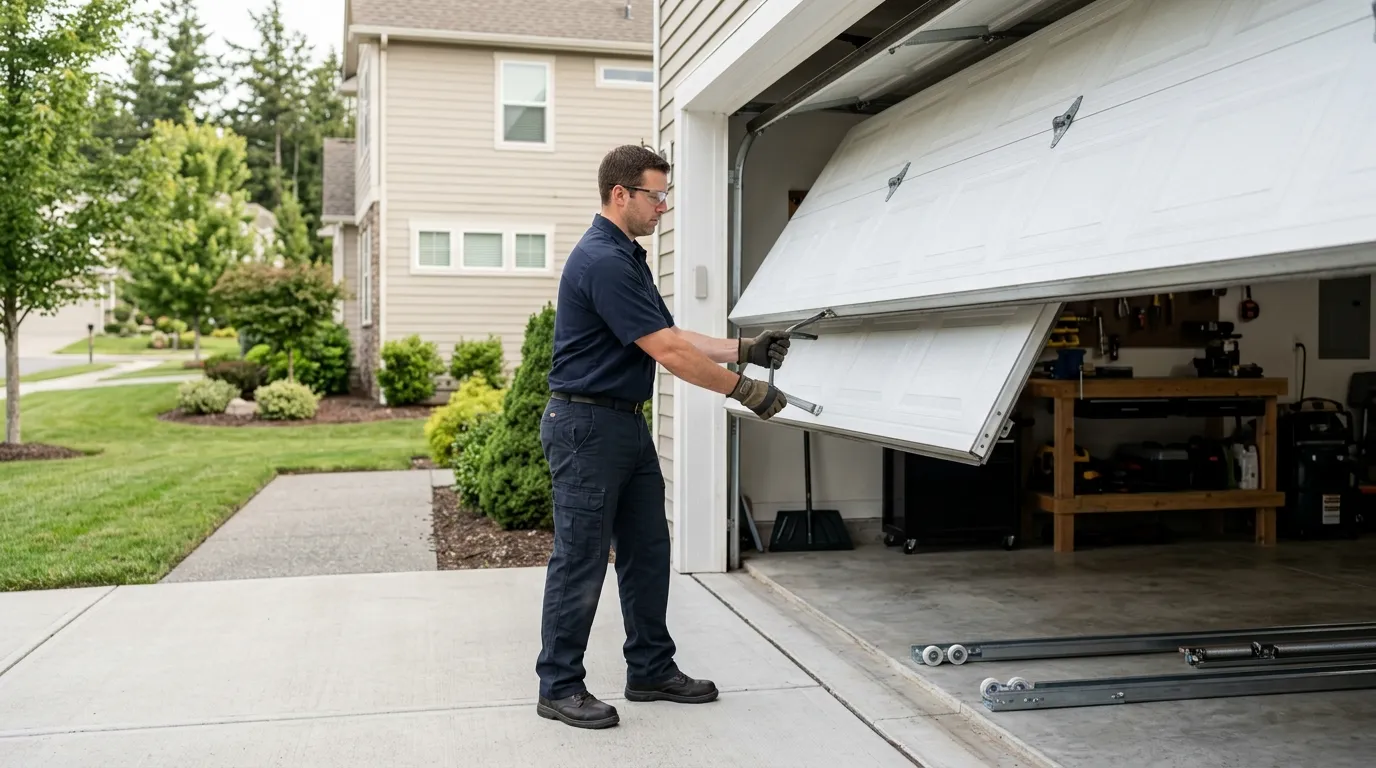
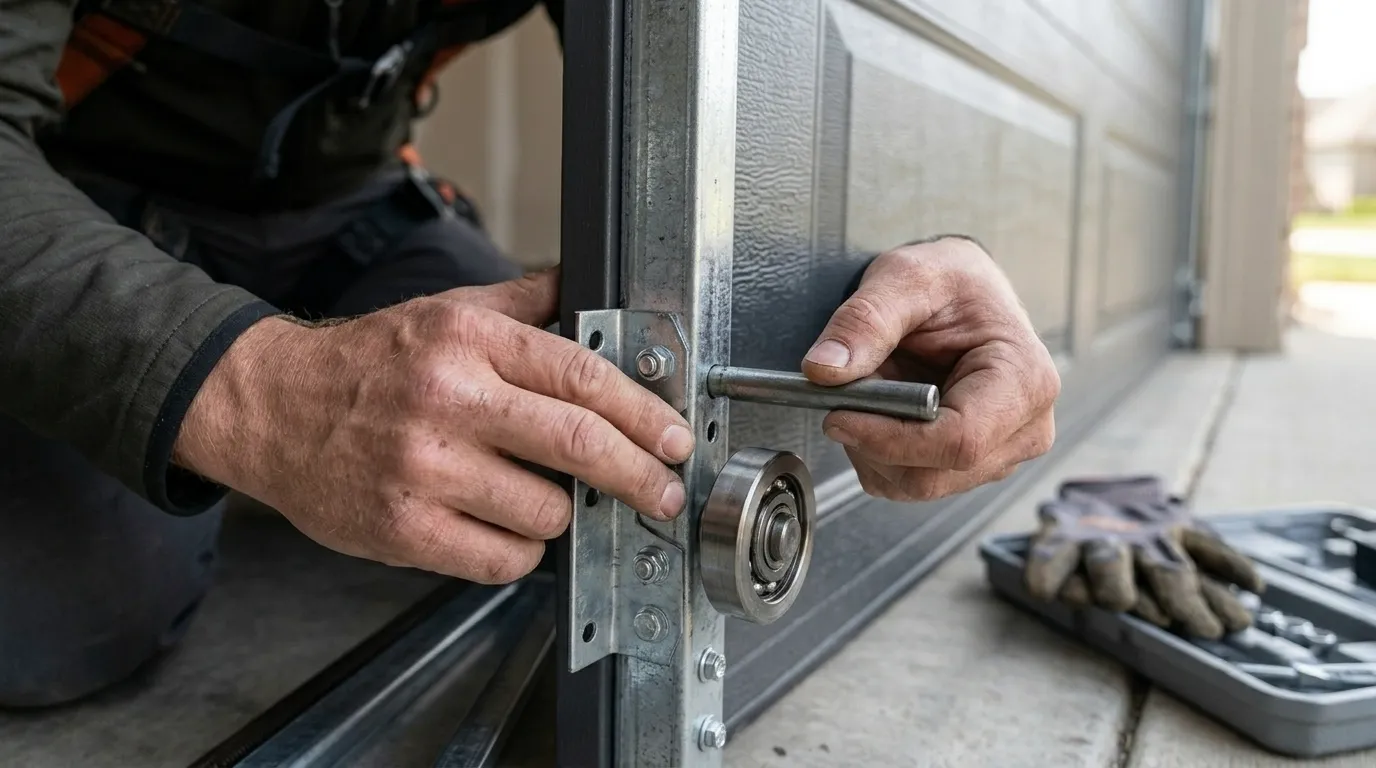
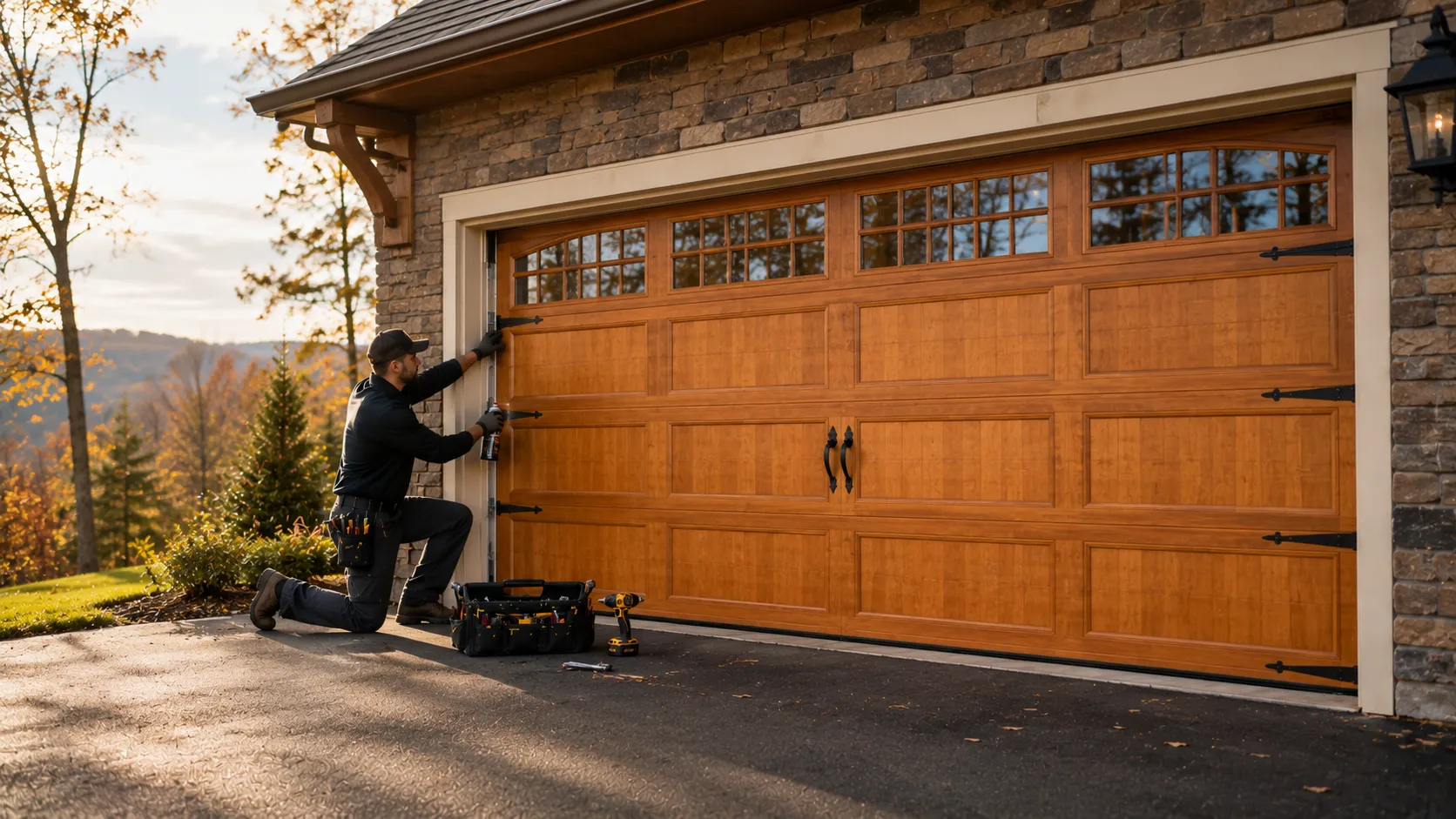
Installing a new door on a Clarkdale house typically means pulling the old panels and track, checking the header and jamb for square, and setting new track and hardware sized to the new door rather than the old one. On houses from this era, the header is usually standard for the door sizes common in 1988, so track and drum sizing is predictable - but we still measure rather than assume, since three decades of settling can shift an opening a little.
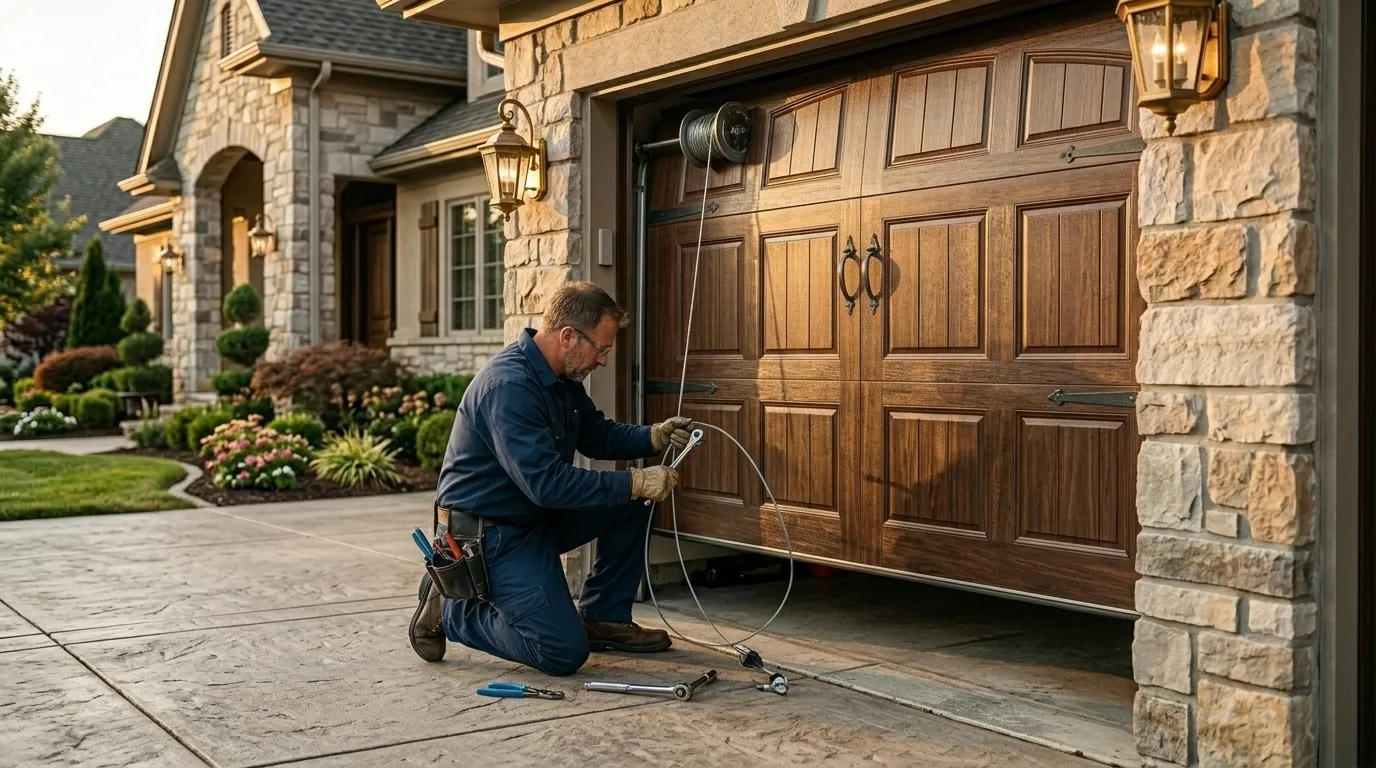
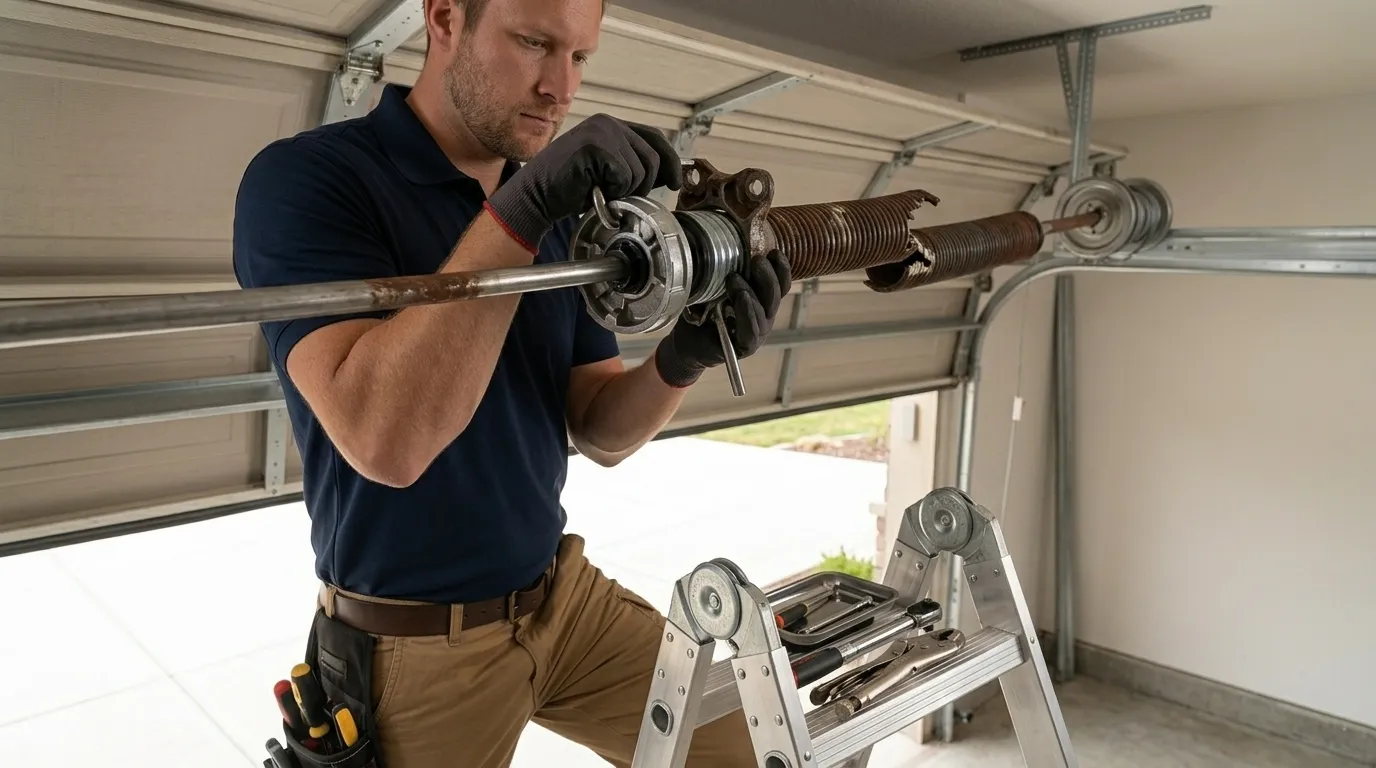
We balance the new torsion spring to the actual weight of the panel set you chose, not a generic figure, then set travel limits and test the opener's auto-reverse against the new door's weight. If the existing opener predates modern safety-reversal standards, we'll flag that as part of the same visit rather than install a new door on old opener logic.
Because the trip out is 18 miles, we load spare rollers, cable, and standard weatherstrip for the visit so a small mismatch doesn't turn into a second drive. Anything outside that standard kit - a custom insulation package or an oversized double door - gets ordered ahead of the scheduled date, not discovered on it.
How Long It Takes
A straightforward single-door swap on a standard 1988-era opening runs a few hours once we're on site, door hung, track set, opener paired and tested. Because Clarkdale sits 18 miles from Prescott Valley, we build the drive time into how we schedule the day rather than into how long the install itself takes - the work on your garage isn't slower, but we tend to book one Clarkdale job per block of the day rather than squeezing it between closer calls.
Double doors, or a job where the header needs adjustment to fit a new opener bracket, take longer - plan on most of a morning or afternoon rather than a couple of hours. If a part turns out to be non-standard for the header, that return trip adds another 18 miles each way, which is the one delay we can't shorten from our end.
We'll give you a specific window when we book, based on the door and opener you've picked, not a blanket estimate that ignores the drive.